‘Woke’ by any other name: Stop erasing the terms of our survival
Author Andrea D. Pringle argues that while the term “woke” may be evolving in political discourse, the underlying spirit of Black vigilance and awareness remains essential for addressing systemic injustices.
I have watched a word that once helped keep my people alive get turned into a punchline, then a slur, and now, this month, a punchline again, this time by people who are supposed to be on our side.
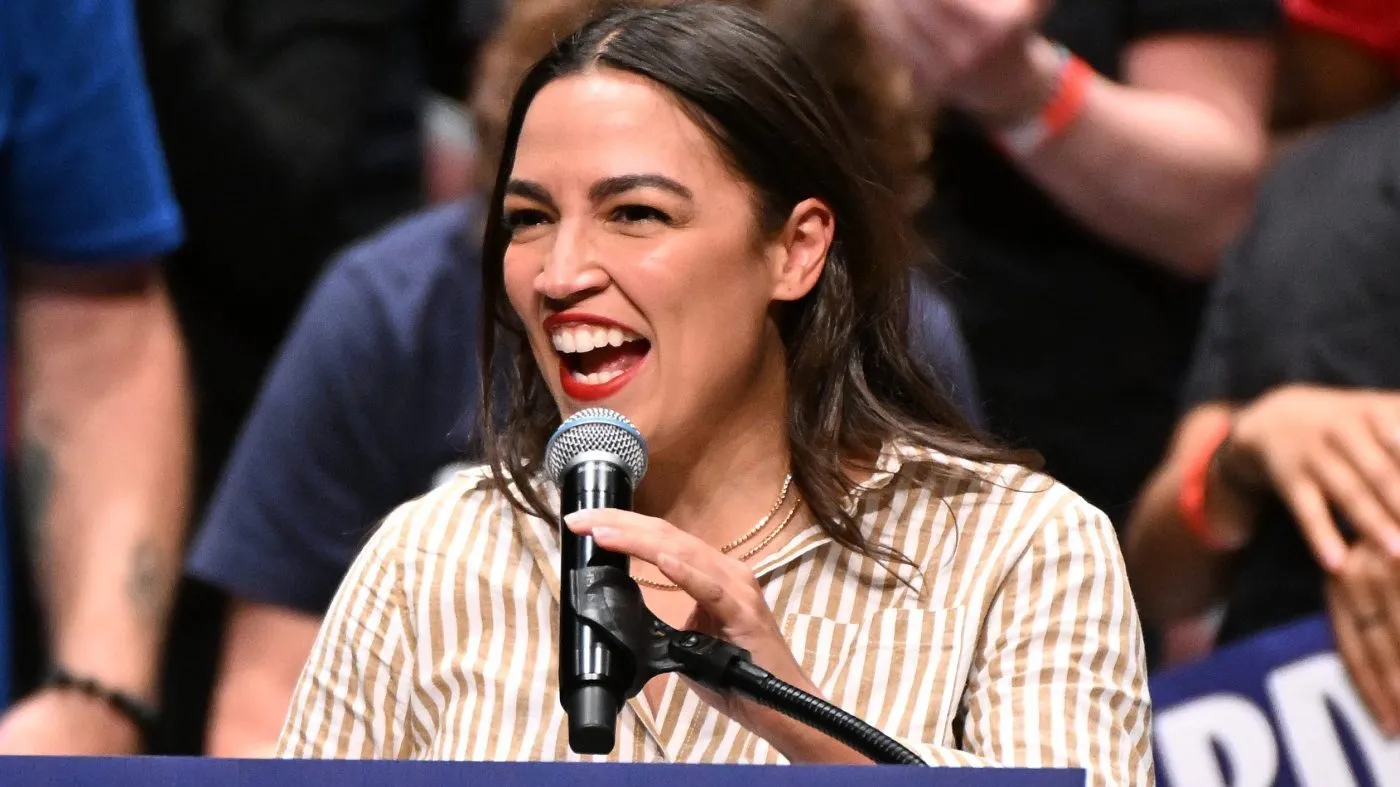
On Aug. 11, Rep. Alexandria Ocasio-Cortez (D-N.Y.) sat across from Jonathan Karl on ABC’s “This Week” and, asked about positions held by democratic socialists in 2020, repeated a phrase she attributed to a fellow politician: “ Woke 1 was crazy .” She moved on quickly, arguing reasonably that candidates should be judged on where they stand today rather than where they stood five years ago.
Since then, those four words have become part of a larger debate about what Democrats should leave behind from 2020. Some of that reckoning is overdue. But before we turn “woke” into a convenient label for everything that went wrong, we should remember something important: woke was never a branding exercise for Black people. It was an instruction.
I say that as someone who admires Ocasio-Cortez and the power she has built for working people. This isn’t about piling on. It is about asking who gets to declare a chapter of Black political consciousness embarrassing, close the book and move on. Who gets to decide when our vigilance has become inconvenient? Who gets to gatekeep the language of our survival?
“Woke” did not begin as a hashtag or cable news category. Its roots run through generations of Black political consciousness. Marcus Garvey urged Black people to “wake up” to the reality of their condition. In 1938, Lead Belly sang about the Scottsboro Boys, nine Black teenagers falsely accused in Alabama, and warned Black listeners to “stay woke” and keep their eyes open.
That was the point: Stay alert because the danger is real.
In 1962, novelist William Melvin Kelley wrote in The New York Times about white America’s habit of taking Black vernacular, hollowing it out and handing it back as something unrecognizable. Decades later, Erykah Badu helped return “stay woke” to popular consciousness. Then another generation carried it into the streets after Trayvon Martin, Michael Brown and Eric Garner.
After George Floyd’s murder, the phrase went fully mainstream. Then the right seized it.
Florida eventually put the acronym “WOKE” into the title of legislation restricting certain instruction and workplace training involving race. A phrase rooted in Black vigilance became shorthand for nearly anything conservative politicians wanted their voters to fear. Black Americans have seen this before: Language we create to describe our experience gets stripped of context, weaponized and sold back to the country as something dangerous.
What troubles me now is watching parts of the left participate in a softer version of that erasure.
To be clear, there were real excesses in 2020. Some slogans substituted provocation for persuasion. Some activists treated people who shared the goal of a more just society as enemies because they used imperfect language or asked uncomfortable questions. At times, our desire to create safety for marginalized people produced too little room for people to learn, stumble, apologize and grow.
We should be able to say that. A movement incapable of examining its mistakes is not a movement preparing to win.
But society also needs mechanisms for moving people toward justice collectively. Progress requires persuasion as well as protest, grace as well as accountability. Learning those lessons is very different from declaring the awakening itself “crazy.”
That distinction matters because 2020 did not materialize from an internet trend. Millions of people took to the streets after watching a Black man die beneath a police officer’s knee. They were responding to something real. To dismiss that period as an inconvenient pendulum swing is not politically shortsighted. It risks confusing mistakes made in responding to injustice with the injustice that demanded a response.
And the underlying conditions have not disappeared.
I organize voter registration and civic engagement work across Georgia, South Carolina, Mississippi and Texas. Voter rolls are still purged. Polling places still close. Laws still create barriers for people who move, change their names or lack particular forms of identification. Every day, organizers enter communities that politics has ignored and work to make sure their voices are not erased.
That is what staying woke means to me. It isn’t a vocabulary test or a cable news category. It is the discipline of paying attention because history has taught us who pays the price when we don’t.
I’m not interested in defending a word forever. Language changes, movements mature and political strategies should evolve. If “woke” no longer communicates what we need it to communicate, Black communities can be part of the conversation about what comes next.
But there is a difference between retiring a word and rewriting its history. There is a difference between acknowledging that a movement made mistakes and treating the consciousness that animated it as an embarrassment.
America can change the vocabulary. Politics can find a new slogan. What we cannot afford to discard is the vigilance underneath it, because for generations that vigilance has helped Black Americans recognize danger, organize against injustice and claim rights this country too often tried to deny us.
So rename the word if you must — just don’t try to rename our survival.
Andrea D. Pringle is a Democratic campaigner and founder and president of Registration Nation and leads March On PAC, Elect Southern Dems and Future Democrats. She previously held multiple roles at the Democratic National Committee.
Topics in this story
Gathered from external sources. Rights to this text belong to whoever originally published it.