Amid a physician shortage, we’re making medical school harder to afford
At the very moment our nation needs more doctors, federal policy may be making it more difficult for talented young people to become one.
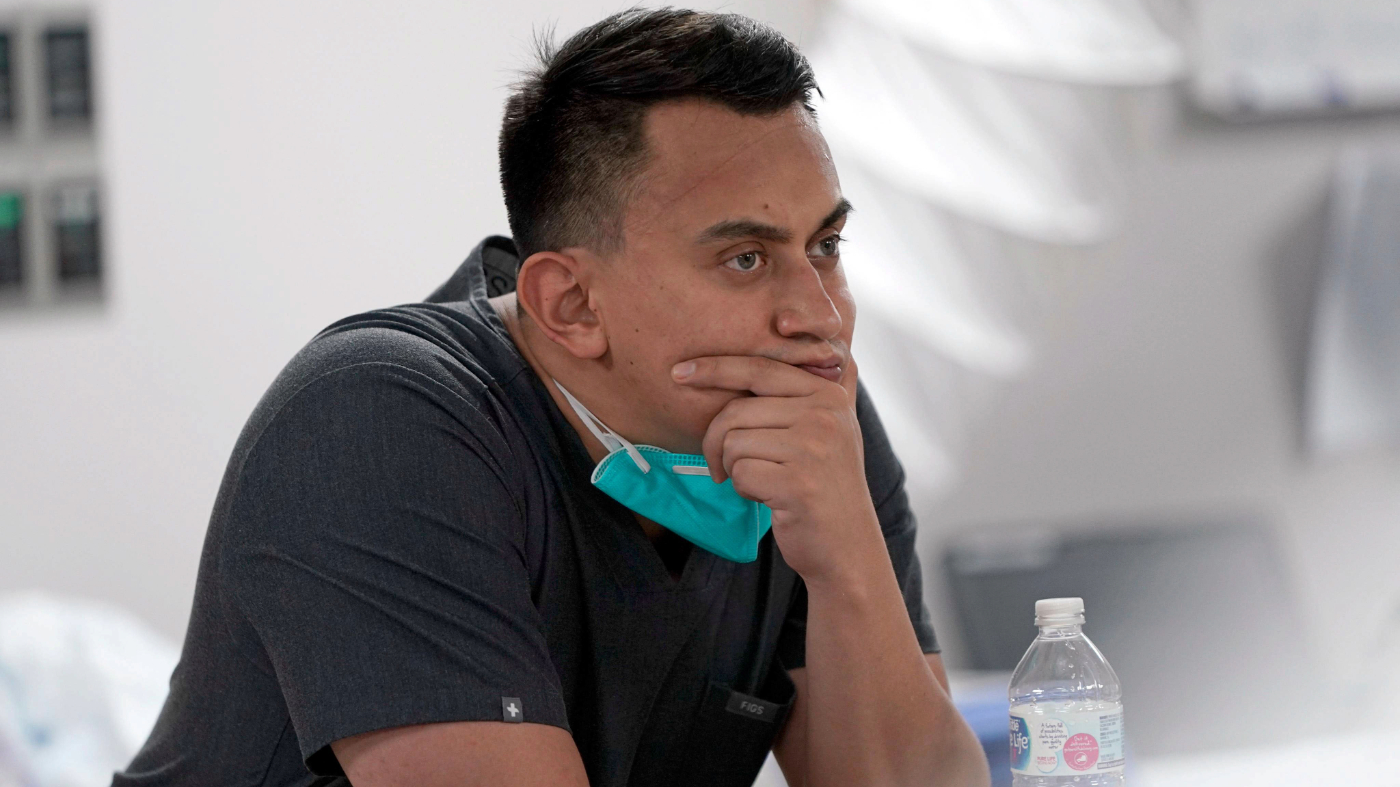
Americans already wait weeks — and in some communities, months — to see a physician. At the very moment our nation needs more doctors, federal policy may be making it more difficult for talented young people to become one.
New federal limits on student borrowing are taking effect, creating unintended consequences that extend far beyond medical schools. Unless Congress and the administration revisit these restrictions, we risk worsening an already critical physician shortage, reducing access to care and narrowing the pipeline of future physicians.
Supporters of these borrowing limits make legitimate points. They argue that unlimited federal lending has contributed to tuition inflation, encouraged excessive borrowing and shifted too much financial risk to taxpayers. They also believe colleges should have stronger incentives to control costs. Those are reasonable policy objectives.
Medical education, however, is fundamentally different from nearly every other graduate program.
Under the 2025 federal budget reconciliation law , medical students are generally limited to borrowing $50,000 annually and $200,000 over the course of their professional education, subject to a $257,500 aggregate federal borrowing limit. While many currently enrolled students are protected, these limits will increasingly affect future applicants deciding whether medicine remains financially attainable.
Unlike most graduate students, physicians enter one of the nation’s most workforce-constrained professions, complete years of supervised residency training and have historically demonstrated exceptionally low student loan default rates. Applying the same financing model to medical education risks solving one problem while creating another: producing fewer physicians precisely when America needs more.
The timing could not be worse. The Health Resources and Services Administration projects a shortage of more than 141,000 physicians by 2038. Americans already struggle to access primary care, behavioral health services and many specialties, particularly in rural and underserved communities.
Every physician who enters practice represents an investment that pays dividends for decades through improved health, stronger communities and greater economic productivity. Yet the financial realities of becoming a physician have changed dramatically.
A recent Journal of the American Medical Association study found that the percentage of medical students requiring federal loans above these new limits has risen substantially over the past decade. The financing model established by Congress simply no longer reflects today’s cost of medical education.
The solution is not as simple as telling medical schools to reduce tuition.
Medical schools have a responsibility to control costs, and many are doing exactly that. Many institutions, including my own, have kept tuition increases below inflation while continuing to invest in simulation technology, cybersecurity, student support and the regulatory requirements necessary to educate highly competent physicians.
But tuition is only part of the equation. Housing, food, transportation, health insurance and childcare have risen sharply. Medical school is a full-time commitment that leaves little opportunity for outside employment. For many students, living expenses equal — or exceed — the cost of tuition.
Students with family wealth or parents able to co-sign loans will likely find financing. Others will not.
Those most likely to be affected are often those our healthcare system needs most: students from rural communities, first-generation college families, military veterans and individuals from historically underrepresented backgrounds. These physicians are more likely to practice in underserved communities. When financial barriers discourage them, patients ultimately pay the price.
Private lenders are beginning to fill part of the financing gap, but access increasingly depends on creditworthiness rather than academic merit or a student’s commitment to serve. Opportunity should be determined by ability, character and commitment — not by family wealth or access to credit.
Medical students represent one of the strongest lending investments in higher education. Medical school graduates have among the lowest student loan default rates of any professional group, reflecting stable employment and a long history of repayment. The Association of American Medical Colleges reports that medical school borrowers have near-zero default rates , while federal data place default rates for the broader category of professional degree borrowers at approximately 1.5 percent .
Communities, philanthropists, health systems and universities are expanding scholarships and developing innovative financing programs. These efforts are commendable, but they cannot replace a predictable and sustainable federal financing system.
For decades, our nation has viewed medical education as an investment in the public good. That principle should not change because the economics of higher education have changed.
If we are serious about strengthening our physician workforce and improving access to care, we should not erect new financial barriers for qualified students willing to dedicate their lives to caring for others.
Congress and the administration should revisit these borrowing limits before they become a long-term obstacle to developing the physicians our nation urgently needs.
The U.S. has never solved a workforce shortage by making entry into that profession more difficult. Medicine should be no exception.
America cannot solve its physician shortage by making it harder to become a physician.
Marc B. Hahn is president and chief executive officer of Kansas City University. A board-certified anesthesiologist, he has spent more than four decades in medical education preparing the nation’s future physicians, including service as a U.S. Army physician.
Topics in this story
Gathered from external sources. Rights to this text belong to whoever originally published it.