Senate votes to advance bill to regulate college sports, athlete compensation
The Senate voted Tuesday to advance the Protect College Sport Act, which would create national rules for compensating college athletes, limit transfers and mid-season coaching moves and set a five-year window for athletic eligibility, among other reforms. It would protect the NCAA, college athletics’ governing body, from anti-trust lawsuits, establish caps on revenue sharing and…
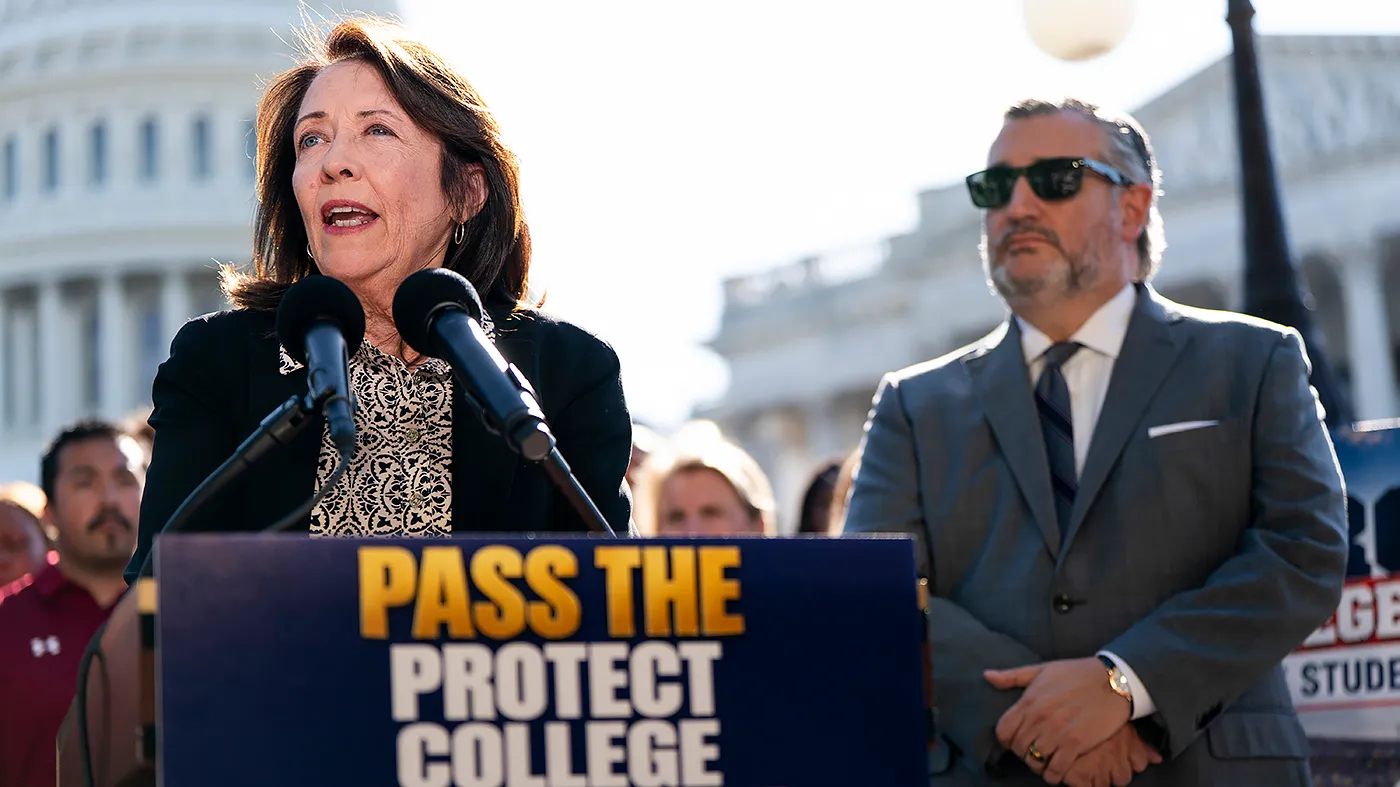
The Senate voted Tuesday to advance the Protect College Sport Act, which would create national rules for compensating college athletes, limit transfers and mid-season coaching moves and set a five-year window for athletic eligibility, among other reforms.
It would protect the NCAA, college athletics’ governing body, from anti-trust lawsuits, establish caps on revenue sharing and allow schools to have retention funds for star players.
The Senate voted 74-24 to advance the legislation, despite the opposition from the NAACP, the AFL-CIO and its Sports Council and the Congressional Black Caucus.
The legislation passed out of the Senate Commerce Committee with bipartisan support in June after months of negotiations between the Republican chairman, Sen. Ted Cruz (R-Texas), and the Democratic ranking member, Sen. Maria Cantwell (D-Wash.).
The legislation requires agents to register with a state before representing student athletes and caps their fees at 5 percent. It guarantees scholarships for ten years after eligibility so athletes can complete their degrees after their playing days and it requires Division I schools to provide medical coverage while athletes are participating in sports.
The Senate voted to advance the legislation over growing public concern about the excesses of college athletics’ current patchwork of compensation, eligibility and name, image and likeness rules.
LSU football coach Lane Kiffin caused an uproar when he considered adding players cut from the NFL to Tigers’ roster.
Dae’Quan Wright, a former Ole Miss tight end, practiced with LSU’s team after being waived by the Cleveland Browns, for example.
Another controversy erupted when quarterback Brendan Sorsby was ruled ineligible by the NCAA for sports gambling, including placing bets on his own team, after signing a lucrative name, image and likeness contract with Texas Tech.
“College sports today are in crisis,” Cruz said on the Senate floor before the vote.
“For years court decisions, litigation, conflicting state laws, unlimited transfers, eligibility issues and inconsistent enforcement has chipped away at the foundation of college athletics. The result is what we’re seeing right now, the Wild West,” he said.
Cantwell said that universities are borrowing millions of dollars and cutting women’s and Olympic sports to feed their football programs and “smaller schools have become unpaid development leagues for the giants.”
She noted that some college agents are now taking 20 percent to 25 percent of athletes’ NIL deals.
She also pointed out that the legislation would direct nearly $1 billion over the next six years to historically black colleges and universities (HBCUs) and has the support of the United Negro College Fund.
But some Democrats came out strongly against the bill, including Sen. Cory Booker (D-N.J.), who played college football as a tight end at Stanford University.
“While a college student and player, I saw just how unjust the NCAA is. It’s a monopoly controlling $15 billion … and rapidly growing. The NCAA has a long record of ignoring the cries for justice from exploited college athletes,” he said.
He pointed out array of groups opposed to the bill, including the United College Athletes Association, the AFL-CIO, the NAACP and the Urban League.
“It is doing all kind of things to stop players from earning money, putting bureaucracy between them and the possibilities but it does nothing to affect coaches,” he said, noting that college coaches make some of the largest salaries in sports.
Cruz, the bill’s sponsor, however, argued that without congressional action, many schools would be forced to shutter their football programs or to end non-revenue-producing sports and women’s sports programs because of the strain of competing with bigger schools’ robust name, image and likeness compensation programs.
“We can sit on the sidelines and watch college sports continue to unravel or we can step on the field and lead,” he said, emphasizing that more than 370 universities have endorsed the bill.
“If the Senate doesn’t act, hundreds of thousands of those students will see their roster slots go away and their scholarships go away,” he said.
A group of college coaches, including Arkansas basketball coach John Calipari, visited Capitol Hill on Monday to promote the legislation.
Calipari told NewsNation in an interview that under current rules college coaches have stopped recruiting high school players to instead focus on recruiting older players, transfer players and European players.
“I got involved to say ‘This ain’t right for American kids,’” he said.
Topics in this story
Gathered from external sources. Rights to this text belong to whoever originally published it.