9/11 has had a lasting effect on world affairs
Reflecting on twenty-five years since the Sept. 11 attacks, Stuart Gottlieb examines how the tragedy reshaped American foreign policy, shifted focus toward non-state actors, redefined terrorism as warfare, and emphasized the need for a long-term battle of ideas.
On the morning of Sept. 11, 2001, I was driving to Capitol Hill, where I worked as a Senate foreign policy adviser. I heard on the radio that a small plane had crashed into the North Tower of the World Trade Center. Terrible accident, I assumed.
As I approached my garage entrance, another report said that a second plane had hit the South Tower, and that they had both been commercial airliners. This was no accident. As I sat silently in my car before entering the chaos of that day, I thought to myself, nothing will ever be the same again.
Twenty-five years later, life has gone on, new challenges have arisen, and the U.S. has been spared a second 9/11. Yet the profound impact of that day still resounds. An attack worse than Pearl Harbor had been carried out with pinpoint precision by the shadowy al Qaeda terror organization. Ever since, the prevention of terrorism has dominated American foreign policy much as containing communism did during the Cold War. And as with the Cold War, there have been ups and downs, successes and failures, and multiple reassessments along the way.
But the most significant effect of 9/11 was how it instantly shattered the conventional wisdom at the time regarding global threats, combating terrorism, and America’s role in the world generally. Four major rethinks from that period last to this day and continue as pragmatic guideposts for ensuring terrorism remains a manageable problem for another 25 years.
First was the end of what Francis Fukuyama had called “ the end of history .” Perhaps the greatest shock of 9/11 was that it occurred at all. At the time, the U.S. was still basking in its post-Cold War “unipolar moment.” All the talk in American and Western circles was about promoting universal liberal values and neoliberal economics.
But looking back, plenty of history was still swirling in the 1990s in the form of vicious civil wars, proliferation of weapons of mass destruction, and escalating terrorist attacks against the U.S., culminating in 9/11. That the first major post-Soviet threat to American security came from a terrorist group showed both the significance of terrorism in contemporary world politics and the cost of neglecting non-Western and less-developed parts of the world. The decades since have grown even more complex with the emergence of state-based challenges to the Western-led international order from China, Russia, Iran and others.
Second was the rise of the transnational terrorist organization as a world actor. For centuries, states have been the primary actors in world politics, as seen with the United Nations being composed of “member states.” On 9/11, this state-centric system was rattled to its core. What makes al-Qaeda and related militant Islamist movements such as Islamic State uniquely difficult and dangerous is that they function as powerful non-state global actors. For example, al-Qaeda lost its base in Afghanistan in 2001, and the Islamic State group lost its “caliphate” in 2019, yet both have been actively operating through franchises across Africa, the Middle East, South Asia, and elsewhere, patiently planning for future attacks against states.
Having no government to negotiate with, threaten or cajole has fundamentally altered the nature of national security strategy in the 21st century. It is why, 25 years after 9/11, and despite two failed wars in Iraq and Afghanistan, America remains extremely forwardly deployed in its efforts to thwart terrorism. As of 2023, U.S. forces were conducting counterterrorism operations in at least 78 countries .
Third is the shift toward treating terrorism as a form of warfare. Prior to 9/11, the U.S. treated terrorism primarily as a criminal justice matter. That makes sense considering our robust legal system and the fact that terrorism involves the commission of crimes. It also made sense because most terrorism of that era (for example, the Palestine Liberation Organization and Irish Republican Army) revolved around small-scale attacks to gain attention for a cause — what terrorism expert Brian Jenkins summarized as “a lot of people watching, not a lot of people dead.”
On 9/11, a new terrorism exploded onto the world scene, far more interested in mass destruction than messaging. Instead of limited political goals, al Qaeda and its cohort were seeking a sustained global war against America, the West and their supporters. Both Republicans and Democrats recognize that this requires measures well beyond civilian courtrooms. For example, Barack Obama promised “to reverse” George W. Bush’s use of aggressive wartime powers but then expanded Bush’s controversial drone assassinations program overseas and surveillance program at home. He also placed such policies under greater Constitutional scrutiny, permitting a more legitimate long-term effort.
Finally 9/11 shattered the notion that Islamist terrorism was a fringe threat — it spawns from a centuries-old militant ideology that enjoys considerable support around the world . This helps explain how al Qaeda and ISIS survive losses of their top leaders, and why the movement cannot simply be defeated on a military battlefield — it must be confronted in a battle of ideas.
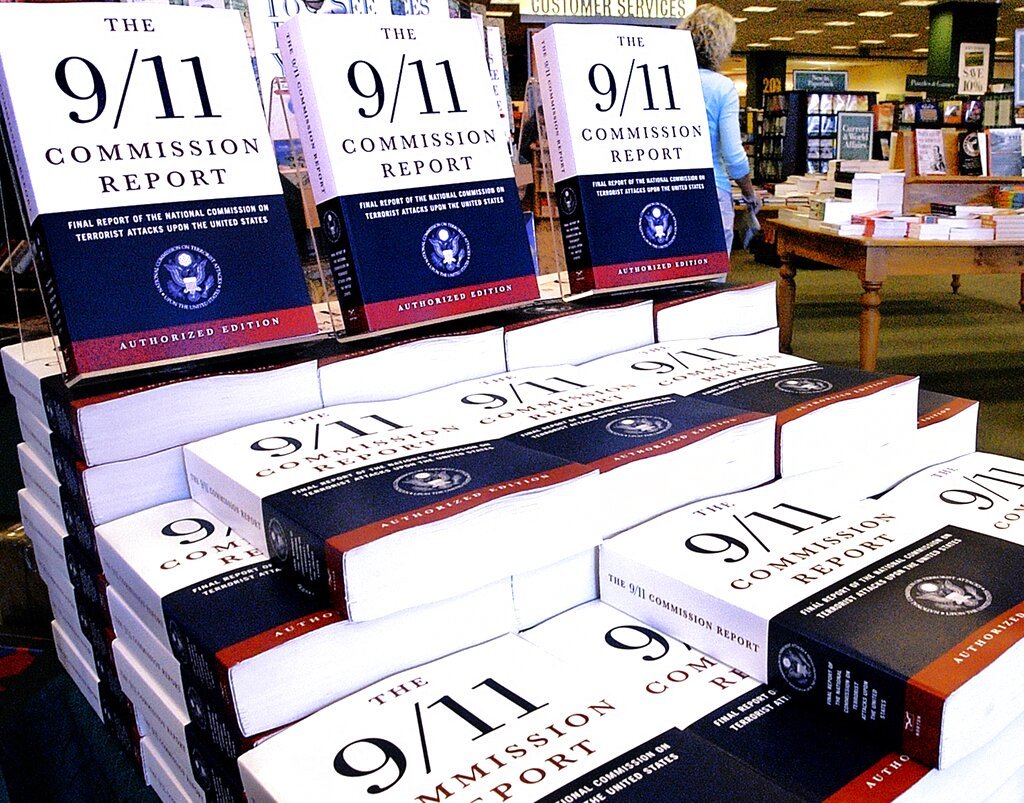
A strategy to “defeat an ideology, not just a group of people” was a key recommendation of the bipartisan 9/11 Commission Report; it remains equally important today. Over the last 25 years, Washington has leaned heavily on military and surveillance tools to combat Islamist militancy, while giving short shrift to winning hearts and minds in regions vulnerable to extremism. To succeed over the long run, the U.S. must soften its use of military power and prove itself a vital partner in economic expansion and improving the lives of communities in Muslim countries and the developing world generally.
Since 9/11, American efforts have weakened global terrorism and prevented worst-case-scenario attacks. But militant Islamist groups are notoriously patient. A quarter-century may have passed, but the U.S. must maintain its post-9/11 vigilance while better addressing the stubborn support that exists for these movements worldwide.
Stuart Gottlieb teaches American foreign policy and counterterrorism at Columbia University, where he is a member of the Saltzman Institute of War & Peace Studies. He served as a foreign policy adviser and speechwriter in the United States Senate from 1999 to 2003.
Topics in this story
Gathered from external sources. Rights to this text belong to whoever originally published it.