Trump is dropping the ball in Venezuela — he needs a new plan
America’s daring Jan. 3 military raid seizing and removing Venezuelan ruler Nicolas Maduro was brilliantly successful. Tragically, however, the Trump administration’s underlying political strategy was flawed from the start. Maduro’s removal changed only the corrupt regime’s public face. The Chavista gang itself remained in power: U.S. acquiescence simply empowered Maduro’s former subordinates, to the detriment…
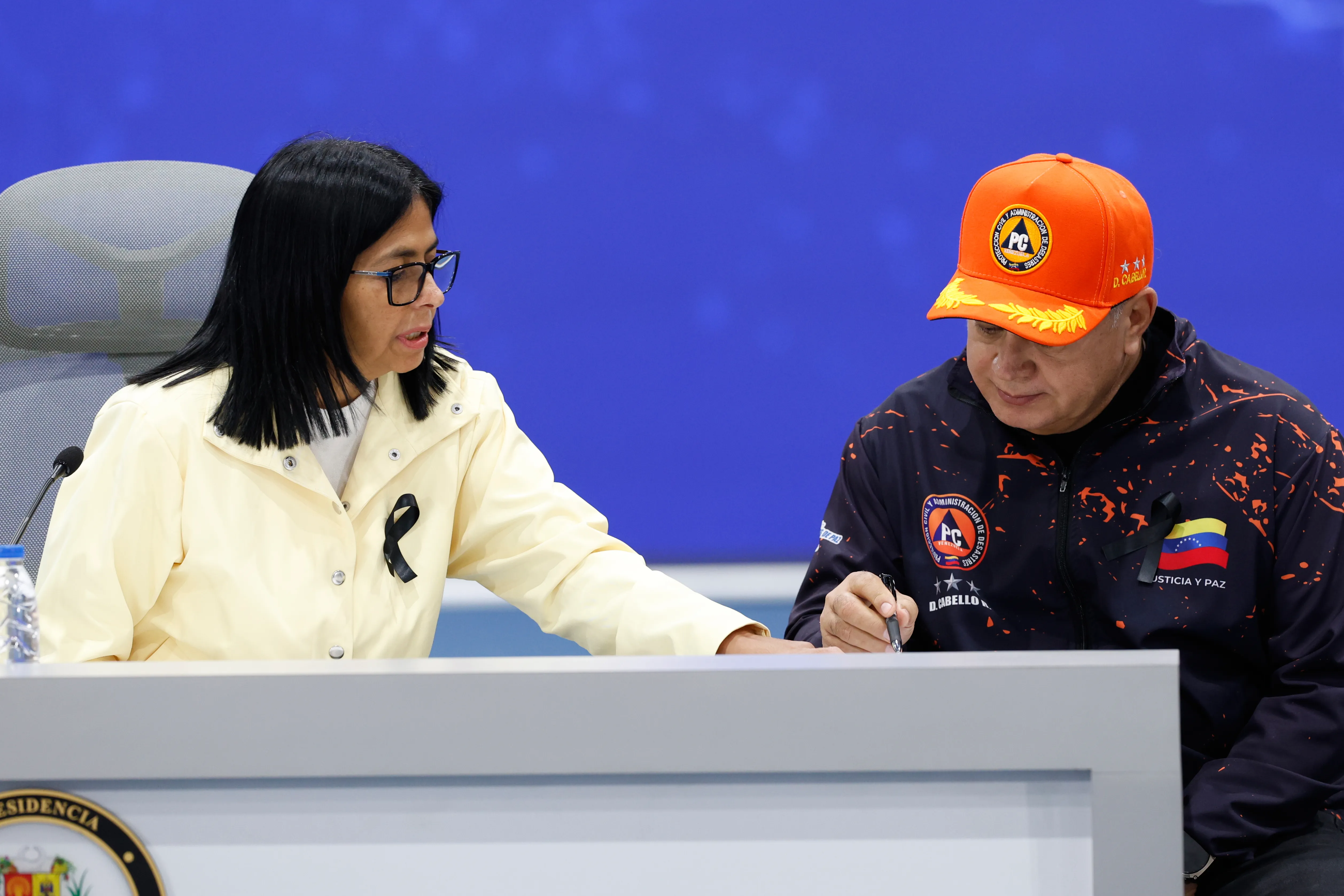
America’s daring Jan. 3 military raid seizing and removing Venezuelan ruler Nicolas Maduro was brilliantly successful. Tragically, however, the Trump administration’s underlying political strategy was flawed from the start. Maduro’s removal changed only the corrupt regime’s public face.
The Chavista gang itself remained in power: U.S. acquiescence simply empowered Maduro’s former subordinates, to the detriment of Venezuela’s people.
President Trump has had only praise for Maduro’s successor, Delcy Rodriguez. He has called her a “terrific person” and revoked existing U.S. sanctions and blocked Federal investigations against her . He has said that, under her rule, Venezuela is “a happy country .” Venezuelan political polling shows the opposite .
In fact, Trump did a huge favor for Rodriguez and her brother Jorge, head of the puppet National Assembly, by ousting Maduro. Real regime change is now unlikely unless the U.S. and Venezuela’s opposition promptly take decisive steps. That starts when opposition leader Maria Corina Machado is allowed to return home to engage in free, open political activity without intimidation.
The regime’s wholly inadequate response to the severe June earthquakes spurred massive public discontent . Media reports show that government-constructed buildings fared the worst, and that the regime built these structures despite knowing their earthquake vulnerability. Since June, power outages have reached levels not seen since the catastrophic 2019 failure of the national power system . Despite “reforms” to encourage foreign investment in the domestic energy sector, it remains unclear whether thoroughgoing reconstruction is achievable.
So too in the petroleum industry, where resurrection is critical to economic prosperity, and which the White House has touted as ripe for American investment. That has proven false. Major U.S. oil companies, still stung by earlier nationalizations, have hung back. They grasp the considerable capital investments required, and they want a true rule-of-law environment — which is nowhere on the horizon — before making commitments. Instead, there is merely superficial change.
The country’s decayed, decrepit oil infrastructure faces basic chicken-and-egg problems. One example is Venezuela’s port facilities, inadequate for meeting petroleum-export demand, which is especially high now because of the Iran war .
Word-of-mouth reports from interested, small-to-medium-size U.S. drillers is that dealing with Venezuela’s state-owned oil monopoly remains nearly impossible, as it is still unwilling to lessen its iron grip. Even where success is initially reported, deals run into trouble from powerful Venezuelan interests.
Controlling the revenues from oil exports is key. Very little is known either about the offshore U.S. account that receives these revenues initially, or what happens after money is transferred to Venezuela’s central bank. The estimated $13 billion so far seems to have had little effect inside the country . It is unclear whether Washington is not releasing large amounts to Caracas, or the money just disappears once there.
There is no dispute that the Central Bank remains under the Chavista regime’s control. That almost certainly means funds are used to reinforce regime control, aiding supporters and icing out opponents. In short, while superficial U.S. management exists, the regime still makes key decisions on revenue allocation.
Despite (or perhaps because of) these problems, the Rodriguez siblings have entrenched themselves in power while posing as meekly carrying out Washington’s orders. Secretary of State Marco Rubio asserts that he is pressuring the regime toward elections, but proof of real progress is scant.
Observers from the U.S. Council on Foreign Relations and Britain’s Chatham House have called progress toward democratization inadequate . Rubio’s biggest mistake has been sidelining Machado, excluding her from negotiations over possible elections. This is effectively helping Rodriquez divide and conquer the opposition . Even Machado’s gift of her Nobel Peace Prize medallion to Trump has failed to bring him around.
The most obvious evidence the regime is gaming American efforts to move toward elections is that Interior Minister Diosdado Cabello remains firmly in power, and his notorious motorcycle gangs, known as “colectivos,” are still out in force . Any serious democratization plan requires Caballo’s expulsion from office beforehand and the colectivos’ dissolution.
Another imperative is returning all remaining Cuban intelligence and security agents to Havana. Trump correctly stopped Venezuelan oil exports to Cuba, resulting in some agents being shipped home. How many remain, however, is highly unclear , since Cubans have been operating in Venezuela covertly.
Accordingly, Washington must require full transparency from the Rodriguez gang, and high confidence from the U.S. intelligence community when the Cubans are truly gone. Significantly, Washington has an important pressure point for cross-checking whatever Caracas says. Rubio should tell Cuba’s rulers we want full disclosure from them, or their eventual overthrow will only be harder on them, and sooner.
The real centerpiece, however, is Machado’s return home. If, as the White House claims, we control the country, surely we can ensure her safety, and opposition safety generally, including those still awaiting release from prison. We should tell Rodriguez we will hold her personally responsible if any harm comes to Machado. Political liberty and economic recovery in Venezuela will come through pressure, not through the beneficence of the Chavista regime.
John Bolton was national security adviser to President Trump from 2018 to 2019 and U.S. ambassador to the United Nations from 2005 to 2006. He held senior State Department posts at times between1981 and 2005.
Topics in this story
Gathered from external sources. Rights to this text belong to whoever originally published it.