Beyond the airport: Today’s aviation security must evolve to prevent modern threats
As the holiday season approaches, congested flight schedules and packed airplanes will challenge already strained security operations at America’s airports. Aviation security must extend beyond the checkpoint.
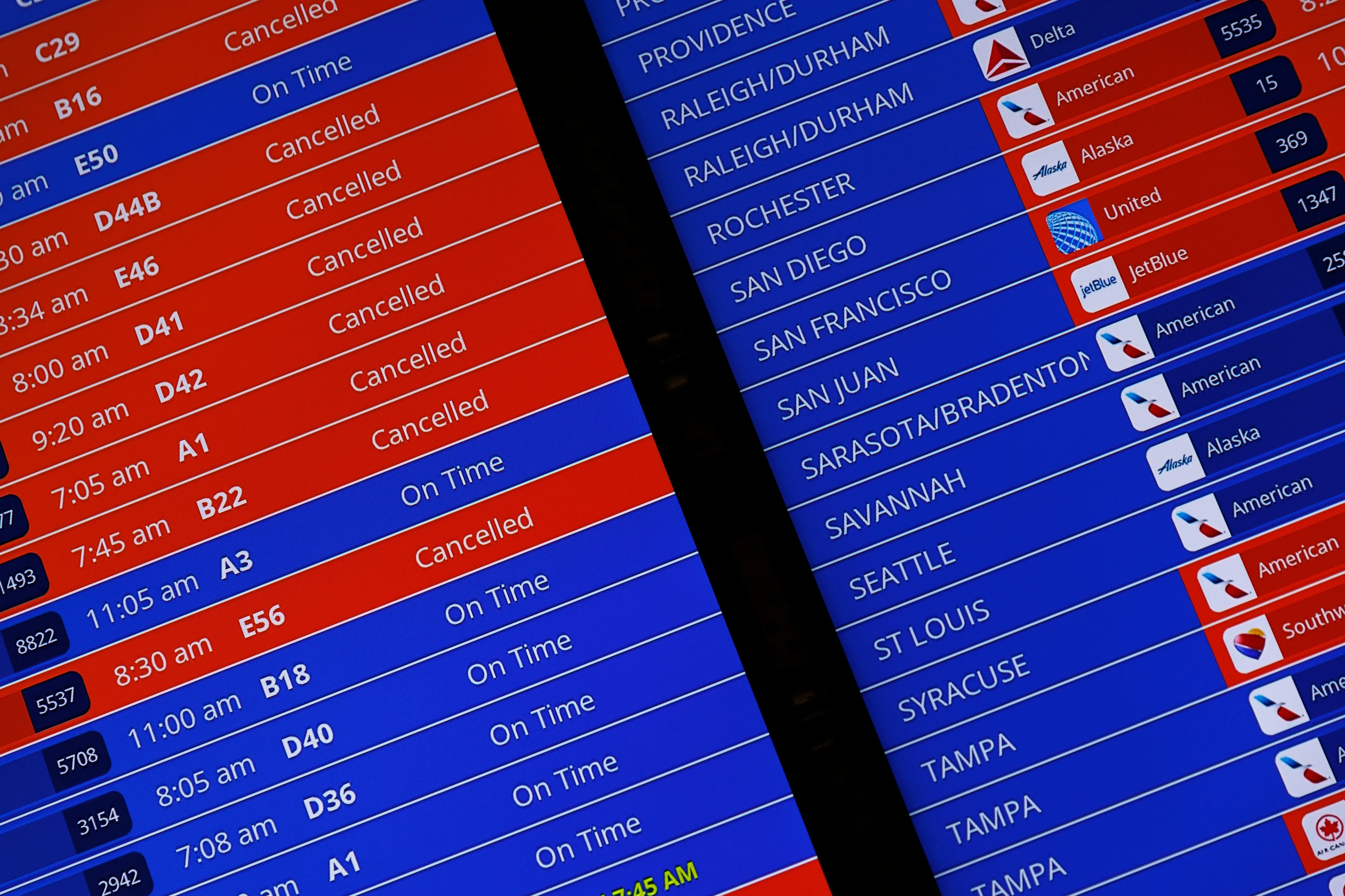
Air travel has been the safest mode of transportation for decades. The Federal Aviation Administration and the Transportation Security Administration both play critical roles in keeping it that way. Last week’s nationwide air system shutdown highlights why safety is always the primary concern, as several other recent events raise questions about whether aviation risks are changing — and whether security policies are keeping pace.
The incident on the FlyDubai flight from Dubai to Tel Aviv in late September, where a co-pilot attempted to take control of an airplane and fly it into Israel’s main airport passenger terminal, highlights the problem of insider threats. This has placed a spotlight on pilots, underscoring the need for comprehensive background vetting of anyone in control of an airplane.
Then there is the improvised explosive device found in a men’s room trash can at the George Bush Houston Intercontinental Airport on the anniversary of the 9/11 attacks. Given that this IED was discovered on the sterile side of the airport, questions remain about how it entered without detection.
Security breaches around airport perimeters , which occur around two to three times per month , on average, have also been in the news. While most prove to be harmless intrusions, one recent breach at Denver International Airport led to the perpetrator being struck by a Frontier airplane during takeoff. The TSA’s emphasis on airport security checkpoints makes sense, given the risk calculus; however, focusing so heavily on them may leave perimeter vulnerabilities with insufficient attention.
As disturbing as all these risks may sound, drone warfare in Russia’s war with Ukraine and the Middle East conflict suggests that drone attacks around airports may be a growing threat . The FAA receives around 100 reports of unauthorized drones around U.S. airports every month. The presence of drones, particularly when airplanes take off or land, poses a threat to air safety that will only increase with time and cannot be ignored. Last month’s Houthi attack at the Riyadh airport demonstrates that aviation infrastructure remains a prime target for terrorist attacks.
TSA Administrator David P. Cummins earlier this year introduced the Horizon 25 Strategy to enhance aviation security across multiple dimensions. Though drone risks are mentioned, TSA investments continue to focus heavily on airport screening lanes, including the deployment of computed tomography machines for carry-on bags, which may eventually lead to a relaxation of the agency’s 3-1-1 liquids restriction .
While airport security checkpoints are the most obvious avenue to introducing threats into the air system, they are by no means the only one.
The TSA has pulled back on several initiatives when new programs were reassessed and found not to provide ample levels of security or value. For example, it terminated the Gold+ program in August, shifting focus back to the Screening Partnership Program , which centers exclusively on privatizing airport screening personnel. It also paused the expansion of the Gateside by TSA’s PreCheck program, leaving the 13 pilot airports in place.
Limited resources constrain efforts to address other aviation-security threats. Checkpoints consume around 70 percent of the TSA budget , and for good reason — they screen around 2.5 million passengers every day on average , acting as both a barrier and a deterrent against known threats. The problem is that screening lanes are also bottlenecks, encouraging those with malicious intent to look for less-guarded pathways to cause harm and disruption. Identifying ways to redirect such resources without compromising security is challenging, but necessary.
When my research helped lay the groundwork for risk-based screening and TSA PreCheck, the goal was to focus scarce resources on unknown threats. One way to achieve this today is by incentivizing more travelers to enroll in trusted traveler programs like TSA PreCheck and Global Entry, perhaps even exploring ways to offer them at no cost to some travelers willing to undergo the required background check. The Horizon 25 program hopes to add 20 million more people to PreCheck over the next three years.
Expanding voluntary passenger vetting has multiple benefits. It reduces system risk and permits more people to use expedited screening lanes that are faster to traverse and reduce passenger waiting times. These lanes also require fewer TSA personnel and less expensive technologies to operate. Expanding participation offers a cost-effective way to free up resources for emerging threats that cannot be mitigated at airport checkpoints.
As the holiday season approaches, congested flight schedules and packed airplanes will challenge already strained security operations. The risk may be small in absolute terms, but the consequences are enormous. Preparing for well-known threats remains necessary, but it is no longer sufficient. Aviation security must extend beyond the checkpoint, with resources allocated to protect the entire system.
Sheldon H. Jacobson, Ph.D., is a professor of Computer Science at the University of Illinois Urbana-Champaign. He applies his expertise in data-driven risk-based decision-making to evaluate and inform public policy. His research on risk-based security laid the foundation for TSA Precheck.
Topics in this story
Gathered from external sources. Rights to this text belong to whoever originally published it.