Israeli isolation grows as Britain spearheads new ban on trade with settlements
Israel’s international isolation is growing this week after the United Kingdom, Canada and France all announced they would move to restrict trade with settlements in the occupied West Bank. Tellingly, it’s not yet clear how hard the Trump administration will fight back on Israel’s behalf. The British government, helmed by newly installed Prime Minister Andy…
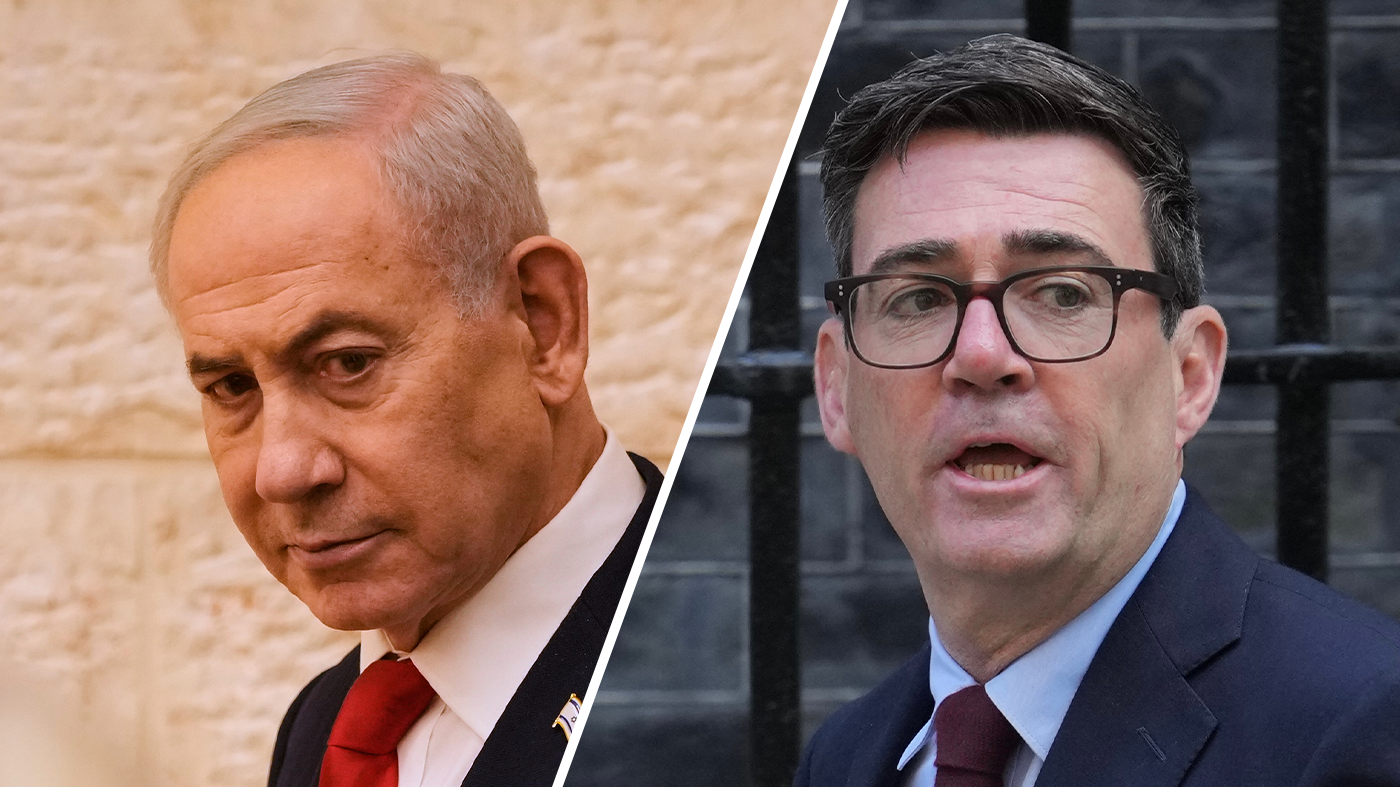
Israel’s international isolation is growing this week after the United Kingdom, Canada and France all announced they would move to restrict trade with settlements in the occupied West Bank.
Tellingly, it’s not yet clear how hard the Trump administration will fight back on Israel’s behalf.
The British government, helmed by newly installed Prime Minister Andy Burnham, led the charge on the settlements issue.
The U.K. is moving to ban imports of goods and some services from the settlements — though of course this does not apply to Israel itself, as defined by its pre-1967 borders.
British Foreign Secretary Ed Miliband has accused some Israeli settlers of “ethnic cleansing” because of efforts to drive Palestinians from their homes in the territory, which was seized by Israel in the Six-Day War almost 60 years ago.
A United Nations report in late July noted that 18 Palestinians had lost their lives so far this year in attacks by settlers.
The U.N. also stated , “The number of settler attacks has increased each year since 2023 following the brutal Hamas attacks on southern Israeli communities, rising to 1,835 last year.”
The government of Israel has reacted with fury to the British move, with Foreign Affairs Minister Gideon Sa’ar calling it “despicable.” Israel has also ordered the closing of the British Consulate in east Jerusalem, among other countermeasures.
But the reaction from the Trump administration has been more muted than some observers expected.
Secretary of State Marco Rubio told reporters Tuesday that “obviously” the United States would not replicate Britain’s actions, but he stopped well short of outright condemnation.
Of course, that could change at any moment — including with a blast from President Trump’s social media accounts or during the Republican midterm convention underway in Dallas.
But the cautious reaction so far appears indicative of a shifting political landscape, in the United States and globally, when it comes to Israel.
Speaking Tuesday in the British Parliament , Miliband noted, “Today France and Canada are announcing, alongside Britain, that they will also ban the import of goods from illegal settlements.”
A further nine nations signed up alongside those countries in a joint statement from their foreign ministers that condemned “unprecedented levels of settler violence and settlement expansion.”
The nations involved — including Denmark, Finland, Iceland, Ireland, Norway, Poland, Portugal, Spain and Sweden — confirmed they intended , or were “actively considering” actions “to introduce national and/or support European restrictions on trade in goods with settlements which are illegal under international law.”
The U.S. remains far and away Israel’s most vigorous defender on the global stage. This is true under Trump, just as it has been under previous presidents.
However, the current administration has expressed a measure of exasperation at times with Israel, a pattern that is interwoven with Trump’s turbulent relationship with Israeli Prime Minister Benjamin Netanyahu.
At a Group of Seven conference in June, Trump said Netanyahu needed to be “more responsible with respect to Lebanon” and clearly implied he believed Israeli actions to be disproportionate.
“You don’t have to knock down an apartment house every time you’re looking for somebody because there’s a lot of people in those apartment houses — and they’re not all Hezbollah,” Trump said then.
The same month, Vice President Vance told Fox News that while the U.S. and Israel sometimes had “shared interests,” it was true that “we also have some situations where our interests diverge.”
In a separate interview on a conservative podcast, Vance also complained about the tendency of the most pro-Israel voices to condemn almost any criticism of the nation, or of Netanyahu, as rooted in antisemitism.
“It’s just not the case that every criticism of Bibi Netanyahu’s policy decisions leads to antisemitism or is antisemitic,” he said.
To be sure, it’s important not to overstate the extent to which the Trump administration is willing to distance itself from Israel.
Almost every time such issues bubble up, the White House stresses that Trump sees himself as a greater friend to Israel than any other president. He has also in the past suggested Jewish Americans should vote for him because of his support for Israel.
All of that being said, the administration seems well aware of just how much the traditional American backing of Israel has been disrupted.
The main cause is the Israeli assault on Gaza that followed Hamas’s Oct. 7, 2023, attacks. The Israeli offensive in Gaza has killed more than 70,000 people after around 1,200 Israelis were killed on Oct. 7.
But the American debate over Israel has also been roiled by the perception in some quarters that Netanyahu overly influenced the launching of the joint war against Iran with the U.S.
Prominent conservative commentators including Tucker Carlson, Megyn Kelly and former Rep. Marjorie Taylor Greene (R-Ga.), have voiced the kinds of criticisms of Israeli influence on U.S. foreign policy that had rarely been heard in mainstream conservatism in recent decades.
Those voices draw fierce opposition, but there is little question that the underlying picture is changing.
Earlier this year, Gallup polling showed , for the first time in its history, more Americans sympathizing with the Palestinians over the Israelis.
This is largely driven by left-leaning voters, but it is not confined entirely to them. In July, when an Economist/YouGov poll asked whether Netanyahu had damaged U.S.-Israel relations, a sizable minority of Republicans — 30 percent — said that he had.
The political center of gravity in Europe is several measures more skeptical of Israel.
Polling for the European Council on Foreign Relations earlier this month found 72 percent of Britons in favor of a trade ban with the settlements and only 28 percent opposed.
Public opinion in the United States is not there — yet. But some voices in Israel are expressing clear concern for the trajectory their nation appears to be on.
Writing in The Times of Israel this week, diplomatic reporter Lazar Berman asserted that the British decision, backed up by Canada and France, “underscores how ineffective Israel’s government has been in maintaining support among erstwhile Western partners, who are increasingly unhappy with Israel’s treatment of the Palestinians.”
It remains to be seen just how much Trump will seek to shore up that support.
Topics in this story
Gathered from external sources. Rights to this text belong to whoever originally published it.