GOP lawmakers unhappy with lack of progress on Iran war
Senate Republicans aren’t happy with the lack of progress in the Iran war and what they say is the administration’s failure to identify clear objectives to end the conflict. The war continues to be a major drag on GOP candidates as the failure to reopen the Strait of Hormuz and new threats facing oil exports…
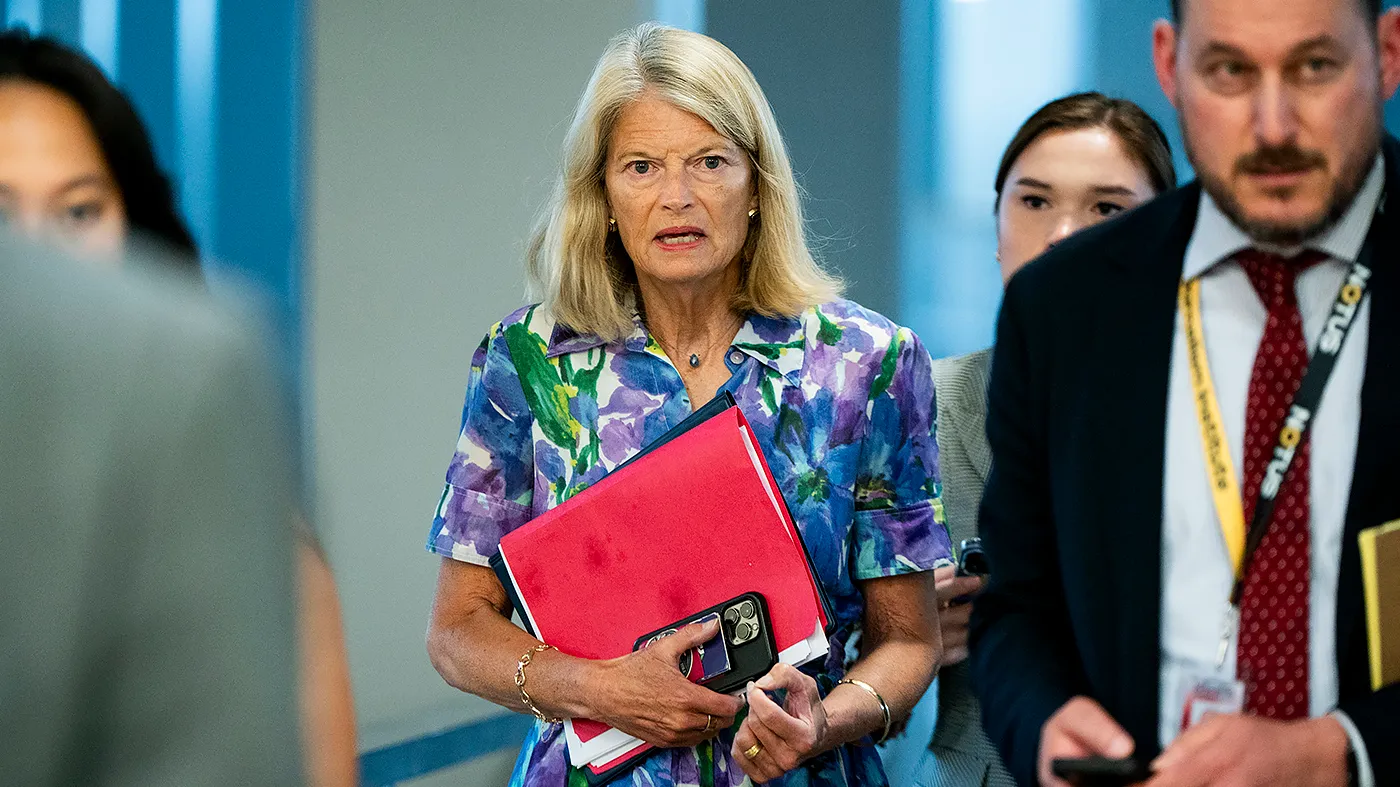
Senate Republicans aren’t happy with the lack of progress in the Iran war and what they say is the administration’s failure to identify clear objectives to end the conflict.
The war continues to be a major drag on GOP candidates as the failure to reopen the Strait of Hormuz and new threats facing oil exports from Iranian-backed Houthi militias have sent the prices to nearly $106 a barrel, while raising the national gas price average to $4.37 a gallon.
But Republicans are particularly concerned about the war’s impact on the price of diesel, which has soared to a national average of $6.31 and hit several Senate battleground states — including Alaska, Nebraska, Iowa and Maine — especially hard.
Some Republicans are now floating the idea of embargoing diesel exports produced in the United States to lower prices.
Republican Sen. Lisa Murkowski (Alaska) expressed frustration over “the lack of just transparency and information from the administration on what’s happening, what we should expect, the costs,” joining other GOP senators who have expressed similar grievances.
Murkowski said senators received a cost estimate for the conflict from Defense Secretary Pete Hegseth just before the August recess but haven’t had any significant updates since then.
“I don’t think that the president ever really made the case for, ‘This is why I’m going into Iran now, this is the objective, these will be the metrics along the way,’” she said. “I don’t think that was ever fully articulated.”
“As I’m talking to Alaskans, they’re saying, ‘Wait a minute, he said we were going to be in and out in a matter of weeks. And not only are we still there but this is what I am feeling in my community when it comes to the cost of the war,’” she added. “I’m not satisfied with where we are. Not at all.”
Murkowski’s colleague Sen. Dan Sullivan (R-Alaska) faces a tough reelection race in what is now a key race for the GOP.
President Trump said in March the conflict would likely last only four or five weeks. Instead, it has dragged on for nearly seven months.
He declared “total and complete victory” early on but has not reached a peace deal to resume oil shipments through the Strait of Hormuz.
Sen. Joni Ernst (R-Iowa), a member of the Armed Services Committee, said voters “would love to hear a clear message coming from the administration” about the war’s objectives and the plan for ending it.
Ernst said voters are particularly concerned about high fuel prices.
“They don’t want to see ground troops going in but certainly they do believe in having a non-nuclear capable Iran,” she said.
Two House Republicans from battleground districts in Iowa voted Wednesday with five other Republicans and Democrats to pass a war powers resolution directing Trump to end the conflict with Iran.
GOP Reps. Zach Nunn (Iowa) and Mariannette Miller-Meeks (Iowa) voted for the resolution after previously voting against it, underscoring the mounting pressure on Republicans in swing states and districts.
Recent polls show the Iowa Senate race between Democratic state legislator Josh Turek and Rep. Ashley Hinson (R-Iowa) is very close — with some polls showing Turek ahead by a few points and others showing Hinson in the lead.
Sen. Susan Collins (R), who faces a tough race in Maine, said Iran posed a national security threat, but she faulted Hegseth for failing to fully anticipate the leverage Iran would have if it shut the critical Strait of Hormuz for months.
“There’s no doubt that Iran is the greatest sponsor of terrorist groups around the world, is pursuing a nuclear weapon, and has an extensive inventory — or did — of ballistic missiles. Having said all of that, it does not appear to me that the secretary of Defense or War had a clear plan,” she said, referring to Hegseth.
“For example, the closure of the Strait of Hormuz should have been anticipated. It happened during the Iraq-Iran war and it’s an obvious point of leverage but there doesn’t seem to have been any plan for it,” Collins said.
Sen. John Curtis (R-Utah) said voters in Utah are overwhelmingly concerned with “affordability” and are linking “gas prices” to the war.
But he declined to comment on the administration’s handling of the conflict, saying that’s “an hourlong answer.”
Polls show that a large majority of Americans disapprove of Trump’s handling of the war and think it was a mistake to start the conflict.
A New York Times/Siena poll of 1,503 voters conducted from Sept. 8-13 found that 66 percent of likely voters disapprove of the war while only 31 percent approve.
The survey also found that 63 percent of voters think Trump’s decision to go to war was the wrong decision while only 32 percent think it was the right move.
Sen. John Cornyn (R-Texas) said public support is weak for the conflict in part because of the president’s failure to clearly articulate his plans and objectives.
“I support the president’s efforts there, I just wish we had a better articulation about what exactly our objectives were,” he said.
“If the president was clearer on what the objectives were that we were trying to achieve, I think [constituents] would be more patient. But in the absence of that, I think there’s just confusion,” the Texas senator added. “I think if we had a little bit better articulation of what the goals are I think we’d have better acceptance.”
The war is affecting Saudi Arabia’s ability to ship oil through the Red Sea, which could raise oil and gas prices even higher. Iranian-backed Houthi rebels have seized strategically important islands near Red Sea shipping lanes and damaged an important oil pipeline that Saudi Arabia had used as an alternative route to the Strait of Hormuz.
Sen. John Kennedy (R-La.) said the Trump administration is doing a good job putting economic pressure on Iran with sanctions and a naval blockade, but he warned the spread of the conflict through Houthi militias is troubling.
“The problem of course is the strait and now the Red Sea,” he said. “I don’t know what our military response is going to be with respect to the Houthis.”
“The Houthis are dug in those mountains pretty well. I would hope that the other countries in the Middle East would help, and I would hope that other countries in the world would help but I don’t know if they will or not,” he added.
Topics in this story
Gathered from external sources. Rights to this text belong to whoever originally published it.