Overton’s nomination withdrawal means no clear end for FDA leadership vacuum
The White House’s abrupt withdrawal of Heidi Overton as President Trump’s nominee to lead the Food and Drug Administration (FDA) means the agency will remain without stable leadership six months after the former commissioner resigned, leaving industry observers anxious. The Trump administration’s last-minute pulling of Overton’s nomination caught senators by surprise this week. Sen. Bill Cassidy (R-La.), chair of the Senate Health,…
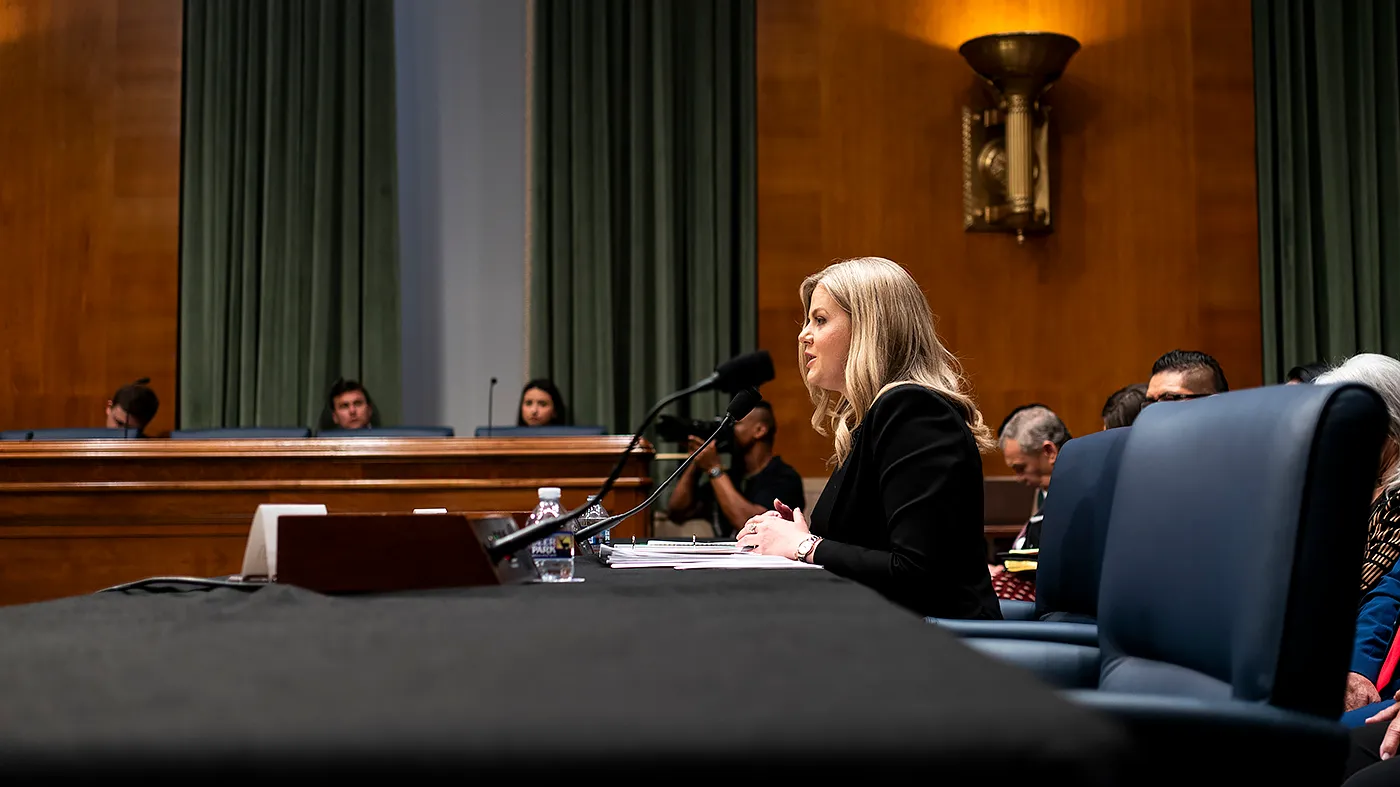
The White House’s abrupt withdrawal of Heidi Overton as President Trump’s nominee to lead the Food and Drug Administration (FDA) means the agency will remain without stable leadership six months after the former commissioner resigned, leaving industry observers anxious.
The Trump administration’s last-minute pulling of Overton’s nomination caught senators by surprise this week. Sen. Bill Cassidy (R-La.), chair of the Senate Health, Education, Labor and Pensions (HELP) Committee, voiced his belief that Overton had enough backers to advance out of the committee ahead of a previously scheduled vote on Wednesday.
“The WH said that this was because she did not have the votes to pass. This was odd as I was having productive conversations with members,” Cassidy wrote on social media .
Democratic senators were also left puzzled by the sudden decision, though some, like Sen. Patty Murray (D-Wash.), were committed to blocking Overton’s confirmation due to her history of criticizing the abortion pill mifepristone.
According to CNN , senior health officials were similarly caught off guard by Overton’s retracted nomination, with even the nominee’s team only learning of it from media reports.
CNN reported that Overton’s prior clashes with Health and Human Services Secretary Robert F. Kennedy Jr., recently empowered with the ascent of a Make America Healthy Again (MAHA) movement-supportive Stephen Miller as White House chief of staff, were the nail in the coffin when it came to the nomination, citing sources familiar with the matter.
The FDA has been without permanent leadership since former Commissioner Marty Makary stepped down in May . Since then, the FDA’s Deputy Commissioner for Food Kyle Diamantis has been serving as acting commissioner of the agency.
Despite the widespread confusion, Chris Meekins, healthcare policy analyst at the investment firm Raymond James, opined that Overton’s withdrawal came as no surprise.
“When Overton was selected in August, we warned her lack of management experience and ties to the Makary era could undermine efforts to stabilize FDA,” Meekins wrote, noting that his firm had given her less than 50 percent chance of being confirmed by the end of the year.
“Had the White House heeded warnings by many before and after her nomination, they could have avoided this unfortunate outcome. The cost is lost time for an agency struggling to rebuild confidence among staff, patients, and industry,” Meekins added.
Outside the Senate, Overton’s confirmation process faced intense pushback from groups concerned with her history regarding mifepristone and vape products. Overton had authored a policy that relaxed standards for fruit-flavored vapes, which critics argue entice children and young people into buying the nicotine-laced products.
The White House has not offered any new names, and Cassidy does not appear open to any more nominees, writing on social media, “Unfortunately, with the limited time left, confirming a permanent FDA Commissioner will fall to Senate Democrats.”
These developments mean the FDA will be without a permanent leader for the rest of this year and potentially months into 2027. Any new nominees from the Trump administration will have to overcome a solidly Democratic-controlled Senate, first needing to get past a HELP Committee that will be controlled by Sen. Bernie Sanders (I-Vt.).
With Miller as chief of staff backing Kennedy, it’s unclear whether a more tempered nominee will be put forth. Semafor reported that the White House is considering Sen. Roger Marshall (R-Kan.), who lost his reelection bid this month, as a potential pick.
Regardless, the conditions on the ground suggest the agency in charge of the country’s food and drug supply will remain rudderless for the foreseeable future. Diamantis, the acting commissioner, has reportedly turned down offers to take on the role permanently.
Leadership vacuums at health agencies have become a pattern in the second Trump administration. The Centers for Disease Control and Prevention (CDC) went a year without permanent leadership after the White House unceremoniously fired former Director Susan Monarez less than a month after her confirmation.
Former CDC Director Robert Redfield warned — in an op-ed written prior to Overton’s nomination being pulled — that an unstable FDA would mean ceding the U.S.’s biotech leadership to China.
“Due to the China biotech threat and the acceleration of innovation overall, the FDA is an agency that finds itself at a critical moment to lead the world or fall further behind. Inconsistent, unstable FDA leadership jeopardizes the opportunity to reform the agency to advance cutting-edge therapies and stymies investment, as the FDA process is increasingly seen as prohibitive,” Redfield wrote in a piece published by the Journal-Courier.
The pharmaceutical industry is similarly eager for the FDA to get back on steadier ground.
“A strong, science-driven FDA is essential to protecting patients and maintaining America’s leadership in biopharmaceutical innovation. We appreciate the agency’s recent efforts to modernize and efficiently review medicines, strengthen domestic manufacturing and provide greater regulatory predictability while maintaining FDA’s rigorous standards for safety and effectiveness,” Chanse Jones, spokesperson for the pharmaceutical trade organization PhRMA, told The Hill in a statement.
“Our focus remains on supporting an FDA that gives patients confidence in the safety and effectiveness of their medicines and vaccines. That stays the same, regardless of who leads the agency,” he added.
Topics in this story
Gathered from external sources. Rights to this text belong to whoever originally published it.