21 years after Hurricane Katrina, FEMA is still failing
The post-Katrina era was defined by lessons learned. Today, America’s disaster preparedness is in a precarious position.
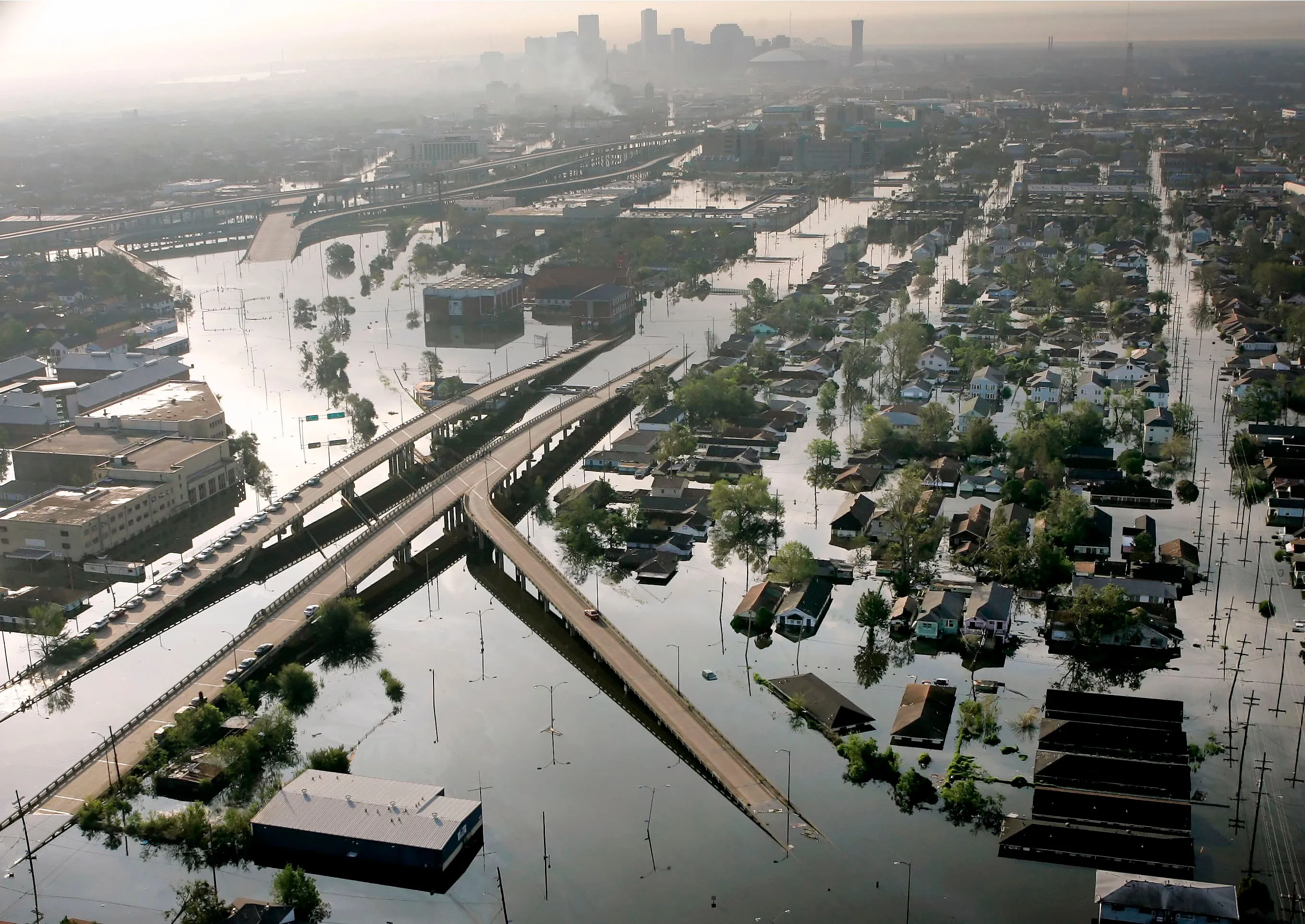
Twenty-one years ago this week, Hurricane Katrina battered the Gulf and the Mississippi Coast and changed thousands of lives forever. New Orleans, the crown jewel of my home state of Louisiana, suffered a direct hit, with a storm surge that overwhelmed federal levees and inundated the city.
Low-income families, the sick and the elderly were left stranded. Entire neighborhoods flooded. Images of desperate families clinging to rooftops while they awaited rescue by air or by boat filled news coverage, filling Americans with sadness for their fellow citizens and anger for the slow response in the early days of the response and recovery.
When the storm first hit, there was a great expectation that the federal government would do more to help on the ground — and respond faster. As I have told many a citizen since, however, the storm had a vote. A disaster is never something that can be fully prepared for: by definition, it is an event that overwhelms existing infrastructure and capacity for response. If help can be delivered right away, then that was never really a true disaster.
We learned many lessons after Katrina, both about preparedness and disaster response and recovery. FEMA, the Federal Emergency Management Agency, went from being a little-known acronym repeated mostly by inside-the-Beltway types and folks who lived in areas prone to natural disasters to a household name . There was a great push to professionalize the agency, moving experts up through the ranks and bringing in professionals from the states who had experience in disaster management. Katrina’s postmortem became the manual for storm preparedness and recovery in the years that followed.
Unfortunately, all of that has since changed.
After years of heightened public awareness, increased funding and agency growth, FEMA has been choked, left without adequate resources to serve the American people. Nested within the Department of Homeland Security, the agency has been the victim of neglect as the department became weaponized against civilians, its budget used for publicity stunts instead of public service.
When Kristi Noem took over Homeland Security, she famously did so with the mission of dismantling FEMA . At the time, both she and the White House agreed that disaster management should fall entirely on the states. The world saw in real time just how effective the Noem plan would be.
A massive storm in Texas caused the Guadalupe River to flood, suddenly and dramatically. The fast-rising flood waters would ultimately kill 135 people in central Texas , including children sleeping away at summer camp . FEMA, whose leadership was already determined to gut the agency and whose capabilities were limited by a requirement that Noem personally approve expenditures over $100,000 , had done nothing to prepare.
Prior to that tragic event, the so-called Department of Government Efficiency had taken a machete to government offices, including the National Weather Service . Even still, the agency had the power to forecast the storm. Under Noem, however, that forecast never translated into meaningful action to save lives.
Today, FEMA is again led by someone too inexperienced for the position. Cameron Hamilton, who was confirmed just two weeks ago, was deemed “unqualified” by the Union of Concerned Scientists. Prior to this post, he served as an associate administrator, though his appearance before Congress for his confirmation left much to be desired. Since assuming his role, his response to his fellow citizens in need has been lackluster, whether they be confronting the water crisis in Puerto Rico or wildfires in the west .
Ultimately, it’s American taxpayers and disaster victims who will pay the price of neglecting FEMA. Storms, fires, quakes and other disasters don’t care if they hit a red state or a blue state, and they don’t consider who their victims once voted for. This administration does, however, allocate disaster relief funds for “red” states at three times the rate they do for “blue” states. Say what you will about George W. Bush , but I never heard him even joke about withholding emergency relief because a certain city or state didn’t vote for him.
As our atmosphere and oceans continue to warm, you can fully expect more wildfires, more heat domes, more flooding and more powerful — and frequent — tropical storms. Now is not the time to decentralize or degrade our nation’s disaster response apparatus. It’s time to invest in a system capable of handling this century’s threats and challenges.
To do that, we must elevate FEMA to a Cabinet-level agency. An institution with such a critical mission cannot be lost in the bureaucracy of the massive Department of Homeland Security.
Just as essentially, we must stop politicizing disaster relief. Tragedy can strike anywhere. Refusing to lend life-saving aid because of politics is perhaps the most un-American thing I can think of.
On the 21st anniversary of Hurricane Katrina, let’s come together to demand better of those sworn to serve us. We are all in this together, and it’s time our leaders in Washington remember — especially when tragedy strikes.
Lt. Gen. Russel L. Honoré (Ret.) is a former U.S. Army general who led response and recovery efforts in New Orleans following Hurricane Katrina.
Topics in this story
Gathered from external sources. Rights to this text belong to whoever originally published it.