The blue wave that broke Trump’s Republican map
Democrats soared to victory Tuesday night across races for Congress and governors’ mansions, and are set to retake power in Congress by higher margins than the party has had since last century. It’s a striking condemnation from voters of the war in Iran and President Trump’s leadership of the Republican Party. Midterm elections are usually…
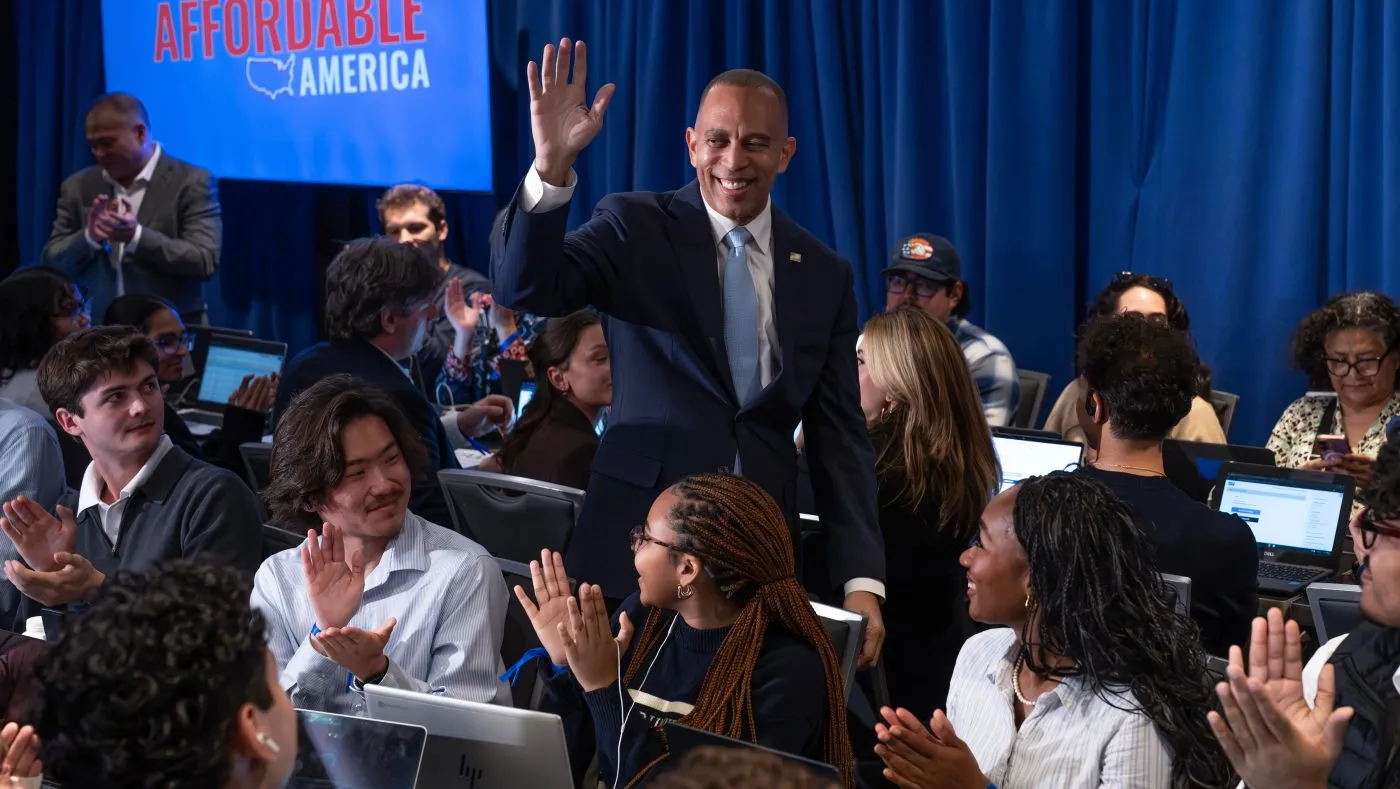
Democrats soared to victory Tuesday night across races for Congress and governors’ mansions, and are set to retake power in Congress by higher margins than the party has had since last century.
It’s a striking condemnation from voters of the war in Iran and President Trump’s leadership of the Republican Party.
Midterm elections are usually a referendum on the party in power, and often result in at least one chamber of Congress flipping. But this “blue wave” goes even further, delivering at least 6 seats in the Senate and at least 24 in the House.
Democrats also swept statewide races, flipping at least 4 governorships.
In the House, the party is likely to have a majority as large as 254 seats, big enough to allow for defections, a cushion Republicans did not enjoy over the last two years.
Democratic leaders, predictably, are doing victory laps and planning their next moves.
“There is now a generational remake of the Senate map that is going to change America now and on into the future,” said Senate Minority Leader Chuck Schumer (D-N.Y.) on Tuesday night. “Americans voted for change, and now Democrats must deliver.”
“MAGA extremists are on the run from sea to shining sea,” said Rep. Hakeem Jeffries (D-N.Y.), who is likely to be the next Speaker of the House.
Republicans, meanwhile, are licking their wounds. The party will likely head into a scattered season of figuring out what the best way forward will be as the 2028 presidential race begins – without Trump.
“Trump’s iron grip on the Republican Party is a melting ice cube,” said Dan Eberhart, a Republican donor.
Texas-based Republican strategist Brendan Steinhauser dubbed the night an “utter disaster” in a text message to The Hill, including a gif of the Titanic sinking.
Some Republicans are already pointing the finger at Trump: his handling of the war in Iran and his attempt at kingmaking candidates like Texas Attorney General Ken Paxton, against the party’s wishes, who ultimately lost.
“Iran War 100 percent. Corruption 100 percent. Bad candidates 100 percent. One common denominator for them all…Trump,” one Republican strategist told The Hill.
Trump laid blame on his absence from the ballot, arguing that he would have won in a landslide if he was up for election himself. The president also notably lashed out at Texas Gov. Greg Abbott (R ), who lost his reelection bid, after the governor noticeably stayed far away from Trump on the campaign trail.
“Tonight is further proof that Republican candidates can’t take turnout for granted when President Trump isn’t on the ballot,” one Trump world source told The Hill.
“Democrats are renting many of these seats, and the independents who voted for them will swing back hard after two years of a socialist majority and a serious case of buyer’s remorse,” the source added.
Trump made himself a centerpiece of the Republican campaign effort, urging voters to “pretend” he was on the ballot. Republicans argued that deploying Trump on the campaign trail would help the party replicate its 2024 turnout, but the strategy had the opposite effect.
“It’s a rejection of Trump’s rallies and closing arguments. His coattails were not long enough,” Eberhart said.
Sen. John Curtis (R-Utah), in a Substack essay published Tuesday night, encouraged Republicans to learn from this election and return to the roots of the party, which he described as “limited government, free trade, resolute diplomacy and global leadership, and fiscal responsibility.”
“Unfortunately, by putting aside our core values, we’ve let down a lot of those same Americans who recently joined our party,” Curtis wrote. “Instead of finally seeing relief on prices after the reckless Biden years, they saw a hastily planned war disrupt oil markets. Instead of enjoying a restoration of order and integrity in our government, they read headline after headline of scandals, incompetence, and corruption. Instead of economic stability and fiscal prudence, they saw the public debt balloon past $40 trillion—leading to volatile markets. Instead of peace through strength, they saw the leader of the free world side with Putin over a strategic ally.”
Curtis, who was elected last year, could be a thought leader in the Republicans’ next chapter of redefinition.
Democrats’ wins in specific races also pointed to those issues where Trump and Republicans by extension were losing ground quickly with voters.
In Kansas, Democrats were bullish in recent months as voters grew more disenchanted with immigration enforcement raids that affected the meatpacking industry; with diesel and gas prices and with the economic effects of tariffs. Those voters sent a Democrat to the Senate for the first time in nearly a century.
In Iowa, too, voters pushed back on mainstream Trump-backed candidates for Senate and governor. Tariffs and agricultural impacts of the war have hit Iowa hard, and the state’s high cancer rate put health care and environmental policy in a central spotlight that favored Democratic platforms. In Ohio’s Senate race, some gubernatorial races and many House races around the country, Democratic candidates seized the upper hand on regulating data centers and pushing back on the tech industry.
As they take stock of what voters don’t want, Democrats are also looking ahead to what the cushy majority will allow them to do. Ending the Iran war has been a central focus for Democrats’ 2027 wishlists, and with a broad majority in both chambers, they will have more leeway to choke off funding or otherwise compel the administration to end the conflict.
The midterms could also be a referendum on Trump and congressional Republicans’ signature legislation, the “One, Big, Beautiful Bill” signed into law last year that cut some taxes and caused many Americans to lose Medicaid benefits. This has also been a key fixture of Democratic attack ads, and leaders have signaled they’re eager to jump into restoring health care benefits and further strengthening the federal safety net.
The main legislative goals Democrats have outlined have to do with their central campaign trail word: “affordability.” That could mean specific legislation designed to cut costs, but Schumer suggested it could also mean investigations into the administration.
“Our number one focus has to be producing for the American people in terms of their number one need, the high costs that Trump has imposed on them,” Schumer said. “And second, to go after the corruption. This is the most corrupt administration in American history.”
Oversight has been a chief topic: Jeffries and his leadership will be empowered to carry out investigations against Trump administration officials and even pursue impeachment proceedings, although some Democrats have cautioned against leaning too hard.
Rep. Robert Garcia (D-Calif.), the likely next Chairman of the House Committee on Oversight, summed his intentions up in a post on X: “LAWYER UP.”
Sen. Ron Wyden (D-Ore.), likely top Democrat on the Senate Finance Committee, which oversees tax policy, just said : “Subpoenas.” Sen. Ed Markey (D-Mass.) replied in a similar vein to a post on X suggesting “live televised trials of Big Tech executives.”
Trump appeared to offer a conciliatory tone in an interview on Fox News just after midnight, going as far as to compliment Democrats on their work in the election.
“I think the Democrats did a good job. I really do. I think they did a good job. They fought hard,” he said.
The president also did not rule out working with Democrats in Congress on issues including immigration.
“I’m a person who likes getting things done,” Trump said, noting he and Republicans can’t work with Democrats on everything.
“But I can work with them on a lot of things. I mean, we can work with them on immigration. I think immigration is a big deal,” he said.
Gathered from external sources. Rights to this text belong to whoever originally published it.