El-Sayed walks political tightrope in Michigan with Hasan Piker
Abdul El-Sayed is walking a political tightrope in the Michigan Senate race as the Democratic nominee enters the final stretch of his campaign, looking to shore up support among skeptical Jewish voters without outright disavowing controversial left-wing streamer Hasan Piker. El-Sayed has also faced pressure to disavow Piker, who campaigned for El-Sayed during the primary…
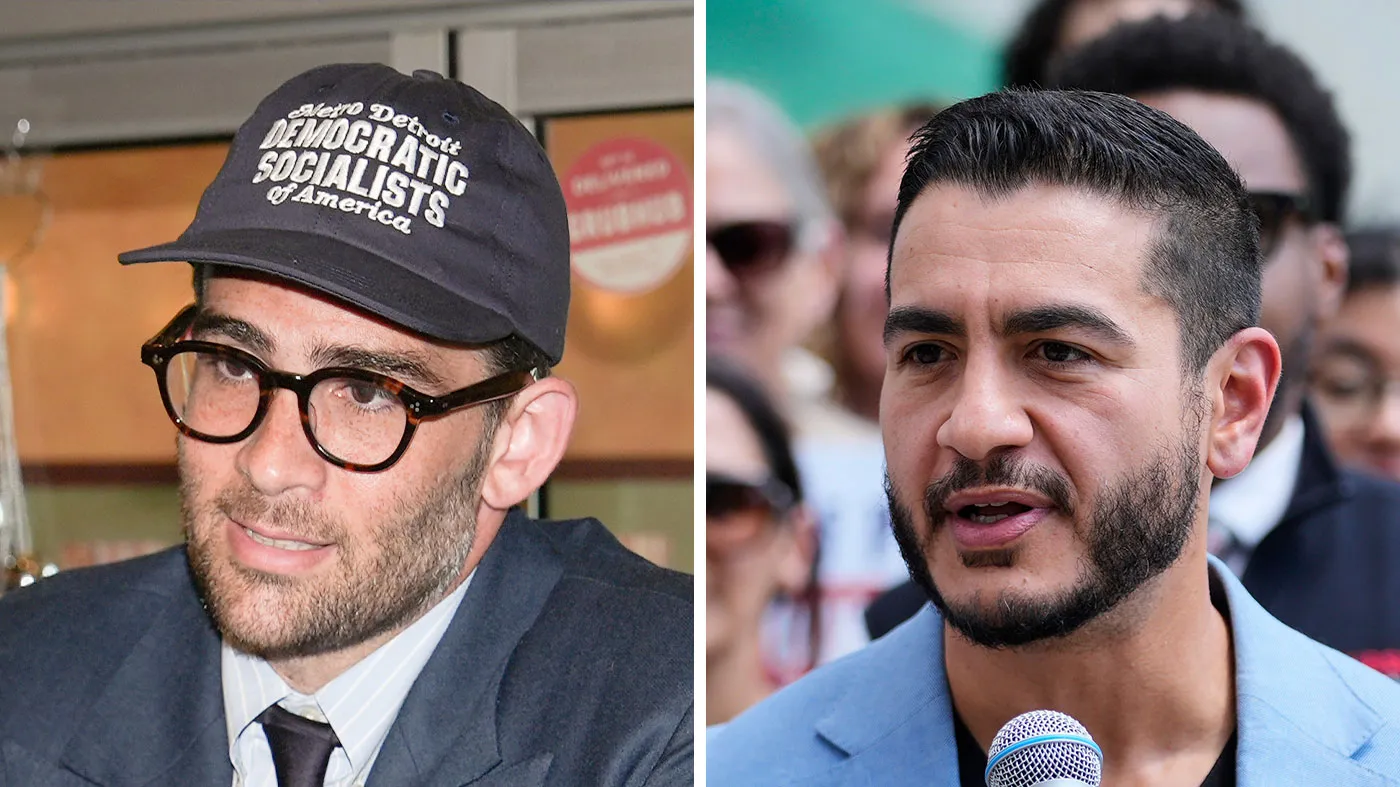
Abdul El-Sayed is walking a political tightrope in the Michigan Senate race as the Democratic nominee enters the final stretch of his campaign, looking to shore up support among skeptical Jewish voters without outright disavowing controversial left-wing streamer Hasan Piker.
El-Sayed has also faced pressure to disavow Piker, who campaigned for El-Sayed during the primary and has come under fire for several controversial statements, including suggesting Jewish Americans who support Israel have themselves to blame for violence that may befall them.
El-Sayed condemned the comments but has resisted calls to disavow Piker.
On Monday, he made clear he had no intention of denouncing Piker, pushing back in an interview against what he described as a “massive effort to cancel Hasan” and suggesting Piker’s critics were taking the streamer’s remarks out of context.
“They’re trying to equate him and David Duke, and him and Nick Fuentes,” El-Sayed said on “ The Breakfast Club” radio show. “The fact that they’re working so hard to character assassinate him suggests that there is a disjunct there between what he’s actually saying and what people hear him saying who actually pay attention.”
“If anybody starts to pick you apart out of context, it’s never done in good faith,” he added.
The approach has left some Jewish Michiganders unconvinced, questioning whether an apology El-Sayed offered over the weekend — for saying “hurt people hurt people” in reaction to the March attack on the Wolverine State’s largest synagogue — was sincere.
Joan Lowenstein, the Michigan Democratic Jewish Caucus’s endorsement chair, said she was glad to hear El-Sayed call the March incident a “terrorist attack,” but she described his apology as a “carefully crafted statement” that addressed the timing of his remarks, not the substance.
The attacker on the Michigan synagogue was Lebanese and had family — including a brother who was a high-ranking Hezbollah commander — who died in an Israeli airstrike a week before the attack in Michigan.
“He apologized for putting it in context only a couple of days after the attack happened, and so that kind of left open the question: Why would you have to put a terrorist attack on preschoolers in any kind of context?” Lowenstein said.
The apology was just one step El-Sayed has taken to try to win over Democrats who may have opposed him during a divisive primary. El-Sayed’s campaign also confirmed that it is hiring a Jewish liaison as the candidate works to build bridges in the community.
But it’s unclear if that will be enough for El-Sayed to really make inroads with his critics, particularly as his association with Piker lives on.
Michigan-based political consultant Adrian Hemond said both the apology and the addition of a position dedicated to Jewish outreach are steps in the right direction.
“They definitely have their work cut out for them, in terms of getting folks back in the boat who have concerns about some of the views that he’s expressed. And it’s probably pretty late in the game to get started. Absentee ballots go in the mail in two-and-a-half weeks in our fair state,” Hemond said. “But, you know, it’s a start.”
Matt Grossmann, a political science professor and director of the Institute for Public Policy and Social Research (IPPSR) at Michigan State University, said El-Sayed’s apology “doesn’t seem to have stopped the concerns, but it’s taken as evidence that he’s listening to them.”
He also noted the debate has largely played out among political elites, rather than voters.
“The other side of it is that he doesn’t want to come off as a flip-flopper or someone who’s abandoning his positions, or to sound too much like a politician,” Grossmann added. “So I think that’s the other consideration that’s driving his decisionmaking.”
El-Sayed has blasted efforts to “cancel” Piker or to dismiss him as just a “single streamer from California” who does not speak for his campaign. Part of that may be by necessity.
“He invited the guy to come to Michigan to campaign for him in a primary election,” Hemond said. “You can’t un-ring that bell.”
“You can say he doesn’t want to talk about a streamer from California,” he continued. “Bro, you brought the streamer from California here to campaign for you. It doesn’t matter if you want to talk about it. People are going to talk about it.”
Politically, El-Sayed’s approach to Piker could find some support in new polling from the IPPSR . The poll, released Tuesday, shows some voters — as expected — are inclined to back Democratic gubernatorial nominee Jocelyn Benson, Michigan’s secretary of state, but are not yet on board with El-Sayed.
But the poll also shows a big age divide — with some young voters supporting only El-Sayed’s campaign but not Benson’s.
“That does suggest that there is a potential downside” to splitting with Piker, Grossmann said. “So I think he’s trying to toe that line.”
Grossmann said El-Sayed could benefit from preserving his image of authenticity and being different from other politicians who quickly cave to party demands.
“There is a general potential positive narrative for El-Sayed that he’s not a normal politician and that he’s willing to take on the establishment, including people in his own party that he doesn’t want to lose,” Grossmann said. “And so I think that’s part of the consideration for how much he’s willing to step out, say, against Piker.”
Topics in this story
Gathered from external sources. Rights to this text belong to whoever originally published it.