On the Ballot: Democrats’ huge freshman class has bigger plans than passing an agenda
The incoming class of House freshmen are already plotting how to shake up and shape up Congress in the coming weeks. Just two weeks since their historic elections, new House Democrats want to pass big-ticket agenda items like reversing Medicaid cuts and banning members from trading stocks as some of the first priorities in one…
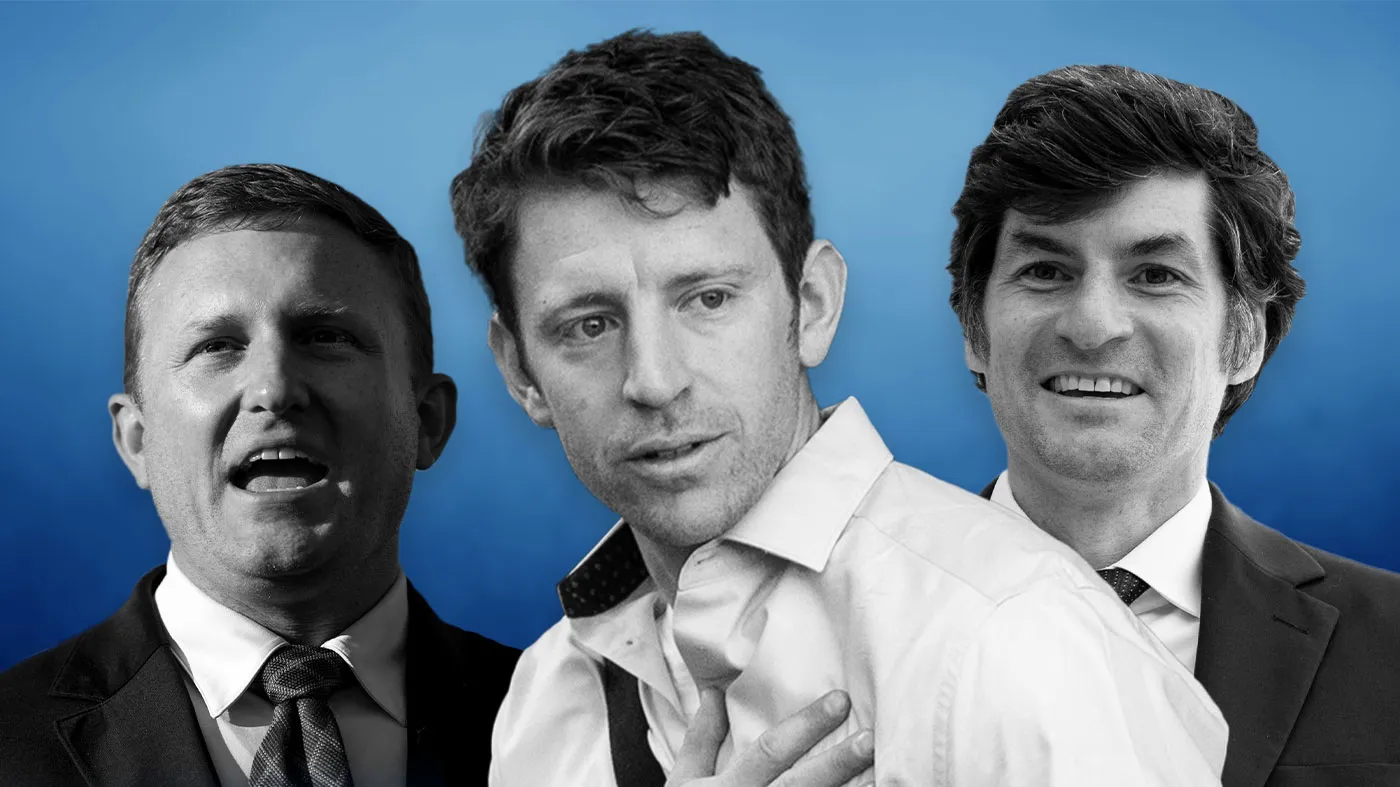
The incoming class of House freshmen are already plotting how to shake up and shape up Congress in the coming weeks.
Just two weeks since their historic elections, new House Democrats want to pass big-ticket agenda items like reversing Medicaid cuts and banning members from trading stocks as some of the first priorities in one of the party’s largest majorities in Congress in recent memory.
But the new freshmen Democrats – whose resumes include smokejumper, mayor, state lawmaker and emergency nurse – are also eager to change the culture in and around Washington, D.C., looking to make it more reflective of the people who helped usher them into office and leaning into bipartisanship.
“I want to see, frankly, more of what I am happy to see in our freshman class, like just normal working people who are in the halls here,” Rep.-elect Sam Forstag (D-Mont.), a smokejumper and union leader, told The Hill. “It is far too rare a thing for a working-class person to make it up here nowadays, and that is a fundamental issue of representation, as I see it.”
The new class of Democratic House freshmen are set to enter their largest majority since at least 2008, the last time the party held at least 257 seats in the lower chamber. But with some House races still uncalled by Decision Desk HQ, House Democrats may see the kinds of numbers they last saw in the 1990s.
In 1992, Democrats held 258 seats in the lower chamber, though it may be harder to top the 1990 cycle, when the party won 267 seats.
More than half of the American labor force consider themselves working-class, but lawmakers with that background — manual labor, service industry and clerical jobs — make up just 2 percent of Congress.
The majority of Congress were millionaires for the first time in 2014. Nearly three-quarters of the current senators now hit that benchmark.
The incoming Congress changes those numbers, after 17 union members won their races this month.
Running for Congress is “a really big ask for even a well-situated person,” Nicholas Carnes , a public policy professor at Duke who has studied working-class representation in government, said. “But for a working-class person who has a job that’s maybe a little more precarious, who doesn’t have a lot of savings, who can’t afford to just like upend their lives to take a chance on politics. That’s going to be an impossible ask for a lot of working-class people.”
Some members are seeing that disconnect in real time.
“You can tell we’ve had a long history of wealthy people being elected because that’s really the way a lot of it’s set up, from the way you secure your housing and get transported — most of the stuff is not covered by the government,” Rep.-elect Cyril Jefferson (D-N.C.), the current mayor of High Point, N.C., told The Hill.
“You got to pay for it personally. Campaign funds can’t pay for a lot of things, and so I only share that because I think we’ve got a ways to go to truly get our government back to where it’s a government of common people,” he added.
Inversely, it makes it harder for Congress to advocate for issues on the minds of working-class voters if too few are represented in the chambers, Carnes said.
“Politicians bring their whole life experiences with them to office, and when you don’t have people with life experience in working class jobs, your institutions don’t have access to the information they need to really represent the interests of workers,” Carnes said.
The burden of campaigning itself is one major hurdle for the working-class candidate, according to Carnes. On top of the personal risks that plague any candidate, working-class people are more likely than professional counterparts to say they’re worried about taking time off or paying bills along the campaign trail. That could also lead major party players and interest groups to favor white-collar candidates instead.
Rep.-elect Matt Little (D-Minn.), a former state senator and attorney, said one of the biggest things that’s surprised him about running for Congress has been the amount of time he had to dedicate to fundraising.
“The speeches and the in-person stuff is so — such a small part of congressional campaigning. It’s all on the phone trying to raise money,” Little said. “That’s the bulk of it, and we’ve got to change that, too.”
“You can’t accurately represent people if all you do all day is call people that can give you $1,000 or more,” he added.
Some groups, like the New Jersey AFL-CIO’s “Labor Candidates School,” are trying to give working-class candidates the tools they need to run. Carnes and other researchers have also proposed seed money programs for workers, targeted political scholarships and reserved party leadership seats for working-class people as potential reforms.
This year’s midterms also elected a historically diverse slate of candidates that increases representation across key demographic blocs.
A record-breaking 155 women are set to serve in the 120th Congress, or nearly a third of Capitol Hill – representing 51 percent of the country.
Sen.-elect Abdul El-Sayed (D-Mich.) is the first Muslim American elected to the Senate. Sen.-elect Peggy Flanagan (D-Minn.) will be the first Native American woman in the Senate. A record three Black women will serve in the Senate at the same time. And as Rep.-elect Michael Alfonso (R-Wisc.), age 26, becomes the youngest person in the House, incoming senators are nearly 15 years younger, on average, than departing ones.
The new freshmen are taking different approaches to how to shake up the culture in Congress and around Washington, D.C.
“I don’t know anything about the culture before that I’m stepping into, but what I’ll say is the perception is there’s not a lot of bipartisanship. I would like to change that,” Rep.-elect Zach Dembo (D-Ky.), a former federal prosecutor and former Navy JAG officer, told The Hill. “I just organized a little informal bipartisan mixer yesterday with like 10 of us because so many of us were saying we wish we had a chance to talk across the aisle, so I’d like to do a lot more of that.”
Little, from Minnesota’s 2nd Congressional District, said that he wanted to prove to voters that candidates can be consistent between what they campaign on in their home states and back in Washington, D.C.
“You don’t have to get sucked into the culture or the money, and you can do exactly what you said on the campaign trail here,” the Minnesota Democrat said.
In addition to looking for more working-class representation in Congress, Forstag quipped “we can start with the ties” when asked how he was personally looking to shake up the culture in Congress.
Jefferson, meanwhile, said he wanted lawmakers to lean into compassion while having difficult conservations.
“We can take the political fight where we need to take it, while also making sure that we don’t lose our humanity and our decency in the process,” he said.
Welcome to The Hill’s On The Ballot. We’re Julia Mueller and Caroline Vakil — reach out to us on X ( @jmthewriter + @CarolineVakil) or via email ( jmueller@thehill.com + cvakil@thehill.com.)
An inside look at Sen.-elect Scott Colom’s winning strategy in Mississippi.
Few campaigns have amassed as much attention this cycle as Sen.-elect Scott Colom ’s (D) shocking upset against Sen. Cindy Hyde-Smith (R) in Mississippi.
While the Colom campaign has become synonymous with the “Pick Another Protein” ad — in which the Mississippi Democrat mocks Hyde-Smith for suggesting voters can enjoy other sources of protein while beef prices are still high – his brother, Andrew Colom , told On The Ballot that the reception to their content didn’t necessarily start out positive.
“We’re doing ads after ads after ads for a year and a half, and … the DC consultants were definitely saying, ‘You guys are doing too many ads,’ but they were definitely wrong,” Andrew Colom said. “I mean, definitely all the ads we were doing, not only were they refining our skills, but they were just always tripling down our message.”
Colom, a filmmaker and co-founder and chairman of the investment and real estate company Century Partners, told On The Ballot that their ads had received some traction earlier on during the campaign, including one where the senator-elect visits a grocery store in Hyde-Smith’s hometown and notes the prices of chicken, pork and catfish are expensive.
“It sho is,” a woman working in the grocery store’s meat department tells the camera each time.
The attention early on from MS NOW anchor Symone Sanders and Sen. Angela Alsobrooks (D-Md.) also felt like a key turning point in the campaign, Andrew Colom said.
Another ad Sen.-elect Scott Colom’s campaign did that attracted attention was one based off the 2025 “Sinners” movie , which is set in the Mississippi Delta during the 1930s. Andrew and Scott Colom, identical twin brothers, repurpose the roles of “Smoke” and “Stake” while treating Hyde-Smith as the ad’s “vampire.”
Andrew Colom said they spent a total of $4,000 on the ad.
“I remember that iconic image of Michael B. Jordan handing himself a cigarette on the smoking stack [that] I think became either the cover or one of the defining images of the artwork, so I was like, ‘Oh, you know what, I could do it instead of a cigarette,’” Andrew Colom said. “’I’ll pass him a brochure, and he can then pass it to the camera and … tell the camera, ‘We can do it together.’”
“We shot it in three hours, edited in like 12 hours, and then put it out,” he added.
Some of the people Andrew Colom noted who have been behind the senator-elect’s success include: Arun Chaudhary ; communications advisor; Patrick Gaspard , strategic advisor; Ryan Sayles , media; Kayland Partee , media; Elizabeth Nelson , digital director; Gerard Henderson , campaign manager; and Amanda Huber , finance director.
1 in 5 Trump voters believe Republicans will lose the White House in 2028 according to a Politico poll. The Hill’s Tara Suter has the latest .
Trump officials seek to ease anxiety over sweeping tech outages, The Hill’s Mallory Wilson and Julia Manchester report .
Sen.-elect Annie Andrews (D-S.C.) says a “generational change is coming” to the Senate with the new freshman class, The Hill’s Suryatapa Chakraborty writes .
As we turn to 2028, we’re asking folks in the elections space what they consumed on and off the 2026 campaign trail.
Filmmaker and brother of Sen.-elect Scott Colom (D-Miss)
Andrew Colom is the co-founder and chairman of real estate company Century Partners and a filmmaker, and he worked on creative content and advertising for Sen.-elect Scott Colom’s campaign. This conversation has been edited for length and clarity.
James Baldwin’s biography by Nicholas Boggs — “Baldwin: A Love Story.”
What album or podcast do you have on repeat?
Coffee with heavy cream. (Colom advises Cafe on Main and Sweet Shop in Columbus, Miss.)
What TV show are you watching right now?
I was rewatching “Mad Men” with my mom because she never watched it. [It] was definitely part of my drive for these ads. I definitely felt like me, Patrick and Arun and Ryan that we were kind of like Mad Men trying to create ads here at the end that would resonate.
Rubio leads, Ossoff rises in 2028 polling
Secretary of State Marco Rubio leads Vice President Vance in new polling on Republicans’ 2028 presidential field, while Georgia Sen. Jon Ossoff (D) climbs ahead of fellow Democrats.
A new Emerson College national poll showed that, in an open-ended question about the race, 36 percent of Republican primary voters said they’d support Rubio for the nomination — a double-digit lead over the 20 percent that supported Vance.
The scores mark a 30-point increase in Rubio’s presidential popularity since this time last year, and a 34-point drop for Vance.
Trump has floated both top allies as potential presidential candidates. Vance, long seen as the heir-apparent, told Fox News this week that he would decide on running “sometime next year.” Rubio has said he’s not planning on a run next cycle, but that hasn’t quelled speculation about his future political ambitions.
Across the aisle, Ossoff was leading other potential Democrats with 17 percent support from primary voters, but the field was still wide-open, with 32 percent of voters undecided about who they’d pick for the next White House race.
Ossoff, who just won another term in the Senate, committed along the campaign trail to serving out all six years and reiterated “zero interest” in a White House campaign, but political observers have continued to look to the Peach State senator as a rising star for the Democrats.
Monday, Dec. 7: Bipartisan Policy Center’s 2026 Elections Summit
Saturday, Dec. 12: LA-05 & LA-06 runoff elections
Scott Colom’s Mississippi miracle ( The New Yorker )
As MAGA melts down, MAHA is also breaking apart—starting with the moms ( Vanity Fair)
Why young ‘America First’ conservatives turned against Trump ( NY Magazine )
With house Democratic majority still growing, recounts are starting in closest races ( New York Times )
Why moderate Democrats are magnanimous in victory ( The Atlantic )
Topics in this story
Gathered from external sources. Rights to this text belong to whoever originally published it.