A commitment to the First Amendment should not be controversial
Across the country, I work with people and organizations that disagree profoundly about politics and public policy but share a basic principle: Americans must remain free to speak, associate, support causes and challenge those in power. That principle is being tested in uncomfortable ways. President Trump has threatened the Center for American Progress with a $5 billion…
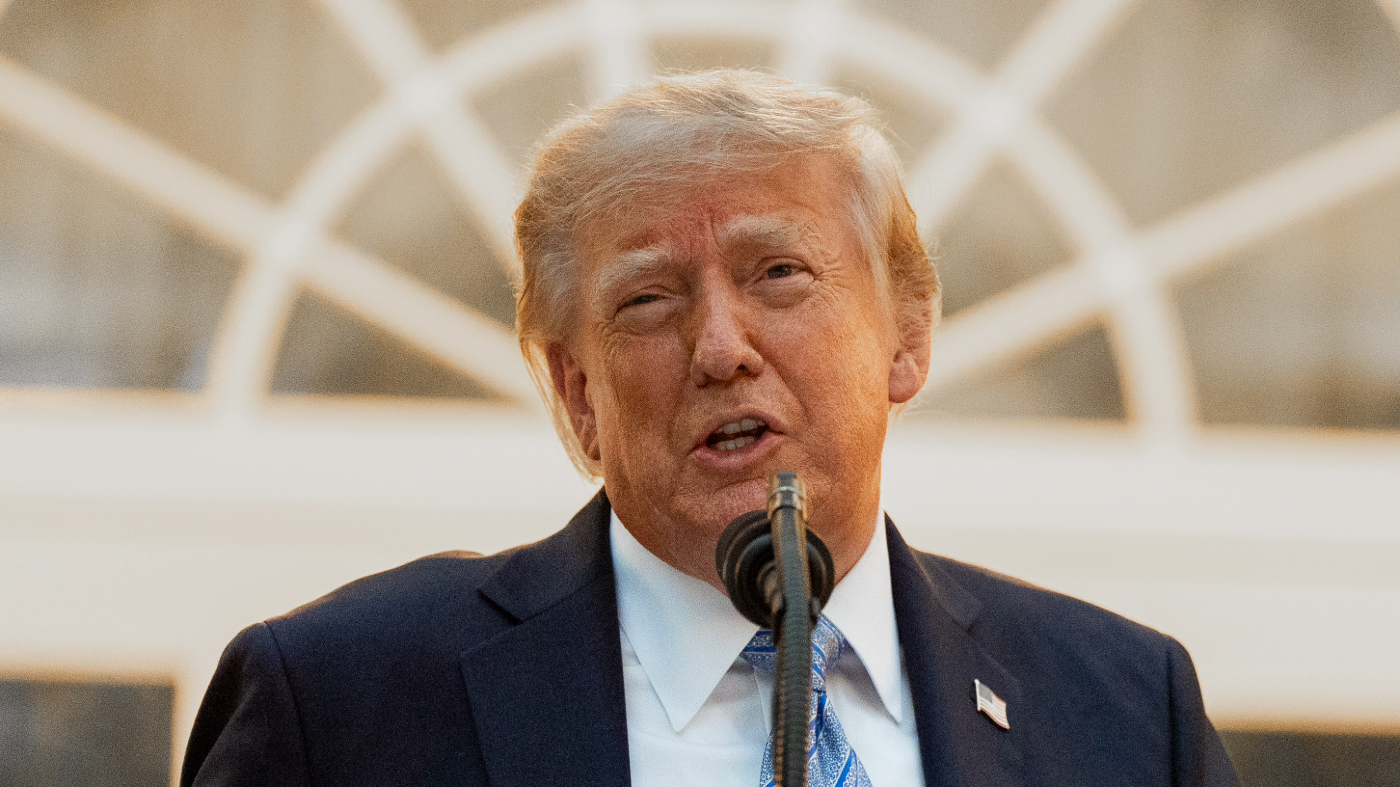
Across the country, I work with people and organizations that disagree profoundly about politics and public policy but share a basic principle: Americans must remain free to speak, associate, support causes and challenge those in power.
That principle is being tested in uncomfortable ways.
President Trump has threatened the Center for American Progress with a $5 billion lawsuit over a report questioning whether National Guard deployments reduced violent crime. He has also publicly singled out some of the organizations and individuals that have supported the progressive think tank.
The center has responded that disagreements over public policy should be resolved through “robust public debate, not through threats or intimidation.” Whether you agree with its politics or its conclusions is beside the point. On this principle, it is right.
Government officials should not use their power to intimidate private organizations because they dislike their research or policy positions. And people should not have to wonder whether supporting an organization that challenges a president, governor or attorney general will make them a target as well. But the principle thatthe Center for American Progress invokes should extend beyond this dispute.
Unfortunately, even as it defends its own ability to challenge political power, the Center for American Progress is promoting a state-level initiative that would prohibit other groups from doing the same thing in elections and ballot referenda. Called the Corporate Power Reset , the proposal would withdraw from corporations, including nonprofit corporations, the right to spend their resources on certain election-related advocacy protected by the First Amendment.
That proposal would not have prohibited the center from publishing its National Guard report. But if preventing corporate political influence is a sufficient reason to silence nonprofit voices in elections, then it is only a matter of time before that same justification is turned against nonprofits that speak about public policy.
Moreover, elections and ballot measures are part of the robust public debate the Center for American Progress rightly says America needs.
Consider a governor campaigning for a ballot initiative that would dramatically expand state authority in some areas — perhaps even to activate the National Guard. He can travel the state, command media attention and urge voters to approve it. An incorporated nonprofit that believes the measure threatens civil liberties may want to spend its own resources urging voters to reject it. Under the center’s proposal, it would be legally prohibited from doing so.
Preventing nonprofits from speaking about ballot measures does nothing to help voters or make elections fairer. It just gives political leaders more wiggle room to force through their agenda without public discussion or pushback. The same is true in candidate elections. Politicians do not lose their platforms when private organizations are restricted. That imbalance should concern Americans on the political left and the right.
The government possesses powers private organizations never will. It can tax, regulate, investigate, prosecute and compel. When the government gains greater authority over private institutions’ ability to participate in political debate, the result is not a more neutral public square. It is a public square in which those who already hold political power can muscle out their opponents and critics.
Trump’s targeting of the Center for American Progress is a preview of what that looks like. It also illustrates why freedom of association matters. The center chooses to disclose many of its supporters publicly. It has every right to do so. But when a president responds to an organization’s criticism by publicly identifying some of its financial supporters, it becomes easy to understand why other organizations might choose differently.
Some Americans are comfortable publicly attaching their names to controversial causes. Others may worry about retaliation from government officials, employers, customers or activists. The possibility of retaliation can discourage people from supporting organizations long before anyone actually retaliates. That is why private giving should always remain a choice.
There is a fundamental inconsistency in defending an organization’s First Amendment rights when government power is directed against it while simultaneously advocating policies that would restrict the political participation of other organizations. But this moment should be about more than pointing out hypocrisy.
Trump’s threats against the Center for American Progress are bad for public discourse. So are efforts to give the government greater authority to decide when private organizations may use their resources to participate in elections. Both should remind us why constitutional principles cannot depend on who happens to hold power or whose speech we happen to like.
Today, a Republican president is threatening a progressive think tank. Tomorrow, a Democratic governor could target a conservative nonprofit. Political power changes hands. The rules protecting those who challenge it must endure.
The answer to powerful politicians is not to weaken the institutions capable of challenging them. We need a renewed commitment to protecting the freedom of Americans, individually and together, to speak, associate and answer those who wield government power.
Heather Lauer is CEO of People United for Privacy Foundation.
Topics in this story
Gathered from external sources. Rights to this text belong to whoever originally published it.