Gen Z regrets Trump support and is midterm motivated
Thirty-one percent of Generation Zers who voted for President Trump say they regret it, a recent Navigator poll reports. Millennials followed at 28 percent, with 20 percent of Generation Xers and 10 percent of baby boomers saying they regret backing Trump, too. It’s another sign of the dismal polling Trump and the GOP are facing as Republican lawmakers…
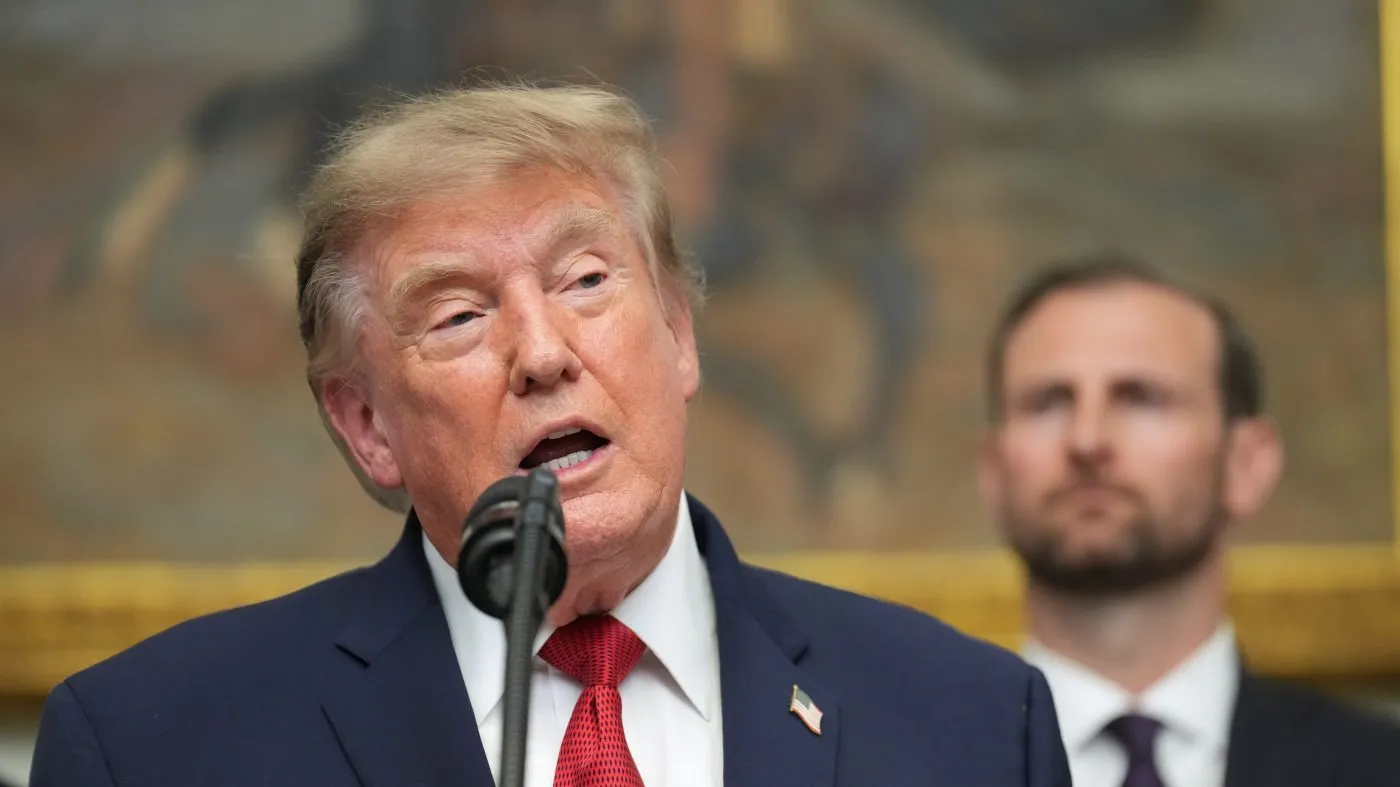
Thirty-one percent of Generation Zers who voted for President Trump say they regret it, a recent Navigator poll reports .
Millennials followed at 28 percent, with 20 percent of Generation Xers and 10 percent of baby boomers saying they regret backing Trump, too.
It’s another sign of the dismal polling Trump and the GOP are facing as Republican lawmakers brace for this fall’s midterm elections.
Gen Z was a significant source of votes for Trump in 2024.
He won 42 percent of voters born in the 1990s and 2000s, according to Pew Research Center , compared with former Vice President Kamala Harris’s 55 percent.
“Young Americans are telling us that politics is deeply important to who they are, but it doesn’t mean they’re happy with the current political system, or that they’re even optimistic about the direction of the country as a whole,” Tina Tang, director of polling and analytics at Navigator, told The Hill.
The survey also asked about the president’s approval rating. Gen Z had the lowest support for Trump, with only 33 percent of Gen Z respondents saying they strongly or somewhat approved of the way the president has handled his job.
Millennials once again followed at 38 percent, with Gen X at 39 percent and boomers at 41 percent.
The results are consistent with other Gen Z political trends, according to Tang. Forty percent of Gen Zers say politics is “very important” to their personal identity, the highest across all ages.
“Young Americans are disproportionately represented among people who are dissatisfied with Trump and the economy. It doesn’t mean they’re flocking to one party or another,” Tang said.
The researchers looked at economically persuadable Americans, or those who disapprove of how Trump is currently handling the economy but don’t necessarily trust Democrats to handle it better.
The results show that 18 percent of all Americans fall into that category, but Gen Z skews higher than other age groups at 22 percent.
“Gen Z is not a group that’s hard to understand,” Tang said. “Politics are important to them, but they are also pessimistic about the economy right now.”
Whichever party can lock down a clear strategy on affordability may have a higher chance at securing the Gen Z vote.
The Navigator study sampled 3,000 registered voters from June 4-July 27, with a margin of error of 2.2 percentage points.
To the ballot box: Gen Z may finally hit the polls
Election turnout among young Americans is notoriously low. New polling suggests that might change.
In their survey of young voters , URGE and HIT Strategies found that 93 percent of participants said they “will certainly” or “probably” vote in the 2026 midterm elections.
The results are at odds with statistics on youth turnout in past elections. A Pew Research Center poll found that 45 percent of respondents between the ages of 18 and 29 said they cast a ballot in the 2024 presidential election, lower than Americans aged 30 to 49 (55 percent), 50 to 64 (66 percent) and 65 and older (77 percent).
But maybe the tides are shifting, and the 49 million members of Gen Z who are eligible to vote in the midterms will finally show up to the polls.
“I think that Gen Z is finding themselves at a real make-or-break point,” Roshni Nedungadi, a founding partner and chief research officer at HIT Strategies, told The Hill. “And they’re trying to participate more and find candidates who resonate with their viewpoints and who are going to act on that positive change that they want to see.”
How Gen Z views political power might partially explain the lackluster turnout in past elections.
Nedungadi says that unlike older generations, who see voting as the primary way to engage politically, younger people have a broader understanding.
“Often with young folks, what they talk about first is what community groups they’re involved in, what, you know, what they’ve been reading about politics, or listening to about politics, on social media,” she said.
Progressive Gen Z political content creator Ricardo Longoria, 25, believes that’s changing. He points to the “affordability crisis” as the reason Gen Z might be more motivated to vote this fall than in previous elections.
“You know, we are seeing the importance that if we want any type of change in this country, we are going to have to vote,” Longoria told The Hill.
“I absolutely think we’re going to see an uptick in Gen Z voters voting in the midterms come November 2026. There are a range of issues that are very important to us, and we are tired of being left out of the conversation,” he added.
The URGE/HIT Strategies poll ran from June 24-July 9 and surveyed 2,950 respondents with a 2.85 point margin of error.
Social media platforms have all started to look similar, taken over by creators who spam teasers, cliffhangers from podcast interviews or notable quotes from political press conferences.
“Clipping” has dominated YouTube, TikTok, Instagram and the social platform X, and Gen Z is leading the pack. It is a marketing strategy in which influencers and livestreamers highlight specific parts of their content through short-form videos, designed to generate clicks by capturing heightened reactions, moments and commentary.
According to a 2025 Pew Research Center study , about 53 percent of adults say they at least get some news from social media, with a large slice of the pie coming from apps that have gained popularity because of clipping.
For those who interact with social media for news regularly, about 35 percent get their stories from YouTube, 20 percent from Instagram and TikTok and 12 percent from X.
Political commentators like Hasan Piker have perfected “clipping” to rack up views. Piker posts segments from his Twitch streams onto TikTok with auto-generated captions that highlight top moments. And it’s working.
Within the last week, Piker has generated more than 100,000 views on each of his TikTok posts, with some reaching up to 580,000 plays.
The same strategies can be seen in previews for Sean Hannity’s twice-weekly podcast “ Hang Out with Sean Hannity ,” showcasing top reactions from those on the show and back-and-forth political commentary.
As crazy as it might sound, there are also companies that specialize in clipping content, such as Clipping Culture and Fixated , which develop, produce and package content for brands and influencers.
Ed Elson, co-host of the “Prof G Markets” podcast with Scott Galloway, emphasized in an interview with The Atlantic that “if you’re not clipping that [podcasts] up and giving it to people in bite-size little shoots of information, the way that they are consuming information today — which is through their phones and online scrolling on social media, scrolling on TikTok, scrolling on Instagram, etc. — if you’re not doing that, people aren’t going to read it.”
One last thing: Hannah Montana helped introduce Gen Z to Dolly Parton
The late country music star Dolly Parton was a staple for many Gen Xers and millennials, but Gen Z got its first taste of the Queen of Country’s music through one of its big television stars: Miley Cyrus’s show “Hannah Montana.”
Parton appeared on three episodes of Cyrus’s show as her “Aunt Dolly,” helping Miley Stewart/Hannah Montana navigate paparazzi, boy troubles and music awards.
In a 2023 interview with The Hollywood Reporter , Parton said Cyrus’s show “made me a lot of new fans that follow me to this day because of her.”
“All those little kids now have grown up and they’ve followed Aunt Dolly all these years,” she continued in The Hollywood Reporter interview.
Cyrus posted a tribute to Parton on Wednesday, saying, “The feeling of losing my Aunt Dolly is beyond what feels right to share.”
“Our most sacred moments were private and they’ll stay there behind the stage. Beneath the glamour and between our hearts,” she continued in her Instagram post .
The Feed is a weekly scoop on Generation Z put together by three Generation Z editors at The Hill. We’re working to understand the ins and outs of our generation’s politics. Send tips or comments to awalker@thehill.com, jfeldstein@thehill.com or cleibowitz@thehill.com.
Gathered from external sources. Rights to this text belong to whoever originally published it.