Congress kicks AI fight down the road as lawmakers demand action
The debate over how to regulate artificial intelligence is being pushed past the November midterms, frustrating some lawmakers who warn that Congress is running out of time to address the rapidly evolving technology. With the House out of session and the Senate facing a crowded agenda before it departs for a monthlong recess, lawmakers are…
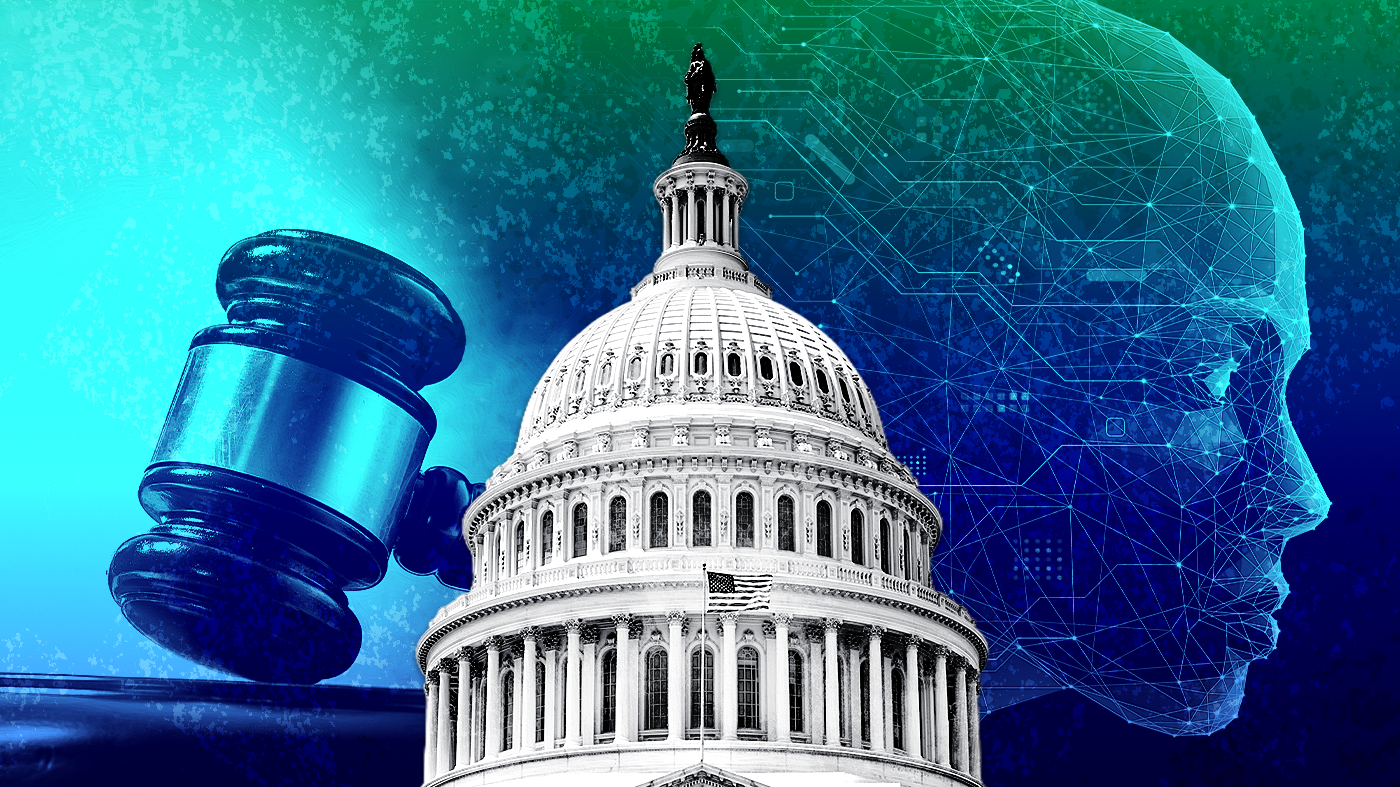
The debate over how to regulate artificial intelligence is being pushed past the November midterms, frustrating some lawmakers who warn that Congress is running out of time to address the rapidly evolving technology.
With the House out of session and the Senate facing a crowded agenda before it departs for a monthlong recess, lawmakers are confronting the prospect of yet another year passing without comprehensive AI legislation, even as worries about the technology hit an all-time high.
Some Democratic and Republican members argue that Congress needs to move faster on issues ranging from AI safety to national security and the technology’s impact on critical infrastructure, even as GOP leaders have cautioned against regulation that could stifle innovation or undermine the U.S. in its competition with China.
Though Speaker Mike Johnson (R-La.) and President Trump are set to meet with AI leaders next week, it is increasingly likely that legislation on the issue will be kicked to the postmidterm lame-duck session — or potentially even the next Congress.
“I know we have been trying, both Democrats and Republicans, to get Mike Johnson to allow us to actually bring it up in this Congress. I don’t know whether it will happen in the lame-duck session,” Rep. Don Beyer (D-Va.), co-chair of the bipartisan Congressional Artificial Intelligence Caucus, told The Hill.
“My guess is, if the president still thinks it’s a hoax, that Mike Johnson won’t bring it to the floor, won’t make it a priority. If Donald Trump suddenly gets the insight that federal regulation of AI is a good thing, then yes, we could. We have a couple of weeks there, and we can actually do something meaningful,” Beyer added.
Johnson has said previously there should be a “balanced approach” when it comes to implementing regulation, arguing that “the reflex of legislative bodies is to cover things up with red tape and in hyperregulation.”
“If you do that, then you lose your edge, and that is a national security concern for the American people,” Johnson said.
Next week’s meeting is one the Speaker had been pushing for. Trump, who is calling for AI to be rebranded as “super intelligence,” has repeatedly argued against establishing new guardrails.
The meeting comes amid a mountain of bills lawmakers have introduced on the matter.
Sen. Bernie Sanders (I-Vt.) and Rep. Greg Casar (D-Texas), chair of the Congressional Progressive Caucus, unveiled legislation, dubbed the Ban Artificial Superintelligence Act, earlier this past week that would ban people and entities from developing or deploying artificial superintelligence and establish a new “cabinet-level federal Department of Artificial Intelligence to safeguard the public from the dangers of artificial intelligence,” according to a press release .
“When you are racing towards a cliff, you don’t just ease up on the gas pedal. You hit the brakes. When the future of humanity is at stake, we cannot let a handful of Big Tech CEOs write their own rules,” Sanders said in a statement. “Scientists have been clear: AI is an existential threat to humanity. It must be treated as such.”
But it’s unclear whether the bill will be taken up.
Reps. Mike Lawler (R-N.Y.) and Josh Gottheimer (D-N.J.) introduced the bipartisan Stop Rogue AI Act, aimed at ensuring businesses and federal agencies can spot and stop dangerous AI agents operating within their networks. In July, Reps. Nathaniel Moran (R-Texas) and Ted Lieu (D-Calif.) introduced the AI Kill Switch Act, requiring AI system developers to “maintain the technical capability to throttle, suspend, or shut them down.”
And Sen. Rand Paul (R-Ky.) blocked a request by Sen. John Kennedy (R-La.) this month to pass legislation that would require tech companies to develop a “kill switch” for superintelligent AI amid fears that it could spin out of control and pose an existential threat to humanity. Kennedy’s bill would have put companies, not the government, in charge of using an emergency switch to shut off a swiftly emerging superintelligent AI threat.
“If Congress acts hastily before the technology is understood, Congress risks killing innovation and setting this technology back decades,” Paul warned.
Senate Majority Leader John Thune (R-S.D.) told Axios in an exclusive interview that he thinks the AI threats are “real.”
“I think you have to have at least some sort of a plan and some guardrails around it, which is what I think our bill does,” Thune told the outlet, referring to an AI safety bill he had introduced with Sen. Amy Klobuchar (D-Minn.) that lawmakers are negotiating over.
Still, the clock is ticking, particularly for Republicans looking to advance AI regulation this Congress. The party will have less than two months after the midterm elections to reach a deal on AI before the new Congress is sworn in — a narrow window that could get even tighter if Democrats take control of the House.
Beyer, however, said that he expects Democrats to work in “good faith” with Republicans and Trump to implement any AI regulation.
“It doesn’t do us any good to pass a House bill that dies the day it hits the Senate. So there are a lot of people in the Senate again from both parties that are eager to do something that shows that we’re acting responsibly on AI,” Beyer said.
“Even if we have differences in opinion, we need to try to narrow them as much as we can. We don’t want to just pass a bill for the sake of saying, ‘Look, we did something good in the House.’ We want to make sure it becomes law,” he added.
Alexander Bolton and Julia Shapero contributed.
Topics in this story
Gathered from external sources. Rights to this text belong to whoever originally published it.