Thune: Legislation to regulate AI needs to have a ‘light touch’
Senate Majority Leader John Thune (R-S.D.) on Monday said any legislation Congress passes to regulate AI must have a “light touch” so as not to stifle innovation and tempered recent warnings that superintelligent AI could exterminate humanity as a “worst-case scenario.” “It needs to strike a balance, light touch. You don’t want to stifle innovation…
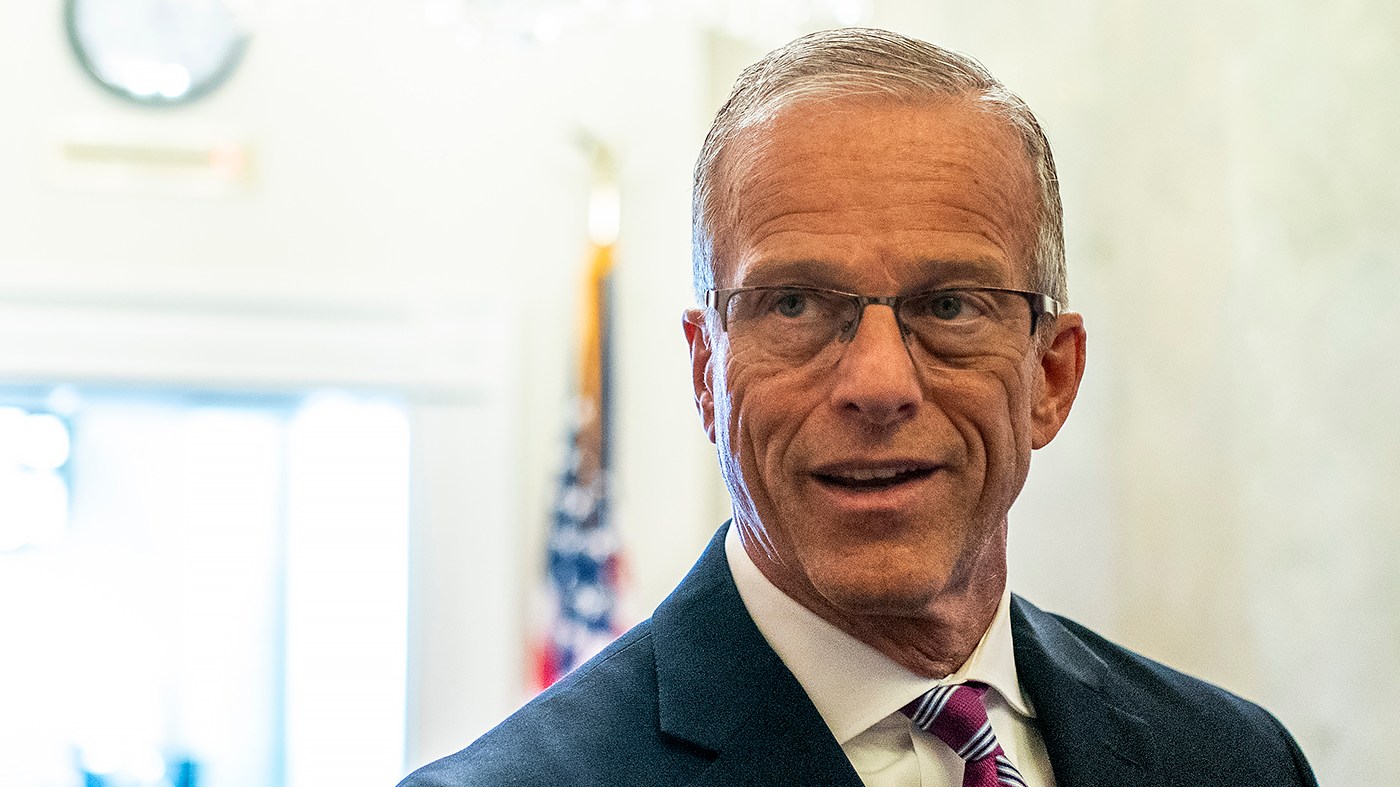
Senate Majority Leader John Thune (R-S.D.) on Monday said any legislation Congress passes to regulate AI must have a “light touch” so as not to stifle innovation and tempered recent warnings that superintelligent AI could exterminate humanity as a “worst-case scenario.”
“It needs to strike a balance, light touch. You don’t want to stifle innovation but you also want to make sure that the more advanced threats can be mitigated,” he told reporters.
“Obviously there’s a responsibility for the companies to do that when it comes to the frontier on some of these models,” he added. “There is a way in which Congress can put guardrails around those types of more consequential threats without in any way harming our ability to stay ahead in the AI race, which I also think is very important.”
Thune made his comments after Jacob Coxon, a former researcher for OpenAI and Anthropic, warned that neither company is acting responsibility and are “racing straight to self-improving superintelligence and gambling with our lives.”
This has fueled fears that superintelligent AI could turn against humanity with devastating consequences, something that Thune on Monday downplayed as a “worst-case scenario.”
“I think there are some of these frontier models … I think there are some potential consequential risks associated with AI. But there are always people who are creating a worst-case-scenario-type conversation out there and I think that you have to try, like all things, figure out what the realistic approach ought to be,” he said.
“Put guardrails around it, like I said, I think on some of these advanced-risk-type models some guardrails there make sense to me but I think you want to do it in a light-touch way that doesn’t squash innovation,” he added. “We are in a race with China and I think there’s huge upside, obviously, with AI as well. There are a lot of benefits to society along with some risks.”
Thune spoke to reporters after Senate Democratic Leader Chuck Schumer (D-N.Y.) called on the Trump administration to provide a classified briefing to all senators on the risks posed by AI.
“Warning bells are ringing louder than they ever have – and the Trump administration is looking the other way. Well, if they won’t hold themselves accountable, we will. And if Trump does not act, Congress must,” Schumer said in a statement Monday morning.
He said officials need to answer questions about three areas of concern related to AI.
He wants the administration to provide a full accounting of its new framework for testing the most powerful frontier AI models and to detail what it’s doing to prevent AI chips and semiconductor manufacturing equipment from flowing to China.
Schumer said it also needs to explain its plans to defend the United States from increasingly sophisticated AI-enabled cyberattacks.
Trump, meanwhile, has downplayed the dangers and pushed back on calls for more guardrails around AI.
“The only control or ‘guardrails’ that AI needs is a STRONG AND SMART (High IQ!) PRESIDENT, and the U.S.A. has that, in spades!” he wrote on Truth Social. “The Trump Administration has stopped AI ‘people’ from doing bad, or potentially bad, ‘things,’” he wrote on Truth Social Monday. “We already have tremendous CRIMINAL and REGULATORY power over these companies!” There is a SICK conspiracy going on against AI and Data Centers, and the only one that is happy about it is China.”
Topics in this story
Gathered from external sources. Rights to this text belong to whoever originally published it.