Let’s go retro: Today’s cyber chaos may need an analog solution
Isn’t the advance of technology supposed to make our lives better?
Last week, a host of cyber outages was all the rage, bringing with them a very real fear of impending danger. Seemingly every cable news host was breathlessly speculating that none of this could be a coincidence as they showcased one end-of-the-world prepper after another explaining how to live off-the-grid.
Of course, it’s hard to blame them when, all of a sudden, we were dealing with the first FAA national ground stop since 9/11 ; Microsoft services were disrupted ; a United Airlines system went out ; the National Security Agency’s classified internal system went offline ; JP Morgan reported technical issues that delayed transactions; and Apple and Marriott experienced outages right around the same time. That is without mentioning new reports of hacks at the CIA, Office of the Director of National Intelligence and FBI .
One week ago today, both The New York Times and The Washington Post featured similar pieces predicting that this is, unfortunately, a sign of the times. “Tech Outages Are Only the Beginning,” read the Times , “A.I. Will Bring More Disruptions.” “Welcome to the age of endless digital breakdowns, ” warned the Post.
But wait — isn’t the advance of technology supposed to make our lives better? Simpler, easier, safer and more enjoyable? As we witnessed with the COVID-like run on Costco and various grocery chains as people once again panic-bought water, toilet paper and shopping carts full of canned and non-perishable food, that overwhelming fear is back.
This past Thursday, we celebrated Thanksgiving. In light of such fear, I was suddenly extremely thankful for access to cash, running water, electricity and natural gas — for phone, television and audio service, working gasoline pumps and the ability to transport myself hundreds of miles away if needed via my vehicle, and store shelves continually stocked with the staples I need to survive.
I realized that all these things could be taken away from me and my family now in a nano-second, that these outages could instantly transport us all back to an 1800s lifestyle because a new advanced technology was able to take down our current state of advanced technology. Shouldn’t there be a way in which we can “hedge our bets” against this?
Paging Elon Musk, Jeff Bezos, Ken Griffin and every other multi-billionaire who has the ability to move the needle.
For decades now, Musk has been trying to figure out a way to get a representation of humanity permanently into space should the worst happen on earth. It’s a great idea. But in the meantime, can’t he and the others come together to create an oasis in the desert of hyper-technology that is impervious to the kind of failures we are seeing today?
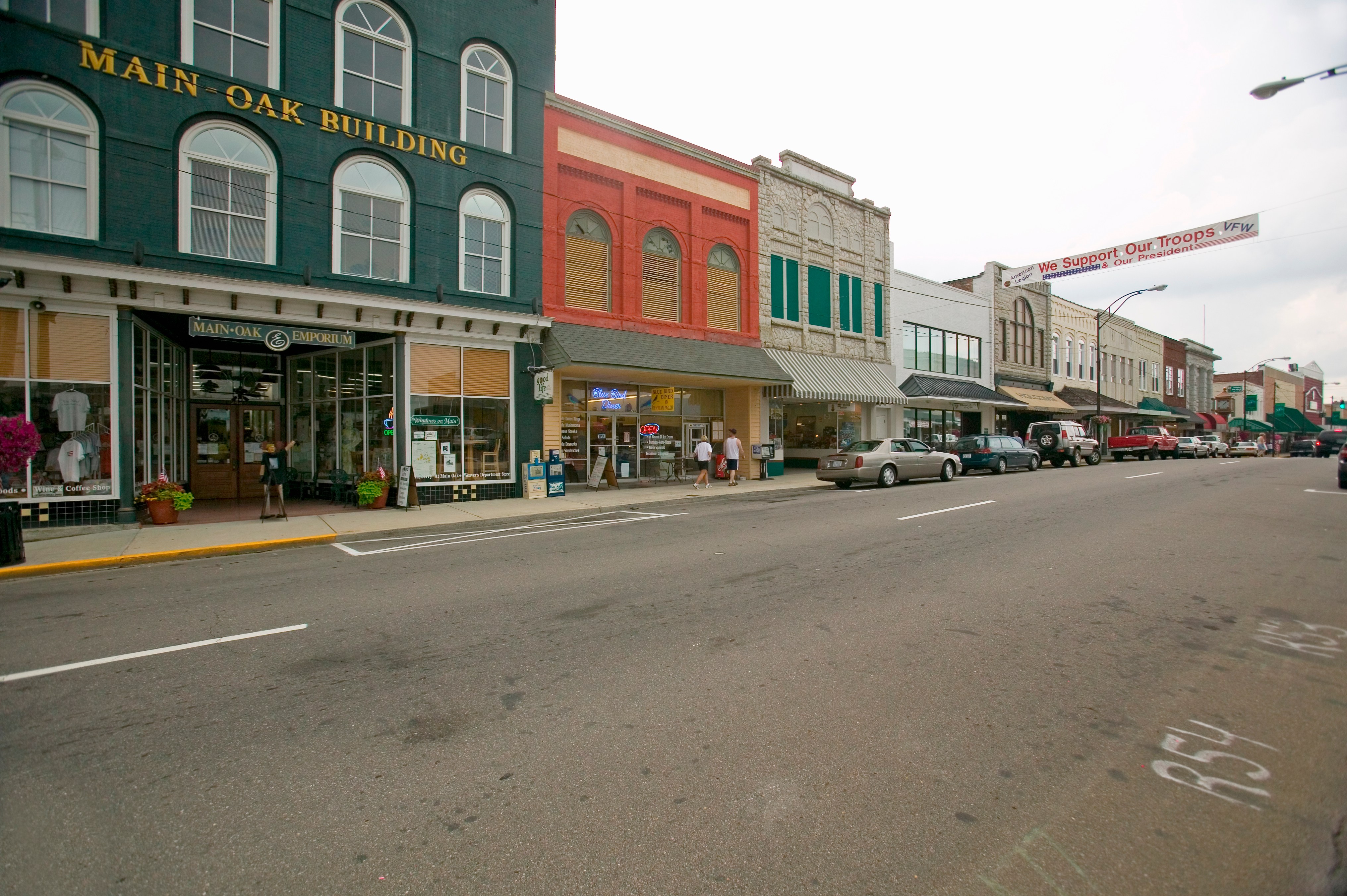
Looking back, every city and town in 1950s America was an example of such salvation. They had banks with actual money in them, land-line phones and vehicles with internal combustion engines. Some cybersecurity experts of today refer to such an analog system as “ security by antiquity ” — purposefully using older or offline tools to deter cyber-attackers who focus on widespread, connected systems because they can’t remotely take down disconnected hardware.
Fast Company magazine touched upon this theme by pointing out that many CEOs and government leaders believe the competition will pass them by if they don’t adopt the latest tech. Unfortunately, as we have witnessed over the last couple of weeks, the reality of that knee-jerk reaction could be “adopt and die.”
Is the building of multiple old-fashioned Mayberry -like towns even remotely possible? Probably not, but I am willing to bet that, given the tech scare we all just experienced, if such towns were built in which our money, energy, water, communication and food supply could be guaranteed and protected, the waiting list to become a resident would instantly be in the millions.
Out with the hackable new and in with the unhackable old. Retro never sounded so good or so safe.
Douglas MacKinnon is a former White House and Pentagon official.
Topics in this story
Gathered from external sources. Rights to this text belong to whoever originally published it.