Thanksgiving has a bumpy history
The history of the American Thanksgiving holiday has evolved from early colonial feasts and Revolutionary War era proclamations to modern debates over its religious nature and official date.
Happy Thanksgiving! That holiday greeting may seem nongermane to a Congress blog, but it is not. Just as the contemporary turkey day is practically synonymous with wall-to-wall pigskin games on television, historically the national celebration became something of a political football. Before you squeal and cry fowl, let me explain.
From grade school, we are all familiar with the origins of America’s Thanksgiving. The Pilgrims in the Massachusetts Bay colony, having landed on our shores in November1620 after an arduous 66-day voyage across the Atlantic on the Mayflower, were grateful for their safe arrival. In 1621, they invited their indigenous Wampanoag neighbors to join them in a harvest feast of celebration. In 1623, they held a similar celebration after a prolonged drought.
Fast forward to our revolutionary war. The Continental Congress crafted the first national proclamation of thanksgiving in 1777 in their temporary quarters in York, Pa. The draft of the proclamation, penned by Sam Adams, thanked the “Almighty God” for the blessings bestowed upon them and implored him “to smile upon us in the prosecution of a just and necessary war…and to crown our arms with the most signal success.”
Not to be outdone, Gen. George Washington, leading our revolutionary forces, proclaimed in December 1777 that thanksgiving should be a victory celebration honoring the defeat of the British in the battle of Saratoga.
During its existence from 1774 to 1789, the Continental Congress issued several proclamations designating “national days of prayer, humility, and thanksgiving.” This practice continued under our new government.
Shortly after the first House of Representatives adopted the First Amendment to the Constitution guaranteeing the freedom of speech, the press, and religion in 1789, Rep. Elias Boudinot of New Jersey proposed that the House and Senate request President Washington to proclaim a day of thanksgiving “for the many signal favors of Almighty God.”
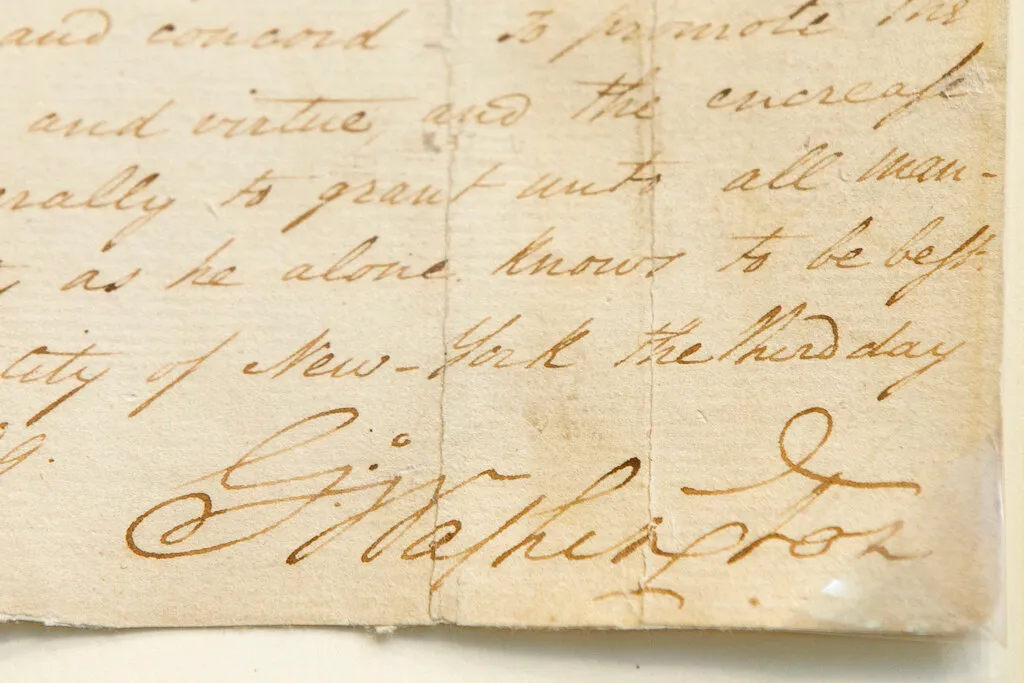
Washinton obliged by issuing the first proclamation of Thanksgiving Day by the national government, to be observed on Thursday, Nov. 26, 1789. His successor as president, John Adams, followed suit.
Thomas Jefferson, on the other hand, our third president, refused to issue any proclamation. As a deist, he explained his reasoning in an 1802 letter to the Danbury Baptist Association . He thought that religiously oriented declarations by government violated our First Amendment’s wall separating church and state and its guarantee of the free practice of religion. “Believing that religion is a matter which lies solely between Man and his God,” he wrote, “the legitimate powers of government reach actions only, and not opinions.”
Jefferson’s successor, James Madison, in 1814, at the end of the War of 1812, resumed the precedent set by Washington and Adams. However, neither of Madison’s two proclamations in 1815 was observed. Instead, states like Massachusetts, New Hampshire, and New York began celebrating their own thanksgiving days on dates of their choosing.
It wasn’t until the middle of the Civil War that President Abraham Lincoln, the first president since Madison’s proclamations, began the regular practice of issuing annual Thanksgiving Proclamations. In 1870, President Ulysses S. Grant signed into law the Holidays Act that designated specific federal holidays in Washington, D.C., including New Year’s, July 4, and Christmas, though Thanksgiving was left to the discretion of the president.
One of the more interesting tugs-of-war over Thanksgiving occurred under President Franklin Roosevelt. With encouragement from Fred Lazarus, Jr., founder of the Federated Department Stores, Roosevelt in 1939 proposed making Thanksgiving the fourth Thursday of November instead of Lincoln’s “final Thursday.” Because it was considered inappropriate to advertise goods for Christmas before Thanksgiving, Roosevelt thought allowing an extra week between the holidays would help lift the economy out of the Great Depression and be a boon to merchants and workers alike.
On Oct. 6, 1941, the U.S. House of Representatives passed a bill that embraced Lincoln’s final Thursday in November as Thanksgiving. However, two months later, the Senate amended the bill switching the date back to the fourth Thursday. The House, after considerable debate, eventually caved and accepted the Senate amendment . And that’s how it still stands today.
This whole tempest in a turkey pot had devolved into a partisan hissing match, with Democrats referring to Nov. 30 as the “Republican Thanksgiving,” and Republicans referring to Nov. 23 as the “Democratic Thanksgiving” or “Franksgiving.”
Who would have thought that this day of family gatherings, peace, and gratefulness was once a source of wartime invocations of the Almighty, First Amendment feuds, and partisan pettiness? Be thankful for today’s gridiron clashes.
Don Wolfensberger is a 28-year congressional staff veteran, culminating as chief-of-staff of the House Rules Committee. He is author of, “Congress and the People: Deliberative Democracy on Trial,” and, “Changing Cultures in Congress: From Fair Play to Power Plays.”
Topics in this story
Gathered from external sources. Rights to this text belong to whoever originally published it.