The Memo: Ukraine’s slide into crisis sharpens questions for Trump
Tumult and doubt are hanging over the role of the United States in the war in Ukraine, 4 1/2 years after the Russian invasion. That’s the bottom line after a week of high drama that roiled Washington, Kyiv and concerned political leaders in Europe. The U.S. stance is, of course, determined by President Trump, often…
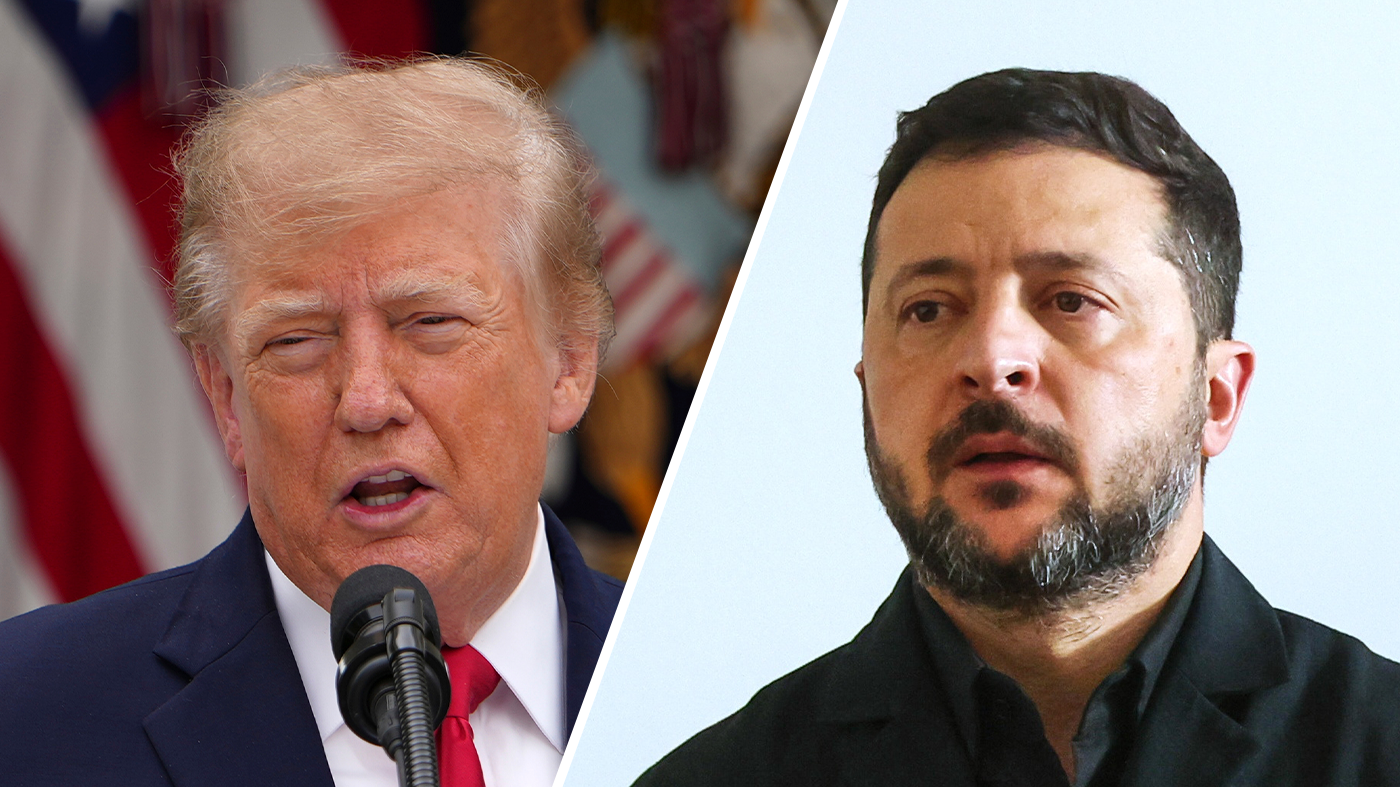
Tumult and doubt are hanging over the role of the United States in the war in Ukraine, 4 1/2 years after the Russian invasion.
That’s the bottom line after a week of high drama that roiled Washington, Kyiv and concerned political leaders in Europe.
The U.S. stance is, of course, determined by President Trump, often in unpredictable fashion.
On Friday, he denied to reporters that either he or his sometime ally Elon Musk had decided to restrict Ukrainian usage of the Starshield satellite system, which is vital to the effectiveness of Kyiv’s drones.
“I didn’t do that. No, we didn’t do that at all. In fact, I don’t even think it was slowed down from what I understood. Because I just checked this morning,” Trump told reporters Friday as he left the White House en route to a campaign rally in Georgia.
The Ukrainians are adamant that the system was indeed slowed down — one of several developments about which they are incensed, blaming the U.S. for having undermined a war effort that they have fought against the odds and at enormous cost.
Ukrainian President Volodymyr Zelensky told a Friday news conference in Brussels that the initial slowing down of the Starshield system had come as “a dangerous and unpleasant surprise,” according to The Associated Press .
Zelensky also disputed the idea that the system had been restored to normal function.
“Have they returned to previous speed limits? No. But is it coming back? Yes,” he said.
The Starshield issue was perhaps the most shocking episode in a recent chapter of drama and recrimination between Kyiv and the White House.
Trump’s Oct. 9 announcement of a deal for Russian diesel caused widespread consternation, given its capacity to ease economic pressure on Moscow. Zelensky and his allies had been seeking to ramp up this pressure. In Washington, Congress recently passed legislation , in memory of the late Sen. Lindsey Graham (R-S.C.), intensifying sanctions against Moscow.
Trump’s assertion that there was an “Energy Ceasefire” between the warring parties has come to seem hollow.
Russia never appeared to accede to the idea of a mutual pause on hitting infrastructure facilities, and Ukraine duly abandoned its willingness to hold off striking Russian refineries.
There have also been conflicting reports about whether the United States was withholding intelligence from Ukraine, which Trump has denied.
Recent days have been interspersed with heated words.
Trump has suggested Ukraine should replace Zelensky as its president. In an interview with Newsmax, broadcast Thursday evening, Trump complained that Zelensky is “not a good guy for us to deal with” and also appeared to blame the Ukrainian president, at least in part, for having “destroyed that country.”
Zelensky, for his part, this week told British journalist Piers Morgan that he felt his nation had been betrayed, in part by the diesel deal. He also told Morgan that he regretted that Ukraine was “losing” the U.S. as a strong partner.
Amid all the bleakness, it looks as if U.S.-Ukraine relations are at their lowest ebb since the infamous February 2025 Oval Office meeting at which Zelensky was berated by Trump and Vice President Vance.
The effects on the battlefield are plain to see.
According to the AP, the latest spate of Russian attacks hit at least nine areas of Ukraine, leaving “hundreds of thousands of households” without power. Those attacks will bite with special fierceness as winter sets in across eastern Europe.
Trump, pinioned by rising gas prices stemming from the war on Iran that he launched in conjunction with Israel earlier this year, appears to be trying to shift blame to Ukraine for pain at American pumps.
His social media message announcing the diesel deal said that the new arrangement — as well as what he inaccurately termed American “TOTAL CONTROL” of the Strait of Hormuz — would mean that “Diesel Prices for Americans and, indeed, the World, will be COMING DOWN, IN RECORD NUMBERS, AND FAST!”
According to AAA , the average U.S. diesel price Friday was approximately $6.33, up from $6.28 on the day Trump announced the Russia deal — and hugely increased from the $3.65 level at which it stood one year ago.
Rick Tyler, a Republican strategist who is often critical of Trump, complained that the diesel deal amounted to “amateur hour.”
“It won’t work, and yet people are going to think we are going to get lower gas prices,” Tyler told this column.
He also blasted Trump’s general approach as “despicable” and said, regarding the president’s approach to Russian President Vladimir Putin, that Trump was “sacrificing the credibility of the United States when he engages with a thug like that who is killing innocent civilians.”
Meanwhile, confusion and controversy continue to swirl around the specifics of the Starlink matter.
On Thursday evening, Reuters reported that the order to limit the way the system could be used by Ukraine “came from inside the White House.” The news agency sourced that information to “two U.S. officials and a Western official.”
In addition to Trump’s Friday denial that either he or Musk was responsible, a U.S. official also told NewsNation, “No such request was ever made by the President.” (NewsNation and The Hill are both owned by Nexstar Media Group.)
Then, late Friday, The Telegraph reported that it was Musk who had “approached Donald Trump with the idea of slowing down Starlink in Ukraine.” Musk had previously implicitly denied he played any decisive role.
Meanwhile in Washington, four GOP senators joined with Democratic colleagues in seeking more information about the Pentagon’s role in the episode.
Whatever more is revealed about the specifics, there’s no mistaking the consternation felt by Republicans outside of Trump’s most fervent MAGA base about the current situation.
Doug Heye, a former communications director for the Republican National Committee, contrasted Trump, very unfavorably, with the vigorous opposition to Moscow evinced by former President Reagan in the 1980s.
“It’s another 180, and it’s very depressing for anyone who considers themselves a traditional Republican,” Heye said.
The Memo is a reported column by Niall Stanage.
Topics in this story
Gathered from external sources. Rights to this text belong to whoever originally published it.