Kimberly Guilfoyle’s resignation doesn’t end an investigation — it changes the rules
Kimberly Guilfoyle’s departure as U.S. ambassador to Greece raises a question that often gets lost in the political headlines: What happens to a government investigation when the official at its center leaves office? The answer depends on who is conducting the investigation. Inspectors general, congressional committees and the executive branch operate under different legal authorities,…
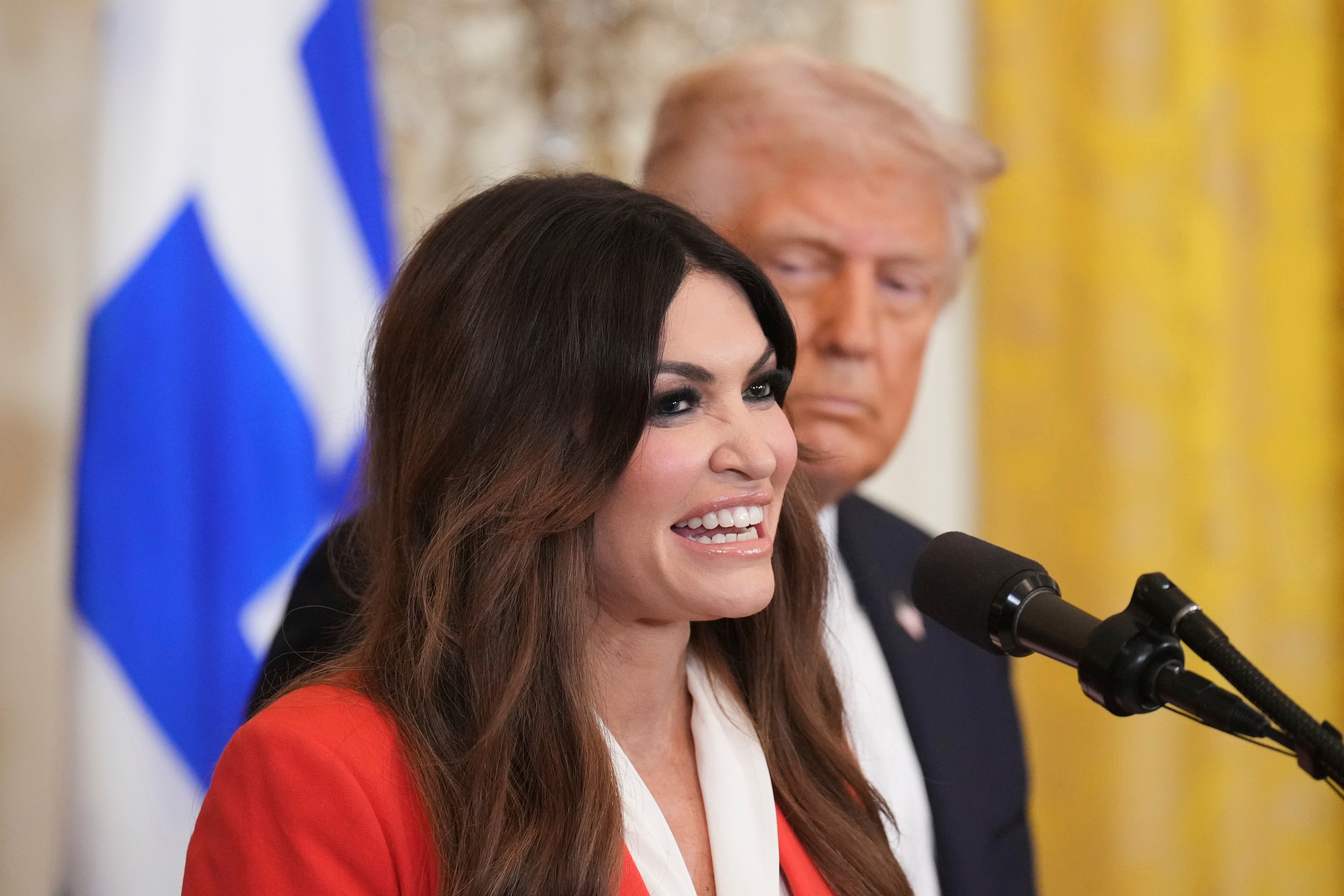
Kimberly Guilfoyle’s departure as U.S. ambassador to Greece raises a question that often gets lost in the political headlines: What happens to a government investigation when the official at its center leaves office?
The answer depends on who is conducting the investigation.
Inspectors general, congressional committees and the executive branch operate under different legal authorities, and an official’s resignation affects each differently. Understanding how each institution operates is essential to evaluating what comes next.
President Trump’s decision to seek Guilfoyle’s resignation followed reports alleging improper financial dealings and other misconduct, allegations Guilfoyle has emphatically denied. Meanwhile, the State Department’s Office of Inspector General has reportedly been examining complaints involving her conduct , although the precise status and scope of that inquiry have not been publicly confirmed. And on Capitol Hill, Rep. Robert Garcia (D-Calif.), the ranking member of the House Oversight and Government Reform Committee, has made clear that his inquiry will continue despite her departure.
Taken together, these developments invite a familiar Washington temptation: treating a resignation as either confirmation of wrongdoing or an attempt to escape accountability . Neither conclusion necessarily follows. In reality, Trump’s decision, an inspector general inquiry and congressional oversight serve different purposes, operate under different rules, and can produce very different outcomes.
Consider first the White House’s decision. Ambassadors serve at the pleasure of the president, who retains broad authority to determine who represents the U.S. abroad. Trump did not need to wait for a formal finding of misconduct before deciding that Guilfoyle should leave her post. Such a decision can reflect concerns about diplomatic effectiveness, public confidence or the administration’s broader interests without resolving the underlying allegations.
While removing an official may resolve an immediate personnel concern, it does not necessarily resolve the questions that prompted scrutiny in the first place. This is where inspectors general enter the picture.
Unlike the president, whose decision may be focused on who should continue serving in a particular role, an inspector general examines the conduct and operations of the agency itself. Under the Inspector General Act , that responsibility includes investigating potential misconduct, identifying institutional failures, and recommending corrective action.
An official’s resignation does not automatically extinguish that authority. Inspectors general possess significant investigative tools by law, including access to agency records and authority to subpoena certain documentary evidence. Even after an official departs, questions may remain about whether agency safeguards were followed, how decisions were made, and whether institutional reforms are warranted.
Of course, the existence of an investigation is not proof of wrongdoing. Inspector general inquiries are fact-finding processes, not verdicts, and their conclusions must rest on evidence rather than allegations or political pressure. That caution is especially warranted when the underlying allegations are disputed.
Congressional oversight presents another layer of complexity — and perhaps the most misunderstood one.
Congress has broad authority to investigate matters relevant to its legislative responsibilities, including executive branch operations and government ethics. That authority can extend to former officials, particularly when their conduct bears on whether existing laws and oversight mechanisms are adequate. Yet Congress’s ability to seek information should not be confused with an unlimited power to compel it.
Garcia’s Oct. 14 letter, for example, reiterates requests for records and communications notwithstanding Guilfoyle’s resignation. While the request reflects a continuing interest by the committee’s Democratic minority, it is not itself a congressional subpoena. Under the House Oversight Committee’s rules , authority to issue subpoenas rests with the committee chair, subject to applicable House rules.
The distinction is more than a technicality. A voluntary congressional request and a duly authorized subpoena carry different legal consequences. The latter invokes compulsory process and potential enforcement mechanisms, while the former generally depends on voluntary cooperation. Understanding that difference is essential to evaluating both the authority of congressional investigators and the obligations of those receiving their requests.
With the November midterm elections approaching, however, that distinction could take on greater significance. Should Democrats gain control of the House, they could assume leadership of the Oversight Committee when the new Congress convenes in January, potentially transforming today’s voluntary inquiries into investigations backed by subpoena authority. Any such action would still require compliance with the rules governing the new Congress, and existing requests would not automatically become compulsory.
These institutional boundaries become even more consequential when multiple inquiries concern the same underlying conduct. An inspector general may seek to determine whether agency policies were followed. Congress may examine whether legislative reforms are necessary. Prosecutors, if warranted, may separately assess potential criminal violations. None of these inquiries necessarily dictates the outcome of another.
The danger is that political narratives can blur the boundaries between these processes. In Washington, a congressional letter can quickly become an “investigation,” an allegation can be treated as a finding, and a resignation can be portrayed as a confession. The legal process, however, demands greater precision.
The Guilfoyle situation illustrates why that precision matters. President Trump has exercised his authority to seek a change in diplomatic leadership. Whether other institutions have additional questions to pursue depends on their respective mandates, the available evidence and the legal tools at their disposal.
Accountability and fairness are not competing principles. Meaningful oversight requires both the ability to investigate potential wrongdoing and respect for the procedural safeguards that govern those investigations.
Resignation may close one chapter of public service. Whether it closes the investigation is an entirely different question, and one that must ultimately be answered by law, not political headlines.
Nadin Linthorst is senior counsel at Lex Politica PLLC, where her practice focuses on congressional oversight and investigations, government ethics and complex litigation. She previously served as assistant general counsel and acting unit chief at the Federal Bureau of Investigation, where she handled sensitive litigation and congressional oversight matters.
Topics in this story
Gathered from external sources. Rights to this text belong to whoever originally published it.