The invisible threat to America’s classified intelligence
Without continuous monitoring for wireless devices, unauthorized devices could be transmitting classified information from inside, completely undetected.
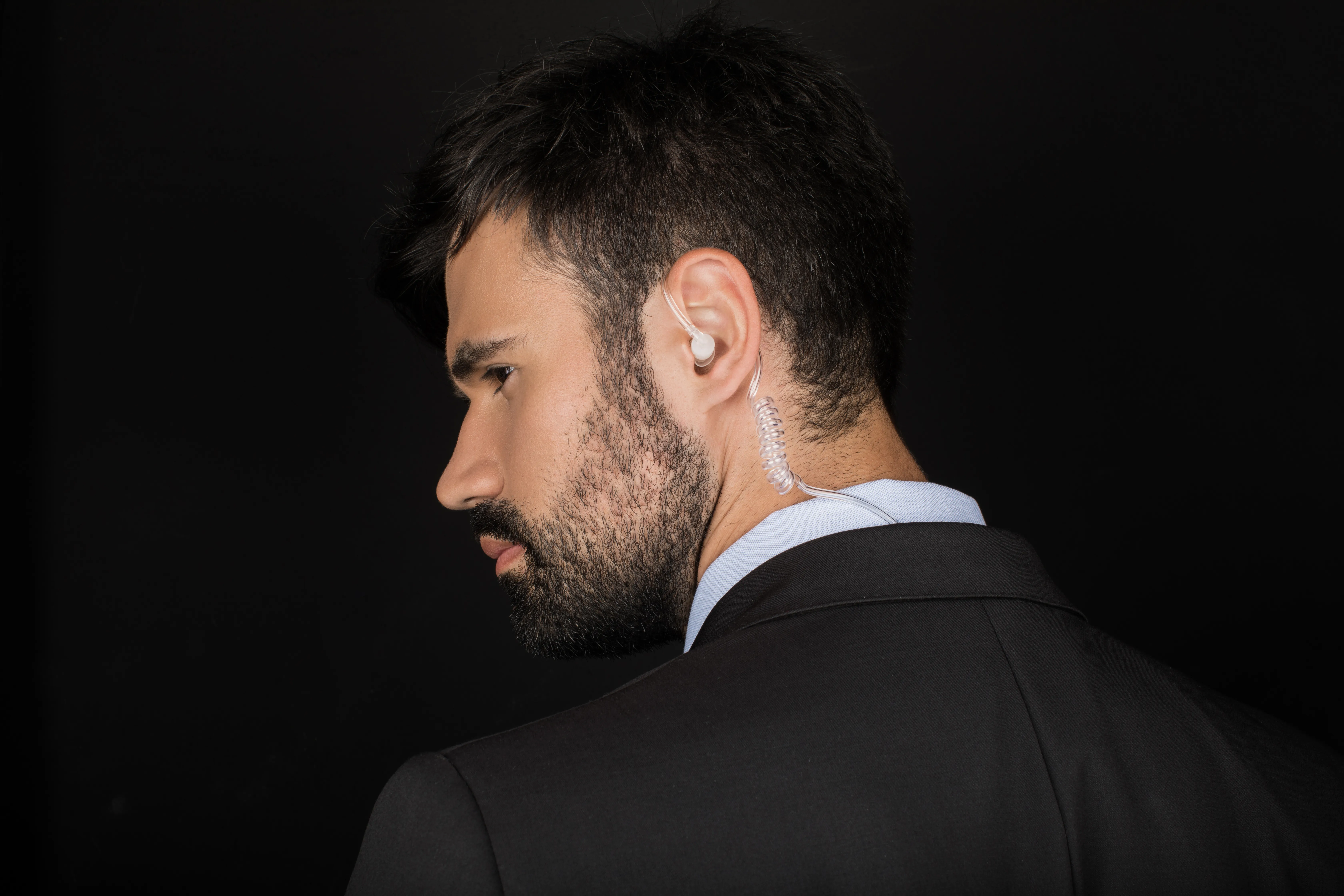
“Someone in here has earbuds. Get them out now!”
That should be the immediate response when any wireless device is detected in a facility that is meant to be free of unauthorized electronics so that classified matters can be discussed without the risk of prying foreign adversaries. Unfortunately, most of these facilities aren’t consistently monitored for wireless intrusions, and breaches — intentional or otherwise — often go undetected.
Every day, phones, earbuds, smartwatches, fitness trackers, smart glasses, Bluetooth-enabled trackers (like AirTags) and other devices, each able to record and transmit, are brought into Sensitive Compartmented Information Facilities (known as “SCIFs”) and Special Access Program Facilities where America’s secrets are held and discussed.
These facilities are built to keep adversaries out of the nation’s most sensitive conversations, with guards, guns and gates. But without continuous monitoring for wireless devices, unauthorized devices could be transmitting classified information from inside, completely undetected.
Nearly every modern electronic device emits radio frequency signals to communicate across Wi-Fi, Bluetooth, cellular and other protocols, often without deliberate user action. Glasses can now record and earbuds can instantly translate. And they can all transmit in real time to anyone outside these rooms bypassing guards, guns and gates. A single unauthorized device inside a secure facility can become a highway for sensitive information to be captured, transmitted or exposed.
Across the U.S. government, military and intelligence community, officials operate tens of thousands of secure facilities to discuss classified matters that can range from plans for the next-generation fighter jet or naval ship to intelligence about Iran’s nuclear capabilities or Russia’s war plans. The vast majority are not monitored for wireless devices.
All secure facilities are built to the same standards, whether it’s the walls, doors or alarms. The absence of continuous monitoring across our most sensitive facilities despite a 2023 order and 2024 deadline set by the secretary of Defense is a vulnerability that the government is aware of — and one that adversaries are actively exploiting.
This is not hypothetical. In March 2025, Army Sergeant Jian Zhao was indicted for conspiring to obtain and transmit national defense information to individuals in China, along with bribery and theft of government property. Prosecutors say he photographed classified documents at his desk at Joint Base Lewis-McChord with a smartphone, and then negotiated their sale for thousands of dollars. Surveillance images in the court file show him doing it, phone in hand, while he was in contact with his buyer. He also sold 20 classified hard drives and a stolen encryption-capable computer.
The same year, a U.S. State Department employee with a top-secret clearance was convicted of using an iPhone to photograph classified documents off his computer monitor and transmit them to people he believed were Chinese intelligence after receiving the phone, and $10,000, six months earlier.
And these are just a couple of the public cases and details we know about. The risk is growing faster than the response, as wireless devices become increasingly vulnerable to hacks. Nearly 1,000 new wireless vulnerabilities were disclosed in 2025 alone , according to an analysis of National Vulnerability Database records.
Detecting wireless devices isn’t new. While the U.S. has had systems for indoor settings for more than a decade, they are not up to the task of detecting the latest technologies, whether it’s Bluetooth or smart glasses that can record surreptitiously. Modern threats require modern protection that provides real-time visibility, allowing for immediate removal before an unauthorized disclosure has occurred.
In the last five years, the government and commercial enterprises have begun using a new generation of “ Wireless Intrusion Detection Systems ” that have been engineered for accuracy, advanced protocols and identification and detection of active transmissions. These modern indoor systems are used by security teams without special radiofrequency training.
So, while a 2023 Pentagon requirement mandating the installation of such systems in all department SCIFs and Special Access Program Facilities may have appeared prohibitively expensive a decade ago, they are now within reach of military budgets. Monitoring costs an order of magnitude less than new construction or retrofitting spaces.
Continuous wireless monitoring systems can monitor Wi-Fi, Bluetooth, cellular and Internet of things spectrums in real time, and detect and locate unauthorized devices without requiring agencies to physically reconstruct every secure facility. These systems are deployed today in a small fraction of secure facilities and across corporate offices and AI data centers, and are producing significant results.
Though this has been a requirement since 2023, it still needs to be funded. The Department of Defense must define the continuous wireless detection requirement and submit the requisite funding request. Congress can then include this requirement in the forthcoming National Defense Authorization Act and appropriations bills.
America’s adversaries are patient and thorough. They are exploiting every available gap, including the invisible wireless environment. If we’re not careful, the next intelligence leak may come through a device someone “forgot” was in their pocket, on their wrist or authorized and in their ear.
Vice Adm. Jeffrey Trussler (Ret.) is former director of naval intelligence and deputy chief of naval operations for information warfare. David M. Taylor is a senior U.S. government official who performed the duties of the undersecretary and deputy undersecretary of Defense for intelligence and security.
Topics in this story
Gathered from external sources. Rights to this text belong to whoever originally published it.