How red Idaho held the line in a blue wave
States that vote overwhelmingly Republican today can look very different a generation from now if the party becomes complacent and neglects its grassroots voters.
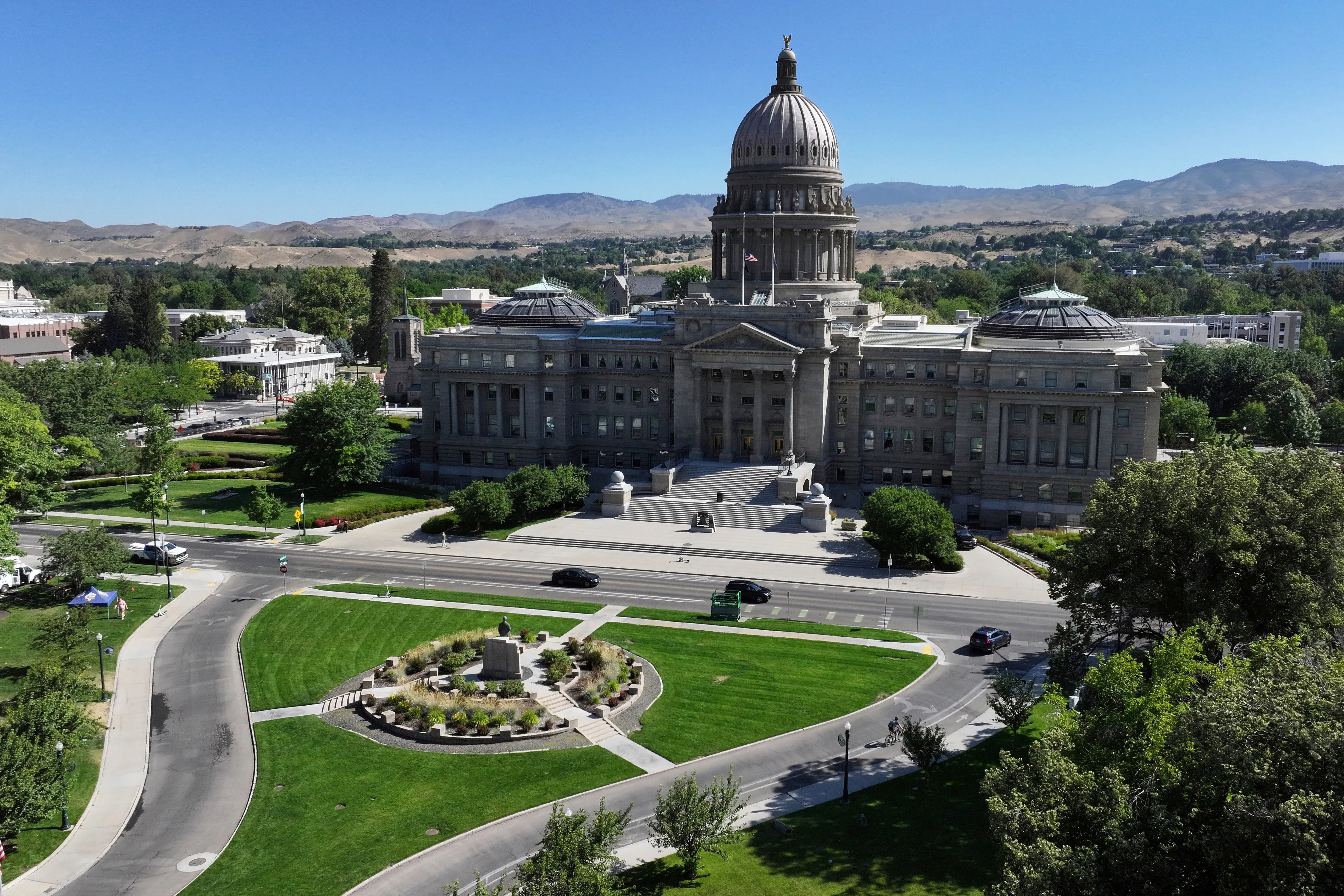
The 2026 midterm elections were a near wipeout for Republicans nationwide. Not only did the Republican Party lose control of both chambers of Congress, but several red states elected Democratic governors and legislatures as well. Texas went blue — not only its Senate seat, but every statewide elected office and the state House as well.
Even where Republicans held on to power, they still suffered losses. Republicans lost supermajorities in one or both legislative chambers in Florida, South Carolina, Indiana, Missouri, Ohio, and Kansas.
Yet despite this once-in-a-generation blue wave, Idaho stood strong. Republicans in the Gem State not only held all three federal seats on the ballot — as well as all seven statewide offices — but also retained supermajorities in both the Senate and the House. Not only that, but Idaho became one of the only states in the nation since Roe v. Wade was overturned in 2022 to reject a citizen’s initiative to legalize abortion .
First, Idahoans fought back hard against the initiative to legalize abortion, which raised turnout across the board. Activists saw how pro-abortion initiatives had passed in Ohio and Kansas, despite the conservative electorates in those states. They made fighting Proposition One the top priority this year.
Joining the Idaho Republicans in that effort were numerous organizations, including the Idaho Family Policy Center, Idaho Chooses Life, Right to Life of Idaho, the Too Extreme For Idaho PAC, the Catholic and Latter-Day Saints churches, and numerous other churches and organizations.
These groups raised millions of dollars to counter the millions spent by pro-abortion groups. They hosted in-person events, put up billboards, passed out palm cards, sent text messages and ran countless ads on television, radio, and social media. Priests, pastors and bishops gave away yard signs after Sunday services at churches. Heading into Election Day, center-right voters knew that Proposition One was extreme, an attempt to impose California abortion laws on Idaho.
By the end of the campaign, a large number of Idaho physicians , a similar number of Idaho Republican legislators, and six statewide elected officials — including Gov. Brad Little (R) and Attorney General Raul Labrador (R) — had signed open letters urging voters to reject Prop One.
This is the kind of unity necessary when facing the double whammy of a national blue wave and an abortion initiative on the ballot.
As with the rest of the nation, Democratic voters in Idaho turned out in numbers similar to 2024, whereas Republicans approached the election like an ordinary midterm. In Idaho, however, the Republican effort was enough to hold the line.
But Idaho Republicans have a structural advantage in elections. As of November 2026, nearly 62 percent of registered voters in Idaho were affiliated with the Idaho Republican Party, compared to 12 percent who were registered Democrats. Idaho Democrats are concentrated in urban areas and college towns such as Boise, Pocatello, and Moscow, but they are firmly in the minority elsewhere. Republicans are strong in other larger cities such as Nampa, Twin Falls and Coeur d’Alene. This year’s blue wave allowed Democrats to win six additional seats in areas where they already had influence, but Republicans kept their legislative supermajorities.
Unlike states such as Illinois or Georgia, where maps show solid blue cores surrounded by otherwise red territory, Idaho’s blue core is not yet large enough to overpower the rest of the state.
Third, Idahoans took nothing for granted. Idaho has long been a red state. The last Democrat to win a congressional race was Walt Minnick in 2008, and the last to win a statewide race was Superintendent of Public Instruction Marilyn Howard in 2002. But Idaho Republicans have not taken anything for granted. They are working hard to keep it that way.
Every two years, the most passionate Republican activists come together for the state convention, while hundreds of precinct committeemen and thousands more grassroots volunteers spend countless hours knocking on doors, putting up signs, and motivating their neighbors to get out and vote. Waves of migration from blue states are only making Idaho redder, with some reports suggesting that more than 75 percent of registered voters arriving from California affiliate with the Idaho Republican Party.
Republicans nationwide could learn a lot from Idaho.
First, it is time to unite around shared values rather than fight over differences. Idaho Republicans have serious disagreements over policy, priorities and the future of the party. But when the stakes were highest, they came together to fight for a shared goal. Republicans in formerly red states would do well to remember that lesson. Winning elections doesn’t require agreeing on everything. It does require knowing when to put aside internal disputes and work together.
Second, Idaho’s political success is about more than just voter registration numbers. The Gem State has a well-deserved reputation as one of the last bastions of conservative values. That is attracting families from across the country who want to live in a place where those values are honored and protected.
Other states cannot simply import Idaho’s electorate, but they can do the work of building communities, institutions, and a political culture that allows conservative governance to endure beyond any single election cycle.
Finally, there is no such thing as permanence in politics. Political majorities in red states like Idaho and Florida must be maintained and renewed, year after year, election after election. States that vote overwhelmingly Republican today can look very different a generation from now if the party becomes complacent and neglects its grassroots voters.
Idaho Republicans have built a substantial advantage, but they cannot take it for granted. That might be the most important lesson of all.
Brian Almon is chairman of Idaho’s District 14 Republican Party and a consultant for the state Republican Party. He is also a trustee of the Eagle Public Library Board and editor of the Gem State Chronicle .
Topics in this story
Gathered from external sources. Rights to this text belong to whoever originally published it.