Forecasts of midterm blue wave put Trump’s legacy on line
President Trump’s political capital is on the line ahead of the midterm elections as a potential blue wave threatens his final two years in office. Trump has...
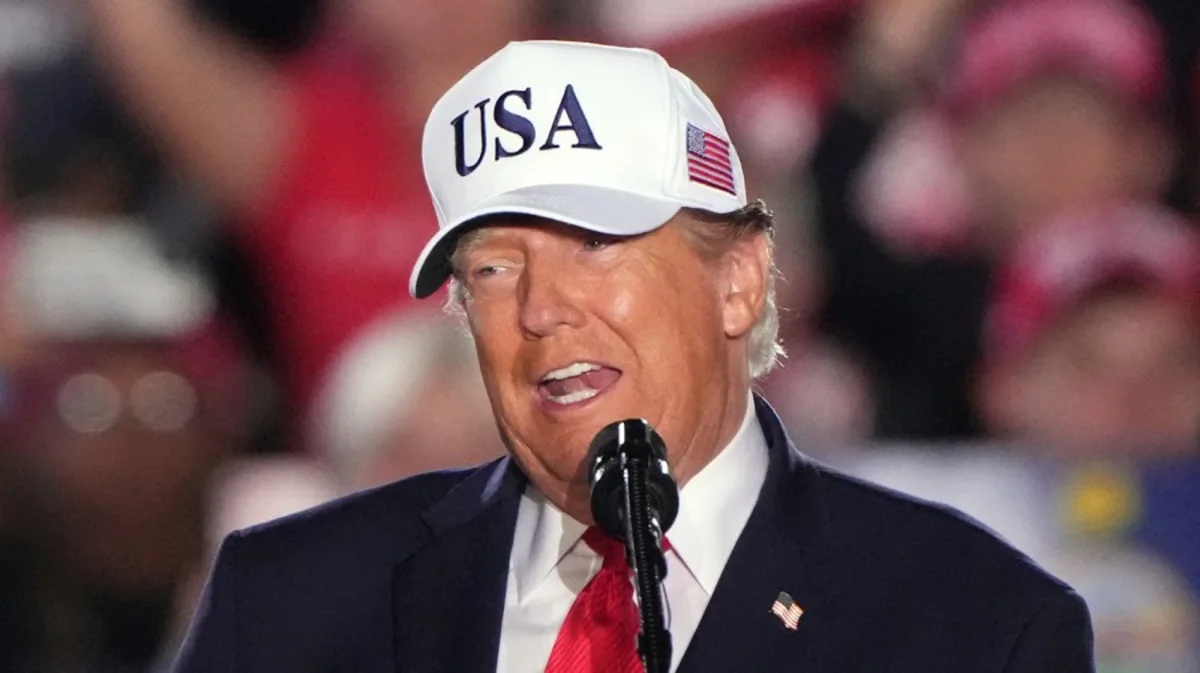
President Trump's political capital is on the line ahead of the midterm elections as a potential blue wave threatens his final two years in office.
Trump has crisscrossed the country, holding 28 in-person campaign rallies in addition to a series of tele-rallies. The president has made stops in Republican strongholds like Ohio, Texas, Iowa, Kansas and even Alaska in an effort to keep the states firmly in the red column. He's also visited a number of deep-red states like Mississippi and South Carolina, where polls show closer than expected races.
While Trump has argued his rallies have boosted Republican incumbents and candidates in the states, recent polling suggests otherwise.
A New York Times/Siena poll released the day before Election Day showed Democrats with leads in Senate races in Ohio, Texas, Iowa, Kansas and Alaska.
Trump's heavy political investment in the states means he could end up shouldering the blame for a potential blue wave, which could impact the GOP beyond Election Day.
Republicans warn that a blue wave would be detrimental to the last two years of the Trump administration, and by extension, his legacy.
"It impacts his ability to drive policy over the next two years, or if a Supreme Court nomination comes up, or fill in the blank in terms of even Cabinet turnover," said one Republican strategist, speaking on condition of anonymity. "All of that too will help shape his legacy, and it's how people remember you at the end that guides you into the history books."
In a statement to The Hill on Monday, the Republican National Committee (RNC) warned that Democrats would "obstruct" Trump's agenda and that their "disastrous economic policies" would drive jobs overseas.
"The president knows what's at stake this cycle, which is why he's barnstormed the country to encourage our voters to support Republican candidates that will advance his agenda and deliver for the American people," said RNC spokesperson Natalie Baldassarre.
But during an election eve speech at the Lincoln Memorial Reflecting Pool, Trump did not appear entirely focused on the elections that could impact the trajectory of his last two years in office.
The president spent the first 22 minutes of his 37-minute address — largely viewed as a closing message before the midterms — talking about his administration's efforts to repair the Reflecting Pool. Trump showed off a number of pre-renovation pictures of the pool and at one point invited Interior Secretary Doug Burgum to the podium to give brief remarks.
Trump also touted his numerous beautification projects and lower crime in the nation's capital.
Republican operative Rob Stutzman called Trump's speech "another Captain Queeg moment," a reference to a character from Herman Wouk's 1951 novel "The Caine Mutiny" who is considered an unstable and incompetent commander.
A second Republican strategist said, "What the utter f--- was that?" when asked for their reaction to Trump's speech at the Reflecting Pool.
"Republicans were hoping that he would have some sort of a closing message, some sort of American message with it, with a wonderful backdrop that could maybe be of help in the closing hours here," the unnamed GOP strategist said. "As we Republicans are losing touch with the public, it looked like he was losing touch with reality."
One national Republican operative noted the speech was "not surprising" considering Trump's communication style but expressed frustration with the closing message.
"This perfectly encapsulates his messaging throughout this entire campaign cycle, but it's deeply frustrating when we need to be laser-focused on turning out our low propensity voters tomorrow," the operative said.
A third Republican strategist defended the speech, arguing the Reflecting Pool was "a hook" for Trump to be able to talk about issues like crime and immigration.
"It's one of these things that wherever you get the opportunity to speak to a national audience, you're going to talk about the midterms even if you have to start with something else," the strategist said.
Trump did take some time during his speech Monday to urge Republicans to turn out on Election Day.
"If the people that voted for me and voted in the last election where we had such a great victory, if they go out and vote, just a good portion of them, we will win in a landslide," the president said.
"Now, that doesn't happen because usually whoever the sitting president is — Republican or Democrat, good or bad, good president, great president, bad president — for some reason the sitting president doesn't win the midterms."
"We gave this a very strong shot," he added.
Much of the GOP's strategy has hinged on turning out its low-propensity base as much as possible, arguably a tall order for any political party in a nonpresidential election. Republicans hoped to defy that trend by dispatching Trump on the campaign trail, urging voters to "pretend" like he is on the ballot.
"The amount of rallies he did shows he 'believes' that he's on the ballot tomorrow," said Dan Eberhart, a Republican donor. "He worked hard, and he's right: Tomorrow's outcome is a reflection on him."
In a statement to The Hill, White House spokesperson Davis Ingle referred to Trump as the GOP's "best messenger" and "unmatched motivator" who is "committed to maintaining Republican majorities in Congress."
But some Republicans are unsure whether that tactic will ultimately work.
"So far from what we've seen, those rallies have not done what they were meant to do," said the first unnamed Republican strategist.
Democrats have been heartened by signs of early turnout in key battlegrounds, but Republicans argue that a large share of their voters tend to vote in person on Election Day.
"They're banking on these Republicans and the folks that he's trying to rally to show up tomorrow, and Republicans historically and should do exceedingly well tomorrow," the first Republican strategist said. "But the fact is, they still underperformed in places like Texas and in Florida in the early vote."
According to data released by Texas's secretary of State, 7.7 million voters in the Lone Star State voted early.
Meanwhile in Florida, registered Republicans led registered Democrats in early voting by just a little more than 200,000 voters. By comparison, in 2022, registered Republicans led Democrats in early voting by just a little less than 500,000 voters.
Florida Gov. Ron DeSantis (R) on Sunday sounded the alarm over low turnout in the state, which has become known as a nerve center for Republican politics.
"If people stay home, you could end up seeing results that you're going to be wondering what happened. That's just the reality," DeSantis said at a campaign event.
"The reality is gas is higher, and that's not good. Some of these Republicans act like it's no big deal. I disagree with that. It is a big deal to people," the Florida governor continued.
Topics in this story
Gathered from external sources. Rights to this text belong to whoever originally published it.