A course correction with lessons for both parties
Rep. James E. Clyburn reflects on the 2026 midterm elections, noting how Democratic victories in several Southern states signaled a voter mandate for accessible services, affordable programs, and accountable representation.
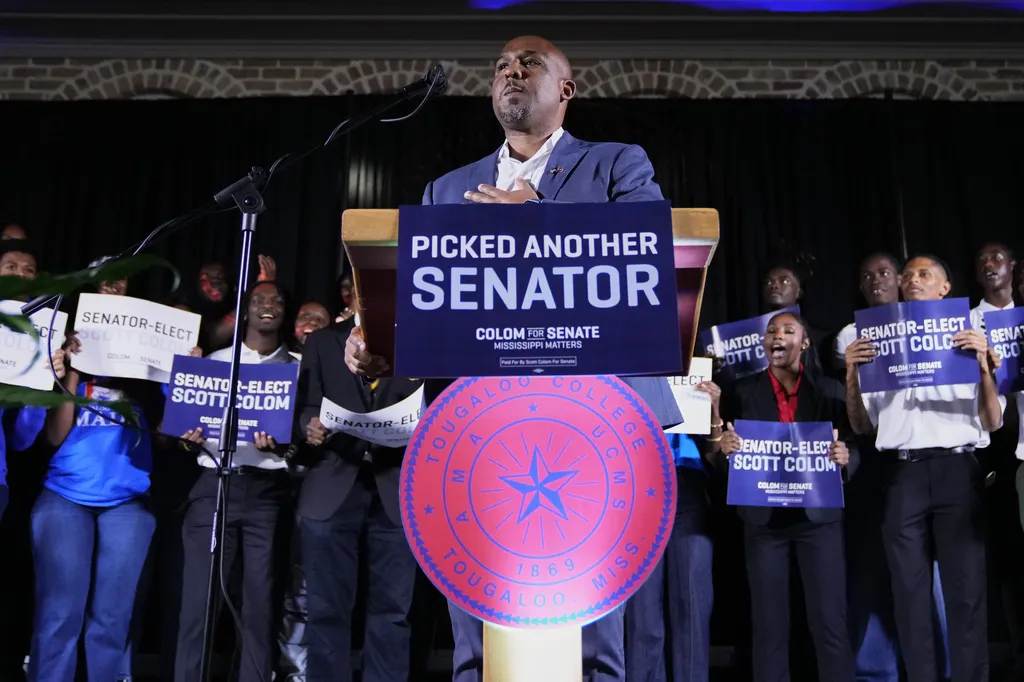
In the midterm elections, voters handed Democrats a three-prong mandate to give the American people services that are accessible, programs that are affordable, and representation that is accountable.
Throughout the campaign, I often uttered the notion (attributed to Alexis De Tocqueville, although disputed by some historians) that “America is great because she is good,” and that “if America ever ceases to be good, she will cease to be great.”
The notion of goodness was an undercurrent that ran rampant throughout this campaign cycle. I was reminded of that while campaigning with U.S. Sen.-elect Scott Colom (D-Miss.), in Ruleville, Miss. As I greeted people at the Fannie Lou Hamer Memorial, I heard yearnings for accessible healthcare and childcare, affordable housing and energy, and accountable representation.
I heard expressions of Fannie Lou Hamer’s famous axiom of being “sick and tired” of the government’s failures. Those concerns are not unique to Ruleville, nor are they limited to government officials’ callousness toward Americans.
I campaigned throughout 14 states with a firm understanding of what was at stake. In “Democracy in America,” Alexis De Tocqueville wrote, “The greatness of America lies not in being more enlightened than any other nation but rather in her ability to repair her faults.” I was hopeful that most Americans were ready to repair the faultlines that have erupted from the election of President Trump to a second term.
During the 2020 elections, I was writing my third book, “The First Eight.” I intended for the book to be some light-hearted facts about the eight Black congressmen who served in Congress from South Carolina before me. But after I saw President Trump and his supporters react to his defeat by Joe Biden, I recognized what was happening in Detroit and Philadelphia, and with that “perfect” telephone call down to Georgia . Trump and MAGA extremists were trying to stop the counting of votes and alter the Electoral College results to throw the election into the House of Representatives.
Although they failed to stop the counting, they did not cease. Those failures led to the Jan. 6, 2021, insurrection. When that failed, they continued their efforts to subvert the will of the voting public. Those efforts resulted in “Project 2025” which I referred to — in real time — as “Jim Crow 2.0.”
But on Nov. 3, America delivered an echo of Fannie Lou Hamer’s Dec. 20, 1964, assertion, which she concludes with “we want a change.”
Scott Colom is the first African American popularly elected to represent Mississippi in the United States Senate. This race was called eight days after Election Day, due in large measure, to the lack of civility displayed by Sen. Cindy Hyde-Smith (R-Miss.) when she prematurely declared victory on election night, being very dismissive of Colom and vitriolic of the moment.
Two African Americans, Hiram R. Revels and Blanche Bruce , represented Mississippi in the United States Senate during Reconstruction and post-Reconstruction. Until 1913, many U.S. senators were elected by their state’s legislatures. Senators were not popularly elected until the 17th Amendment to the Constitution was adopted . But what makes the success of Scott Colom relevant to this discussion are the congressional interactions that led to his candidacy.
Rep. Bennie Thompson (D-Miss.) recommended Colom for a federal Judgeship for which he was eminently qualified, and President Joe Biden nominated him. But despite Thompson’s and Biden’s best efforts and broad bipartisan support for Colom among Mississippians, Hyde-Smith used her senatorial privileges to un-ceremoniously deny him the judgeship.
Her treatment of Colom was unwarranted and mean. I do not know if she would have had an opponent for reelection if she had allowed a vote on Colom’s confirmation, but I doubt it. And even if she had, it certainly would not have been Colom.
The midterm election results are history, but they exposed some lessons that need to be learned by both parties. As for my side of the aisle, hopefully we have learned not to ignore the South in the future. We have a lot of hard workers in our party who are devoted to making our government work for everybody. But there are some in our party who seem to be oblivious to some realities.
Over half of the nation’s African Americans live in the South, the fastest growing region of the country. America’s fastest growing county is in my congressional district, and South Carolina is arguably the country’s fastest growing state. To be successful in electoral politics, we must take our campaigns to where the votes are. On Election Day, South Carolina, Texas, Georgia, Mississippi, and North Carolina, all states in the American South, proved that.
In my home state of South Carolina, Dr. Annie Andrews became the first woman elected to serve in the U.S. Senate. Vice Admiral Nancy Lacore flipped South Carolina’s 1st District from red to blue and now joins me in the U.S. House of Representatives. The results of our governor’s race and the other congressional races were much closer than expected, but results I had hoped and worked for years.
While the voters of the 2026 midterm election gave Democrats a three-prong mandate on accessibility, affordability and accountability — they also offered my friends on the other side of the aisle an opportunity to gain some new perspectives. Hopefully, they will accept some advice from one who is genuinely southern and proudly Black.
People do not respond favorably to insults and bad manners. Telling southern legislators what they must do, and Blacks what they must accept, are not winning propositions. We do not believe the country is in need of being made great. We think it already is great.
The greatness of this nation is measured not simply by its power or prosperity, but by the character and compassion of its people, the dignity and respect we render to one another, and our willingness to recognize that, even when we disagree, we are all Americans in search of a “more perfect Union.”
James E. Clyburn represents South Carolina’s 6th District in Congress. From 2011 to 2018 and 2023 to March 2024, he served as assistant Democratic leader. He served as House majority whip from 2019 to 2022.
Topics in this story
Gathered from external sources. Rights to this text belong to whoever originally published it.