Polls can mislead: Do your own homework before you vote
After big misses from several polls in recent weeks, people are wondering what to believe.
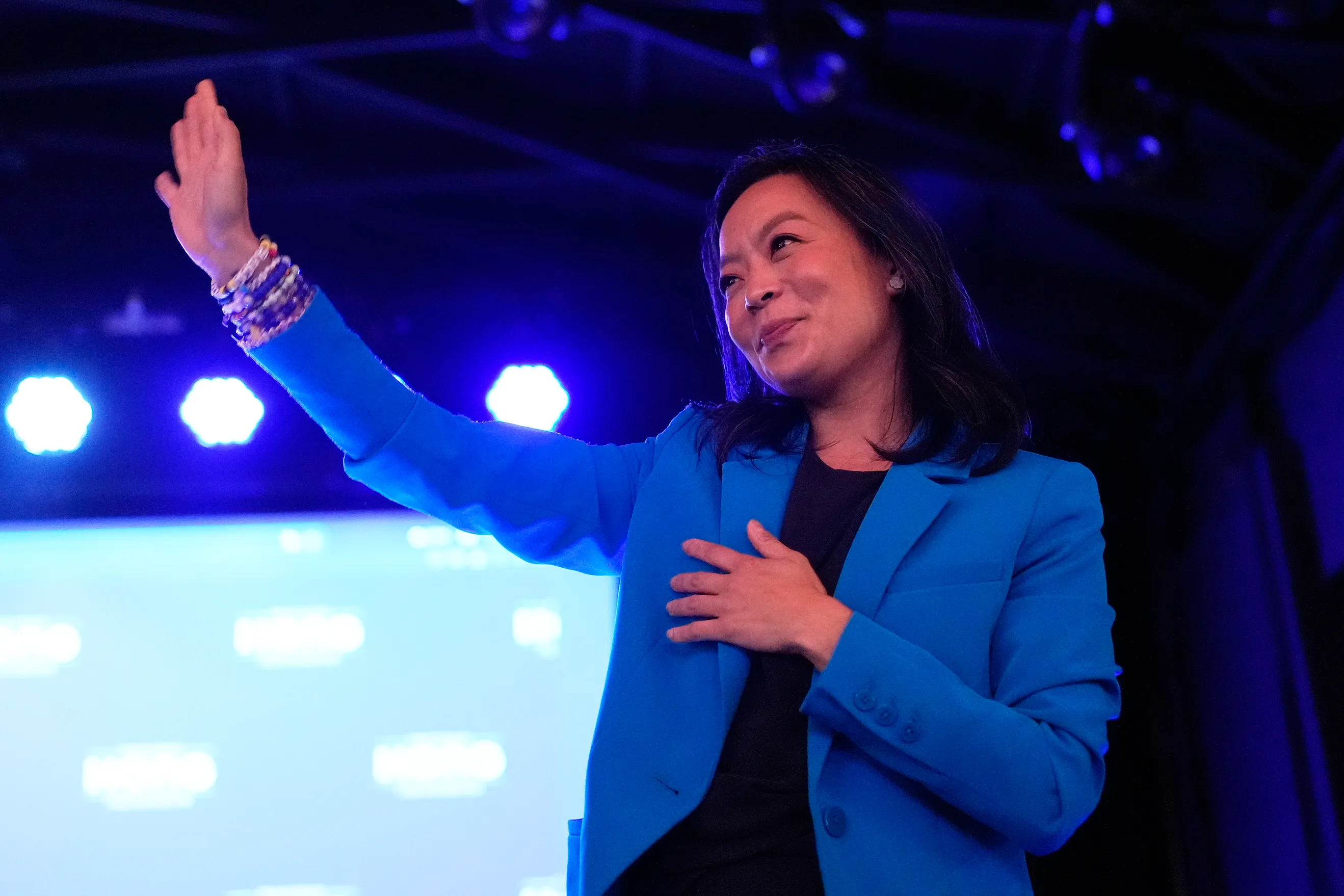
Headlines recently touted a new Siena Research Institute poll claiming that Zohran Mamdani, mayor of New York City, enjoys an approval rating of 69 percent .
I don’t believe that. Conversations that I have had with bodega owners, taxi drivers, construction workers and people in many other occupations lead to a different conclusion. New Yorkers cannot stand our smug young socialist mayor.
Am I not talking to the right people? Do such surveys reliably reflect the mood of the electorate?
After big misses from several polls in recent weeks, people are wondering what to believe. Of course, survey failures are nothing new; President Trump has consistently outperformed his polling, causing many supporters to view the entire industry as suspect.
For sure, polling can influence voters. If your candidate is crashing in the polls ahead of an election, you may decide it’s not worth voting — that the outcome is preordained and your vote won’t matter. Or, you may decide against donating to a campaign, not wanting to waste your money.
Remember that one month after his 2024 win, then President-elect Trump sued the Des Moines Register and its former pollster, J. Ann Selzer, for “brazen election interference” over a poll published just days before the election.
Selzer’s Nov. 2 survey showed Democrat Kamala Harris winning reliably red Iowa by 3 to 4 points — a shocking outlier that received a lot of attention at a critical moment in the campaign. Just days later, Trump won Iowa by 13 points . Although Trump later dropped his lawsuit, many agreed that Selzer’s survey had been intended to shake his supporters’ confidence in a race he was quite clearly winning. She quit her job soon thereafter.
Since that 2024 race, the rise of prediction and betting platforms has upped the stakes. People placing bets on political races will have even greater incentives to try to influence or manipulate polling. The smaller the race, the more vulnerable the poll.
Not all polls are trustworthy. Siena is generally deemed accurate, with one group rating it as having a “ slight Democratic lean. ” But sometimes, even an honest poll can produce a misleading result, as with the Siena poll that had Mamdani fans cheering.
The institute set out to assess the current state of the governor’s race in New York, and surveyed 811 “likely New York gubernatorial voters.” As such, they included only 227 people in New York City . But that figure is meaningless, as it represents less than .003 percent of the 8.8 million people living in the Big Apple. Of that tiny group, 69 percent approved of the mayor, while only 49 percent gave a thumbs-up to the Democratic Socialists of America, Mamdani’s political home base. That inconsistency typifies the screwy results that come with small samples. If New Yorkers like the mayor, shouldn’t they also like his platform?
Steve Greenberg, who works for the Siena Research Institute, told me that the poll’s samples were starkly different from what Siena might have included if they had aimed to determine Mamdani’s actual popularity.
Because the poll focused on the governor’s race, the survey overweighted areas outside the city. In those regions, the mayor fared poorly, registering approval of only 34 percent in the suburbs and 41 percent upstate. Also, non-white voters were undercounted; some 71 percent of respondents were white , whereas only 10 percent were Black and 13 percent Latino. Also unusual is that of those surveyed, more than half reportedly had incomes above $100,000, whereas the median income in New York State is just shy of $86,000 .
Bottom line: because it set out to measure trends in the New York state governor’s race, the Siena poll ended up inadvertently favoring Mamdani, overrepresenting whites with high incomes. The questionable accuracy of the reading, of course, did not preclude Mamdani supporters from jumping on the poll, to tout his supposed popularity.
Other polls — some big misses — have also recently raised eyebrows. In the run-up to the Democratic primary for an open Senate seat in Michigan, polling showed far-left candidate Abdul El-Sayed running away with the contest, up by double digits over establishment favorite Haley Stevens. On primary night, El-Sayed won by only 1 point. Some theorize that the polling has distorted the popularity of Democratic Socialists of America-backed candidates because white liberals are more likely to respond to polls than other Democrats.
But on the same night, in another Democratic Senate primary, progressive Minnesota Lt. Gov. Peggy Flanagan (D) beat out Rep. Angie Craig (D) by nearly 20 percentage points , despite some surveys showing a neck-and-neck contest .
And then there was an actual polling scandal. Median Strategies, a group describing itself as an “independent research and polling” organization on a website that has subsequently disappeared , confessed to creating completely bogus polls . One showed Francesca Hong, a socialist candidate who ran in the Democratic primary for Wisconsin governor, some 20 or more points ahead of rival Milwaukee County Executive David Crowley. Crowley, a moderate, ended up winning. Another poll from Median put incumbent Karen Bass ahead of opponent Nithya Raman in the Los Angeles mayoral contest by almost 12 points.
Median claimed on its now defunct website that it “ fabricated the polls as part of a ‘short-term social experiment'” meant to show “how purported polling information could enter and spread through the political information ecosystem without independent verification,” as reported by The New York Times. Since Bass posted the poll on X, it spread far and wide, boosting her numbers.
Who was behind that deception and why they did it remain to be seen. But the message is clear: Do not accept polling at face value. Look at the cross-tabs to see who was counted, who performed the survey and, most important — pick a candidate whose policies and personality appear best suited for the job.
The most important takeaway is this: do your own research and don’t go with the crowd, because sometimes we have no idea where the crowd is actually headed.
Liz Peek is a former partner of major bracket Wall Street firm Wertheim and Company.
Topics in this story
Gathered from external sources. Rights to this text belong to whoever originally published it.