Europe cannot get its industrial base in order
European increases in spending will not necessarily result in commensurate increases in defense capability.
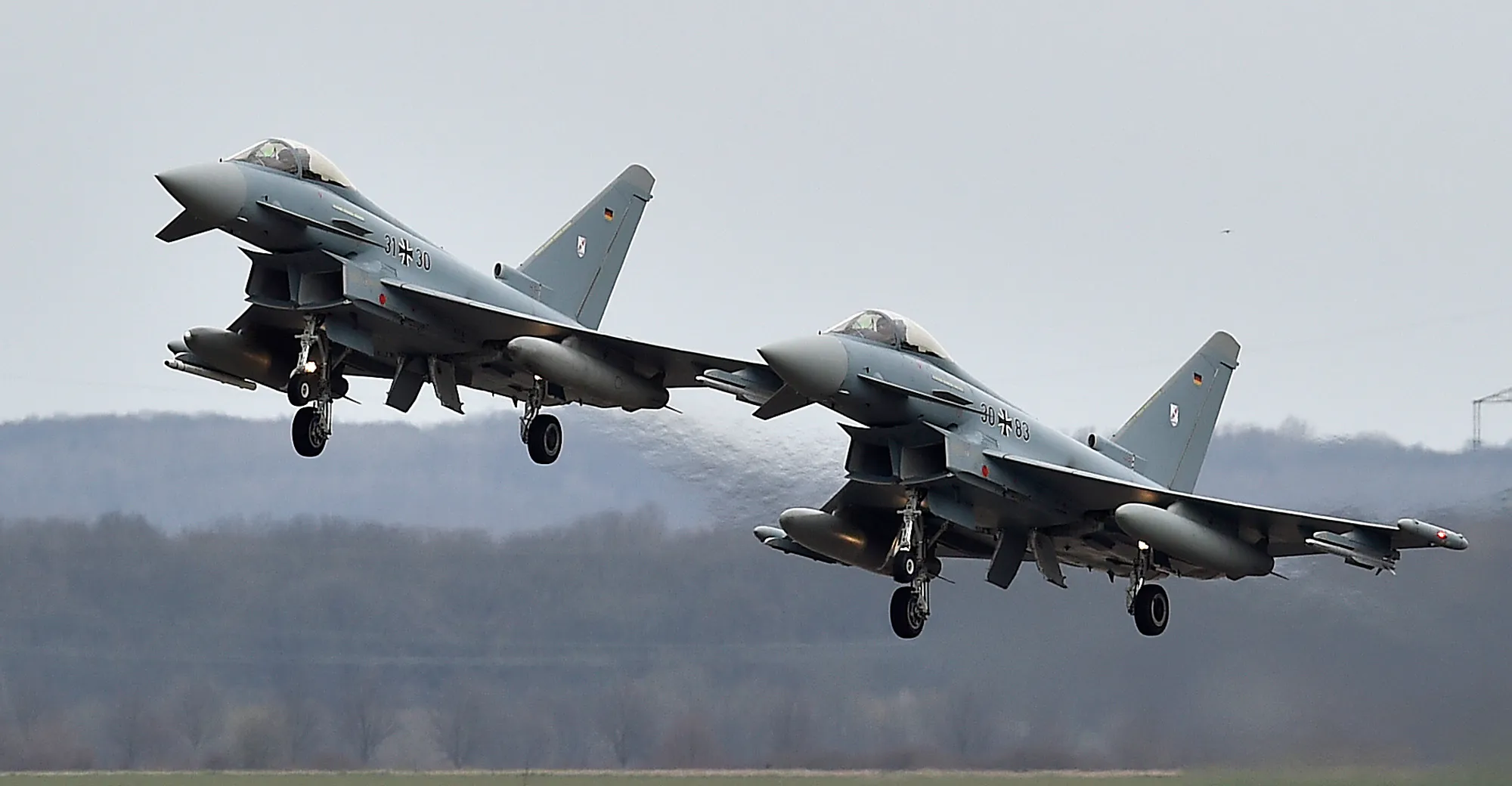
At the June 2025 Hague Summit, America’s NATO allies committed themselves to spending 3.5 percent of Gross Domestic Product on “core defense requirements” by 2035, plus an additional 1.5 per cent of GDP for “defense and security-related spending.”
They specified that the aim is to “protect…critical infrastructure, defend … networks, ensure civil preparedness and resilience, unleash innovation, and strengthen [the] defense industrial base.” What they did not specify, however, was whether and how those funds would be spent in a manner that contributes most efficiently to the alliance’s common defense.
The allies’ commitment to increase their spending is certainly a welcome development. It results from a combination of increased fears of the Russian threat to Europe and President Trump’s threats to leave the allies to their own devices if they do not increase their defense budgets.
Nevertheless, European increases in spending will not necessarily result in commensurate increases in defense capability. The European NATO allies have been plagued by unnecessary duplication for decades. International rivalries, coupled with a longstanding determination to protect their respective domestic industrial bases, have led member states to produce multiple versions of aircraft, ships and submarines, armor and other military equipment. As a result, the alliance is considerably less efficient than it otherwise might be.
Although NATO states have made some progress in rationalizing their domestic industrial bases they have by no means reached maximum efficiency. The latest example of the challenge to their ability to do so is, as has often been the case in the past, the difficulty of rationalizing aircraft production.
A team at the Financial Times reported last week that Italy had rebuffed a British effort to include German participation in the British-Italian-Japanese Global Combat Air Program to develop a sixth-generation fighter. The program represents a hedge against America backing away from Europe (and for that matter, East Asia); it would create an alternative to purchasing American aircraft.
The Financial Times reported that although Germany could make a major financial contribution to the project and increase orders for the plane, “officials from [Japan and Italy] … fear that their aerospace companies would lose work if German industrial players, including Airbus, joined the program.” Instead, the two partners were prepared to offer Germany the same “observer status,” they had granted to Canada — an offer Germany would certainly reject.
The Germans had previously parted ways with France for joint development of another sixth-generation plane, “the Future Combat Air System.” Germany had pulled out of the project due to disagreements over who would lead it; how to distribute work share; and ultimately, over the plane’s mission. Paris wanted a smaller aircraft to fly off French aircraft carriers; Berlin wanted a larger plane for overland air superiority.
Chancellor Friedrich Merz seemed to go even further when he asked, “Will we still need a manned fighter jet in 20 years’ time … given that we will have to develop it at great expense?” Evidently, the Germans subsequently had second thoughts about remaining outside a European fighter program, but the distribution of workshare was another matter.
The Italian government quickly rejected the Financial Times report. The Defense Ministry stated that it had offered Germany observer status “precisely to facilitate and accelerate this process…as an immediate facilitator of information-sharing on the program with a view to subsequent full membership.” The offer “was not intended to limit Germany’s future role in the program. On the contrary: it was aimed at accelerating the conditions for its involvement as much as possible, whilst safeguarding the program’s progress and the established timetable.”
Yet the Italian denial was not a complete denial. “Safeguarding the program’s progress and…timetable” could provide an excuse for excluding Germany if there was schedule slippage. Once again, industrial base issues appear to be complicating Europe’s effort not only to spend defense funds more efficiently, but to reduce its reliance on American military systems, despite the Trump administration‘s pressure on the allies to spend their defense funds on more purchases from U.S. contractors.
Programs such as Global Combat Air Program and the Future Combat Air System certainly represent a European hedge against a possible reduction of American support for NATO and reflect Europe’s growing desire to wean itself off American military sales. Yet the flap over German participation in the former, as well as Berlin’s break with Paris over the nature and management of the latter, highlights the challenges that continue to plague any European effort to develop a coherent and efficient industrial base. That goes not only for aircraft, but also for other key military capabilities they lack, such as airlift, intelligence, surveillance and reconnaissance.
As long as the NATO allies cannot reorganize and rationalize their industrial production, they will find that they must still rely on purchases from American contractors, whether they like it or not.
Dov S. Zakheim is a senior adviser at the Center for Strategic and International Studies and vice chairman of the board for the Foreign Policy Research Institute. He was undersecretary of Defense (comptroller) and chief financial officer for the Department of Defense from 2001 to 2004 and a deputy undersecretary of Defense from 1985 to 1987 .
Topics in this story
Gathered from external sources. Rights to this text belong to whoever originally published it.