Democrats win Senate majority
Democrats have won the Senate majority, a feat that seemed unreachable last year but that came to fruition with Republican candidates failing in states won just two years ago by President Trump, whose failing approval ratings was a huge drag on the GOP. Victory in the Senate will deliver additional oversight powers to Democrats, who…
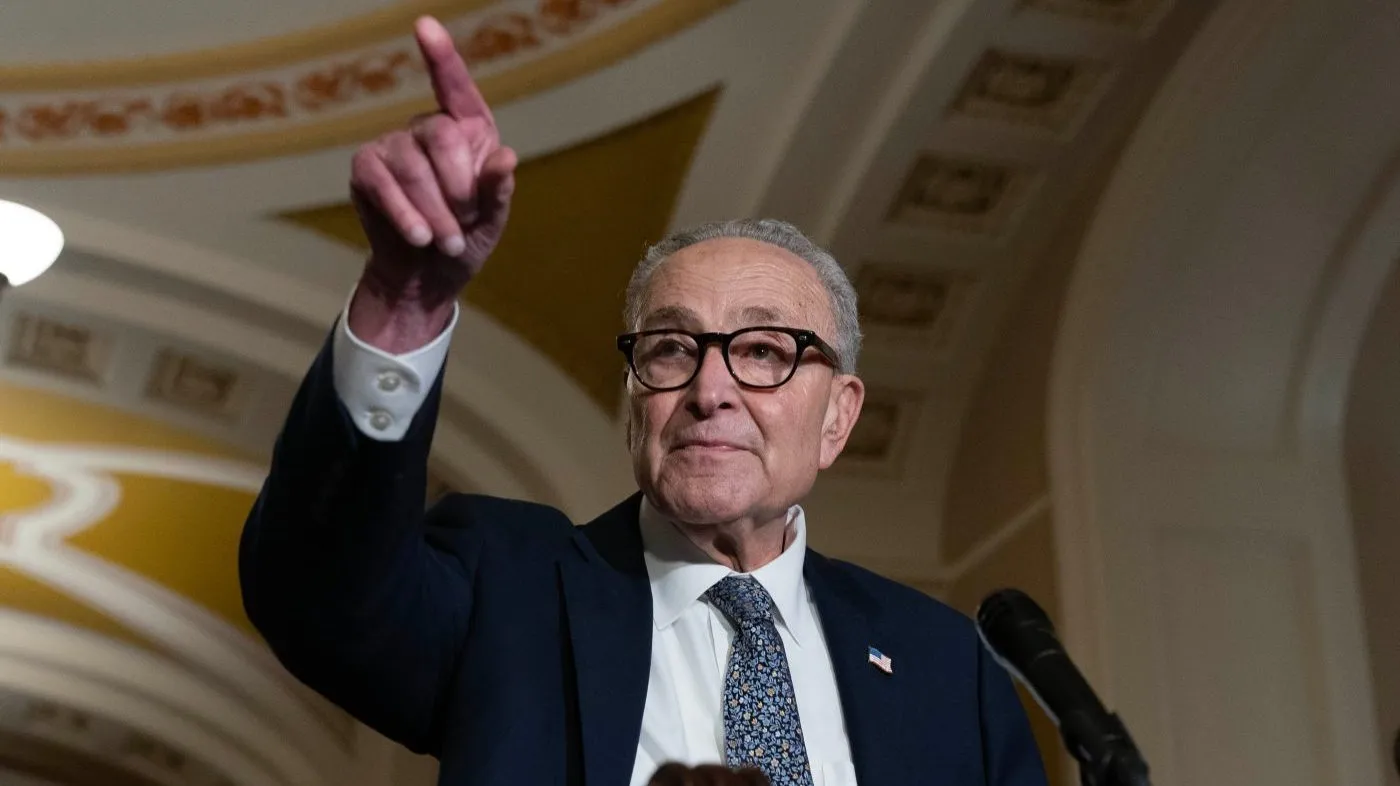
Democrats have won the Senate majority , a feat that seemed unreachable last year but that came to fruition with Republican candidates failing in states won just two years ago by President Trump, whose failing approval ratings was a huge drag on the GOP.
Victory in the Senate will deliver additional oversight powers to Democrats, who will now have a much bigger say on administration and judicial nominations.
They will also set the schedule for the Senate and have new powers to call in administration officials for hearings.
The string of Democratic victories sets the stage for Sen. Chuck Schumer (D-N.Y.) to return as majority leader in 2027 and for hardball negotiations with Trump on an array of issues, including on federal spending levels.
It puts a significant crimp on Trump’s legislative powers and his ability to reshape the federal court system, though it will be necessary for Democrats to negotiate with the White House to win their own legislative victories.
Democrats needed to net at least four seats to win the Senate majority, which had seemed a tall order given the fact that most of the competitive seats held by Republicans were in states comfortably won by Trump.
But high gas prices elevated by the war in Iran along with more general worries about the economy gave Democrats ammunition to go after Trump and Republicans.
Senate Democrats flipped their first seat of the night in North Carolina when media election trackers declared former Gov. Roy Cooper (D) the victor over former Republican National Committee Chair Michael Whatley.
Democrats got their next biggest call of election night when pediatrician Annie Andrews was declared the winner over Sen. Darline Graham (R-S.C.), who had only been appointed to the seat in July after her brother, longtime Sen. Lindsey Graham (R-S.C.), died suddenly.
Another big early call for Democrats came in Texas where state Rep. James Talarico (D) handily defeated state Attorney General Ken Paxton, whom Trump controversially endorsed over Sen. John Cornyn (R-Texas) in the GOP Senate primary.
The political headwinds facing Republican candidates grew steadily stronger amid the deeply unpopular Iran war. Earlier in the year, Trump also took political hits from the killings of two U.S. citizens in Minneapolis by federal immigration officers sent to the city by an administration focused on immigration.
Trump also launched a trade war that raised prices, including with Canada, one of America’s oldest allies. That became an issue in a number of states, including those along the long border with Canada.
Political handicappers initially gave Democrats well below 50-50 odds of winning back control of the upper chamber, but by the final week of campaigning before Election Day, they were favored to win control of both the Senate and House.
Decision Desk HQ in the final week of the campaign gave Democrats a 60 percent chance of winning back the upper chamber. On Tuesday at about 6 p.m. EST, the Kalshi prediction market put the odds at 76 percent.
The loss of the Senate is a pointed rebuke of Trump, who campaigned extensively for GOP candidates throughout October, including Sens. Jon Husted (Ohio), Dan Sullivan (Alaska), Roger Marshall (Kan.), Graham and Paxton.
Democrats winning control of the Senate leaves Trump’s agenda, even in the postelection lame-duck session of Congress, in limbo. They have warned that Trump’s judicial and executive branch nominees will have a difficult time getting confirmed in the Senate.
Now, Senate Majority Leader John Thune (R-S.D.) must decide whether to spend much of the lame-duck session trying to confirm as many Trump nominees as possible or spend weeks working on a budget reconciliation package to fund the Defense Department over Democratic objections.
Schumer is expected to be easily elected as majority leader when Senate Democrats hold their leadership elections in early December, even though some senators-elect, such as Juliana Stratton in Illinois, have threatened not to support him.
Thune is expected to be elected as Senate minority leader when Republicans hold their leadership election next week.
The president campaigned in Rock Hill, S.C.; Chillicothe, Ohio; and Corpus Christi, Texas — among other battleground states — in the final week and predicted victory for Republicans, despite polls showing them down or tied even in GOP-leaning states.
Trump urged supporters to pretend he’s “on the ballot” in hopes of driving low-propensity Republican voters who turned out in big numbers in the 2024 election to the polls on Election Day.
Democrats in the Senate may now face pressure from their own base to turn their electoral victories into legislative wins, despite the reality that they will still need Trump’s signature to turn their bills into laws.
Democrats won big on election night despite being heavily outspent by Republican Party committees and aligned outside groups.
Senate Republicans and aligned super PACs spent significantly more than their Democratic counterparts, drowning Democratic candidates in negative attack ads.
In Texas, outside groups spent more than $153 million against Talarico, while in Ohio groups spent more than $115 million against former Sen. Sherrod Brown (D-Ohio), according to OpenSecrets.org, a group that tracks campaign fundraising.
In Michigan, GOP-aligned groups spent more than $91 million against Democrat Abdul El-Sayed, and in Maine, they spent more than $55 million against Democratic nominee Troy Jackson.
A Republican source familiar with the Senate fundraising dynamics estimated that Thune and aligned outside groups spent nearly three-quarters of a billion dollars to protect the Senate majority.
Thune urged GOP colleagues to run on their legislative record in Washington, especially the One Big Beautiful Bill Act, which made permanent Trump’s tax cuts from his first term, made permanent major tax breaks for corporations and included new tax break, such as “no tax on tips” and “no tax on overtime.”
Senate Democrats focused their campaign message on the issue of affordability and what they called a “culture of corruption” under Trump’s leadership in Washington.
Schumer warned colleagues last month that Democrats were being outspent in key races, describing the spending disparity as “one enormous advantage” for Republicans.
Democratic candidates made up for some of the Republicans overall fundraising advantage by raising more than their Republican opponents for their personal campaign coffers.
Democrats in more than a dozen Senate races raised more than $250 million during the third fundraising quarter of 2026 compared with more than $56 million collected by Republicans.
In Texas, Talarico raised more than $60 million, while Paxton raised about $10 million during that span.
In Ohio, Brown outraised Sen. John Husted (R) $23 million to $4.8 million from the start of July to the end of September.
In Alaska, former Rep. Mary Peltola (D) raised $17 million in the third quarter, while Sen. Dan Sullivan (R) raised just less than $3 million.
Voter dissatisfaction over rising prices, Trump’s handling of the economy, and the drawn-out military conflict with Iran, which they blamed for high gas and diesel prices, eclipsed the GOP fundraising advantage and message.
A Fox News poll of registered voters conducted nationwide in mid-October found that Trump’s job approval had sunk to 36 percent and that 64 percent of voters disapproved of his performance.
In a troubling sign for GOP candidates, only 22 percent of independents said they approved of Trump’s job performance.
The president’s job approval rating among Republicans dipped to 76 percent, according to the poll.
Topics in this story
Gathered from external sources. Rights to this text belong to whoever originally published it.