Flake knocks Musk campaign spending: ‘You probably ought to know what these candidates are standing for’
Former Sen. Jeff Flake (R-Ariz.) on Wednesday knocked Tesla CEO Elon Musk for his regret of spending more than $400 million on Republican candidates in the 2026 midterm elections, saying the tech leader “probably ought to know what these candidates are standing for.” CNN’s Erin Burnett played a clip of Musk’s comments during a virtual…
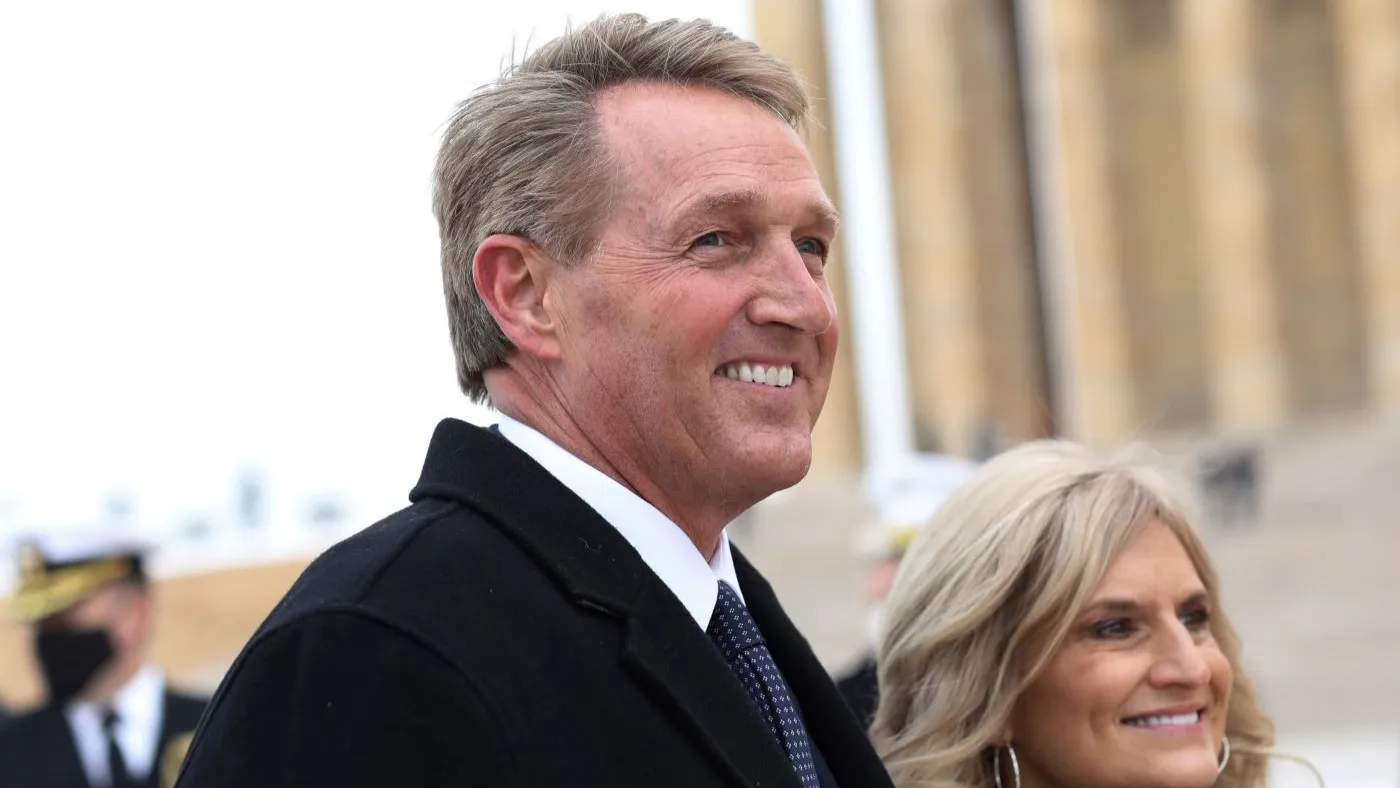
Former Sen. Jeff Flake (R-Ariz.) on Wednesday knocked Tesla CEO Elon Musk for his regret of spending more than $400 million on Republican candidates in the 2026 midterm elections, saying the tech leader “probably ought to know what these candidates are standing for.”
CNN’s Erin Burnett played a clip of Musk’s comments during a virtual interview with New York Times columnist Andrew Ross Sorkin at the DealBook Summit, where the world’s richest person also said he was “ not MAGA ” and that he was not sure “what MAGA means.”
“He said, ‘I’m not MAGA if MAGA is blind adherence to a set of principles,'” Flake said. “MAGA is not blind adherence to a set of principles. It’s blind adherence to one individual. President Trump has said over and over, ‘I define what MAGA is.'”
“Before you put down a few hundred million dollars on an election, you probably ought to know what these candidates are standing for,” the former senator admonished.
Flake also noted that a “good chunk” of Musk’s campaign spending went to Texas Attorney General Ken Paxton (R), who lost his bid for outgoing Sen. John Cornyn’s (R-Texas) seat to Democratic Sen.-elect James Talarico (Texas). Musk poured $158 million into Texas PAC, a key super political action committee that backed Paxton.
The Arizona Republican said Paxton “had no business being a candidate were it not for President Trump propping him up.”
Musk told Sorkin on Wednesday that he felt “pretty foolish” for spending $442 million on GOP campaigns after Democrats made sweeping victories across the country.
He said what motivated him was having at least the House, the Senate or the White House be in Republican control going into 2029, but that he wanted neither party to hold a “supermajority.”
Musk also described himself as “ideologically quite moderate.”
The tech billionaire was a staunch supporter of Trump’s 2024 reelection campaign. He went on to lead the defunct Department of Government Efficiency following Trump’s return to the White House in 2025.
The two had a falling out in the months after, but they have been seen together on occasion since.
Topics in this story
Gathered from external sources. Rights to this text belong to whoever originally published it.