DOJ insists new Trump inscriptions are ‘not renaming’ Kennedy Center
The Justice Department (DOJ) on Thursday defended renewed plans to inscribe President Trump’s name on the Kennedy Center, insisting it does not run afoul of previous court rulings that found the change was unlawful. A DOJ lawyer told U.S. District Judge Christopher Cooper during a nearly two-hour hearing that the renowned performing arts center was in “structural…
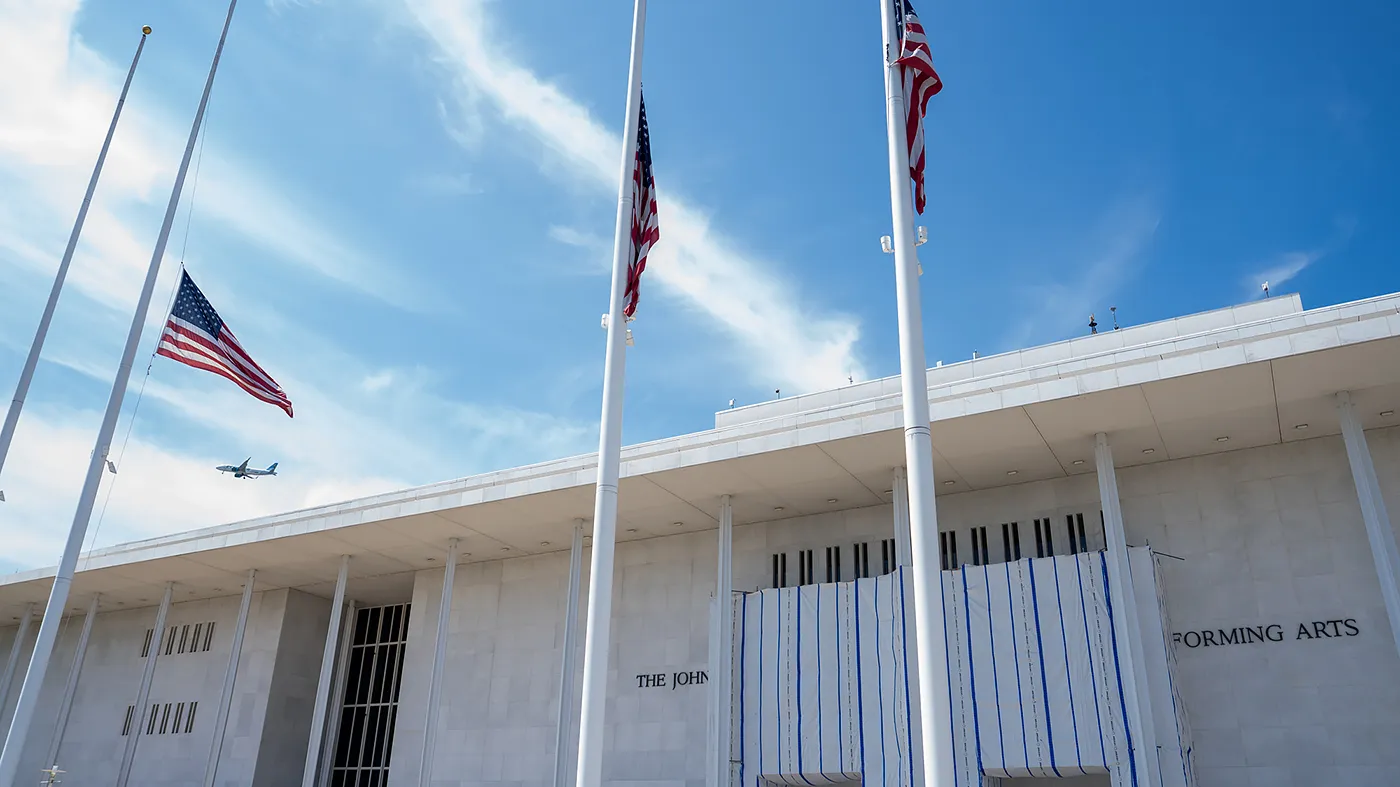
The Justice Department (DOJ) on Thursday defended renewed plans to inscribe President Trump’s name on the Kennedy Center, insisting it does not run afoul of previous court rulings that found the change was unlawful.
A DOJ lawyer told U.S. District Judge Christopher Cooper during a nearly two-hour hearing that the renowned performing arts center was in “structural and financial disarray” and the inscriptions only sought to recognize Trump’s role in helping restore it.
“We think it’s quite clear that there’s no renaming here,”Brantley Mayers said, claiming the Kennedy Center board’s decision does not violate a federal law that establishes the institution as a “living memorial” to former President John F. Kennedy Jr.
The hearing came in a challenge brought by Rep. Joyce Beatty, an Ohio Democrat and ex officio board member who has been suing to halt the changes. The congresswoman was present in the courtroom.
“They are doing the same thing that they were told they couldn’t do before,” Beatty’s lawyer Nathaniel Zelinsky said, accusing the board of engaging in “outright defiance” of the court.
He argued the institution is in “crisis” because of the board’s efforts to rebrand it, suggesting that the board’s decision was a “smoke screen for financial mismanagement.”
Cooper, an Obama appointee, did not order a ruling from the bench.
In late May, Cooper blocked the Kennedy Center from moving forward with a prolonged closure for renovations but allowed “necessary maintenance and repair work” to continue.
He rejected the notion during Thursday’s hearing that further court intervention would impede that effort, saying it was “not quite fair.”
Cooper also ordered at the time that Trump’s name be removed from the building’s facade, concluding that the board’s decision was unlawful because only Congress had the authority to change the name.
Several attempts by the Justice Department to pause Cooper’s order were unsuccessful, and the lettering of Trump’s name was stripped in the early morning hours of June 13. It was simultaneously covered with a tarp, obscuring the change from public view.
But the board voted on a resolution earlier this month that would again add Trump’s name to the facility, this time in the form of two inscriptions that read: “renovated and restored by President Donald J. Trump” and “endowed by the Trump Kennedy Center Fund.”
Critics have argued that affixing Trump’s name to the front portico infringes on a provision in federal law that bars “additional memorials or plaques” in the Kennedy Center’s “public area.” The Justice Department disagreed, contending that the board’s decision fits within the law because it leaves the congressionally mandated name intact.
Plans to close the building for a two-year renovation project that could cost an estimated $257 million were also revived, with officials claiming the building may have to be “torn down” if not allowed to move forward.
Commerce Secretary Howard Lutnick told reporters ahead of the hearing that the REACH, an extension of the main theater, would remain open for performances, walking back previous controversial proposals that included its full closure.
“The REACH is not closing,” Lutnick said. “The REACH is going to stay open so the Kennedy Center can keep providing all of its performances and all of its agenda.”
The board also approved renaming the campus for Trump, which the government argues is distinct from the building itself. The Justice Department contended that Beatty does not have standing to challenge that aspect because she stated during the Aug. 13 board meeting that she had “no objection” to it.
Zelinsky noted that while Beatty “unequivocally” voted no on the full resolution, she signaled some support for finding a lawful way to recognize the president’s contributions.
“This is her in good faith trying to reach some kind of common ground with a board that is trying to flout the law,” he said.
The Kennedy Center has pledged not to move forward with any of its plans until at least Sept. 8, a deadline Cooper appeared skeptical of.
“What’s magic about that date?” he asked, to which Mayers replied that was the board’s vote and they were sticking to it.
Mayers also urged Cooper not to weigh in on the endowment inscription yet because it had not reached the $100 million threshold that would trigger its placement.
There is “no evidence of imminence,” he told the court.
Topics in this story
Gathered from external sources. Rights to this text belong to whoever originally published it.