Putin and Trump refuse to accept the realities of their wars
Neither Trump nor Putin respond well to negative feedback.
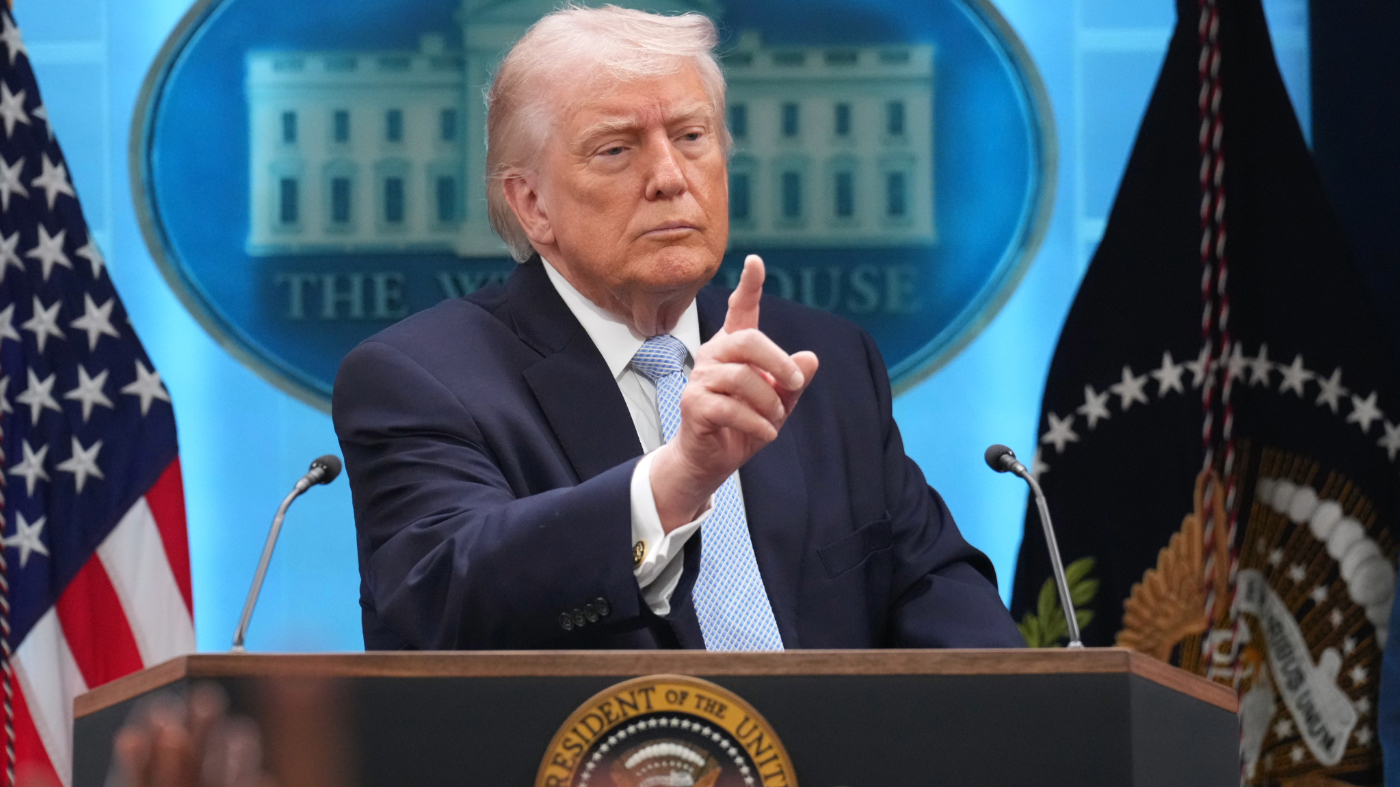
Presidents do not like hearing bad news. CIA Director John Ratcliffe went to Moscow to brief Russian counterparts on the U.S. assessment of the state of the war in Ukraine. The news could not have been good.
Even if Ukraine is not winning the war, its costs to Russia in blood and treasure have been extraordinary. Now, Russia’s energy infrastructure is being increasingly shut down .
Suppose Russian President Vladimir Putin reversed the favor, sending Foreign Intelligence Service head Sergey Naryshkin to brief President Trump on America’s “ excursion ” into Iran. Imagine how that would go down if Naryshkin relayed the reality? Trump would be apoplectic.
Using U.S. reporting, Naryshkin would tell the president that total U.S. losses are estimated at $29 billion or more. Last month, the administration asked for $67 billion to support the conflict. The U.S. has lost , so far, about a quarter of its MQ-9 Reaper fleet amounting to 45 drones. Also, at least 850 Tomahawk cruise missiles and more than 1,000 anti-missile and anti-drone weapons were launched against incoming Iranian strikes.
Naryshkin would remind Trump that Iran took out the command-and-control center in Bahrain , as well as major radar sites in the Gulf region. Meanwhile, there are reports that Iran has damaged one U.S. F-35 Lightning II and four F-15 Strike Eagle fighter jets, destroyed at least two KC-135 tankers and an E-3 Sentry AWACS, and shot down an A-10 Thunderbolt.
Two U.S. MC-130 transport aircraft were reportedly destroyed to “keep them out of enemy hands.” And due to the wear and tear of many months at sea without maintenance, the USS Ford and USS Lincoln aircraft carriers will both be out of action for perhaps a year for repairs.
Neither Trump nor Putin respond well to negative feedback. Few presidents do. Two personal experiences reinforce that conclusion.
During the Vietnam War, it took the January 1968 Tet Offensive and renowned TV anchor Walter Cronkite declaring the war a stalemate for President Lyndon Johnson to recognize the truth.
In June 1967, three young officers were ordered back from Vietnam to brief the president on their perceptions of the war. I was one of them . Present were President Johnson, Secretary of Defense Robert McNamara, National Security Advisor Walt Rostow, General Earle Wheeler and other senior advisors.
Asked first, and directed by Johnson to be blunt, I told the officials that “we were getting the sh-t kicked out of us” and that our options were “to get in or to get out” — meaning that unless we were prepared to invade with ground troops to cut North Vietnam in half, we could not win.
The other two officers did not get a chance to speak. During the next 55 minutes, Johnson, McNamara and Wheeler gave us a pep talk on how well the war was going. They did not dispute what I had said. Ignorance was the better response.
When the three of us left, it was clear that no one in the White House had any grasp of the realities. More likely, having been so intimately engaged in running the war, cognitive dissonance took over such that winning was not only likely to the president, but was the only option.
The other experience was during the second Iraq war. I had known and been very close to former Secretary of State Colin Powell since we were both at the National War College — he was in the class of 1976 and I was on the faculty.
During the run up to the war, I did not believe Iraq had weapons of mass destruction that it could use and said so repeatedly as a Fox News contributor. On a number of occasions, I pleaded with Powell to take a second and even third look based on the International Atomic Energy Agency’s and former Central Command Commander Marine General Anthony Zinni’s negative assessments.
Having known Secretary of Defense Donald Rumsfeld well since he was a rump member of the “ shock and awe ” group of the first U.S.-Iraq war of the mid-1990’s, I raised similar doubts with him. But President George W. Bush had made up his mind. Invading Iraq was part of the “ Freedom Agenda ” that would impose democracy on the region. War was inevitable.
I also asked what Plan B was if no weapons were found? No answer.
History may not repeat, but if Naryshkin were to brief Trump, my guess is, like his presidential predecessors, his view would not change.
Harlan Ullman is a senior adviser at Washington’s Atlantic Council, chairman of a private company and principal author of the doctrine of shock and awe. His upcoming book, co-written with Field Marshal The Lord David Richards, former United Kingdom chief of defense, is “Who Thinks Best Wins: How Decisive Strategic Thinking Will Prevent Global Chaos.”
Topics in this story
Gathered from external sources. Rights to this text belong to whoever originally published it.