Don’t assume moderate Democrats crave centrism
A voter can call themselves moderate and still want candidates who champion economic populism and challenge the political establishment.
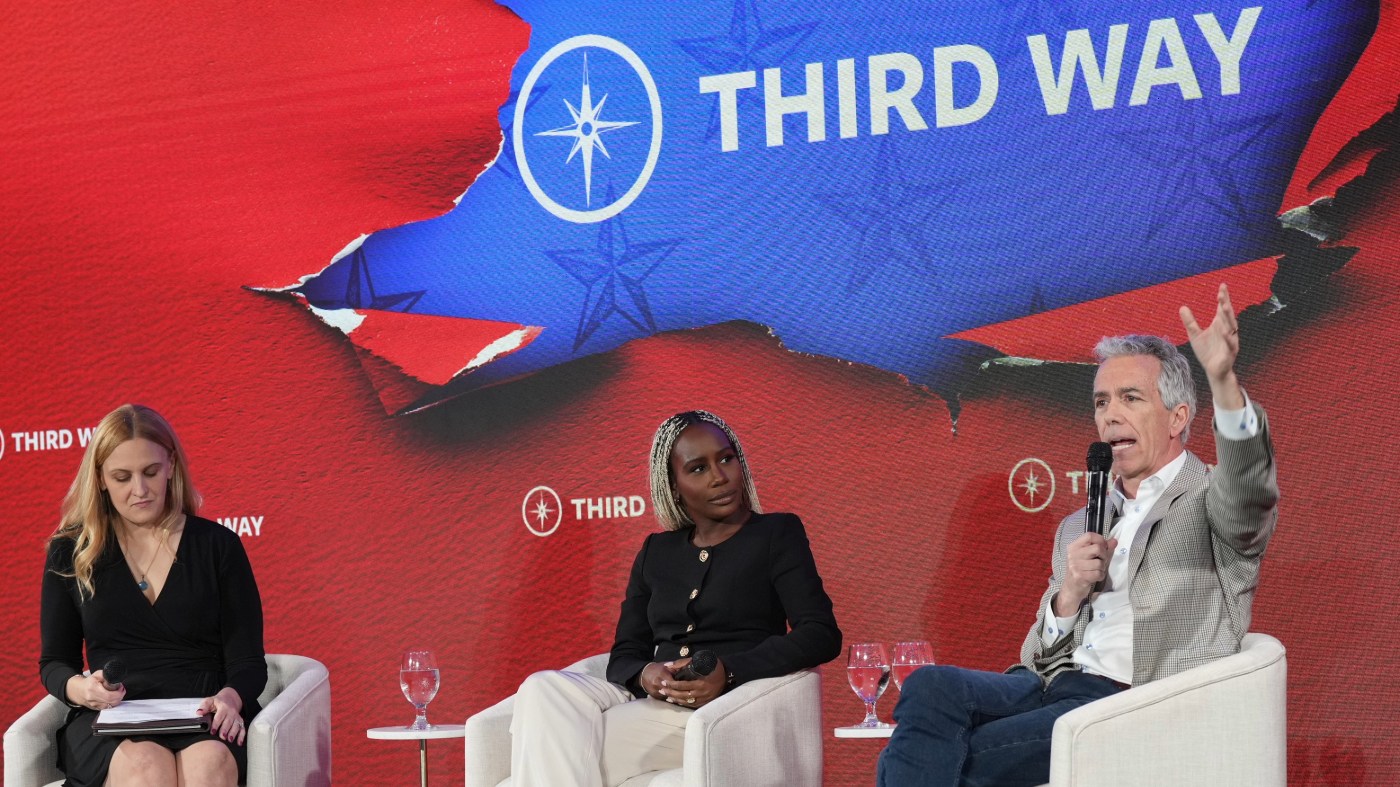
Another election cycle, another round of well-resourced, centrist groups recycling the same arguments you could have overheard renting movies from Blockbuster in the ‘90s.
Because a plurality of voters identify themselves as “moderate,” they say , the path to winning elections is a version of “combative centrism” — pick fights with Trump, but also nominate candidates who break with the left, avoid promises of transformative change and don’t sound too threatening to corporate and wealthy interests.
It is an argument we have all heard before, and one that relies on oversimplifying what voters actually mean when they call themselves “moderate.”
The evidence that centrism itself is an electoral advantage is mixed and considerably weaker than its advocates suggest. As data journalist G. Elliott Morris has documented, claims about the electoral benefits of moderation are often overstated . Moderate Democrats may perform slightly better than a typical Democrat, but the estimated advantage is small and surrounded by considerable uncertainty.
More importantly, moderate is a description of how voters see themselves, not a prescriptive policy platform. It’s wrong to assume that voters think about ideology or see a choice between a centrist candidate and a progressive candidate in the same way political pundits and operatives do. A voter can call themselves moderate and still want candidates who champion economic populism and challenge the political establishment.
Recent public opinion research has made clear that voters, including moderates, are deeply skeptical of concentrated wealth and corporate power.
When the organization I lead, Data for Progress, asked which entities have the most negative impact on U.S. society and our economy, likely voters nationwide point to billionaires, corporate landlords and artificial intelligence companies. Among voters who identify as moderate, a majority say the existence of billionaires is a sign of a dysfunctional economy, and that billionaires earned their wealth through exploiting workers and consumers or through luck and family inheritance, rather than hard work and innovation.
The same pattern emerges in the most competitive congressional districts. The Working Families Party’s research finds that 80 percent of voters across 18 toss-up districts and Michigan believe elected officials care more about wealthy donors than people like them. More than half of moderates and independents in those districts prefer candidates who challenge the status quo and take on corporations and billionaires over candidates who defend the political establishment.
That is not a constituency clamoring for more conventional centrism. Our report on swing voters tells a similar story. We find that a majority of 2026 swing voters, 56 percent, call themselves moderate. But when we provide them with a list of policies and ask which three policies would make them definitely vote for a Democratic candidate in the midterm elections, they are persuaded more strongly by progressive economic policies than conservative cultural stances.
The top choice is to raise taxes on the wealthy at 28 percent, followed by creating a Medicare for All healthcare system at 24 percent. Also, 21 percent also choose to ban AI from setting prices or wages based on personal data, and 20 percent want to restrict private utility companies from passing unreasonable costs to customers.
Swing voters are not asking Democrats to split the difference on every issue. They want Democrats to advance tangible solutions to lower the cost of living and take on the powerful interests they believe are responsible for making their lives harder.
Centrism can backfire. In our polling, a hypothetical Democrat running on a populist economic message beat a Republican by 15 points , while a Democrat running on a more conventional Democratic message won by just 6 points. In other general election matchups, our polling has found Democratic candidates who reject corporate PAC money outperform candidates who who accept money from interests like the American Israel Public Affairs Committee, AI, crypto and Big Pharma.
The lesson isn’t that every voter is secretly a socialist. It’s that the center of public opinion is not synonymous with the center of the political establishment.
That is also what makes the phrase combative centrism so revealing. Combativeness has to be directed at something. You cannot promise to fight the status quo while defending the incrementalism that sustains it. And you cannot credibly run as a populist champion for the working class while taking money from the same powerful interests you promise to fight.
Moving right for the sake of moving right will not bring moderates and swing voters into the Democratic coalition. The voters Democrats need are looking for candidates who will lower costs, put workers first and take on concentrated economic power.
Moderate voters aren’t asking Democrats to do less. They are asking them to make their lives better and take on the powerful interests standing in their way. They are asking them to do something that works.
Ryan O’Donnell is executive director of Data for Progress .
Topics in this story
Gathered from external sources. Rights to this text belong to whoever originally published it.