DC Courts pleads with Congress for funding as system reaches tipping point
Years of flat funding are stretching the District of Columbia Courts thin, placing a system relied on by thousands each day under what officials describe as unsustainable pressure. It’s left administrators, judges and clerks to juggle an ever-growing caseload and heightened security needs with a budget that hasn’t kept pace. “We have certainly reached a critical inflection point,” said…
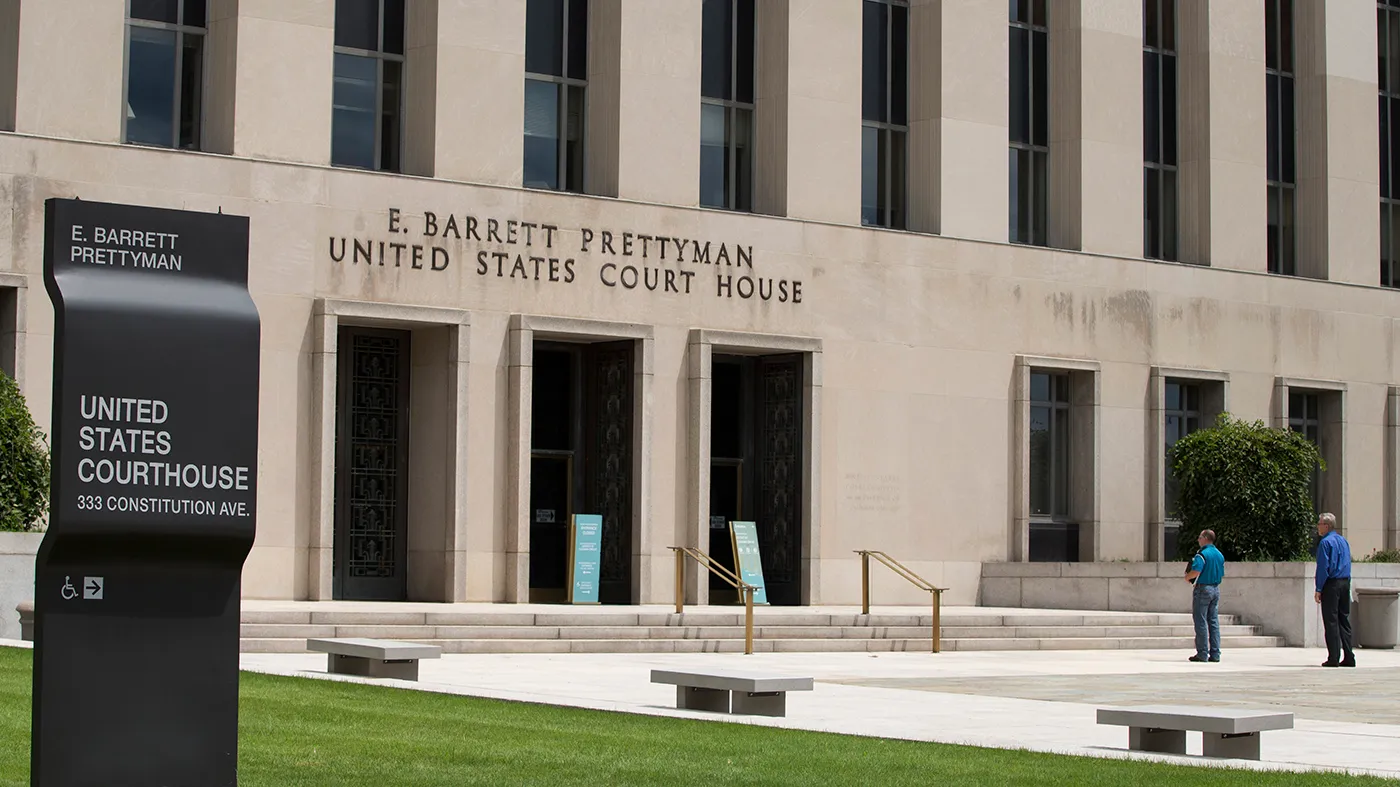
Years of flat funding are stretching the District of Columbia Courts thin, placing a system relied on by thousands each day under what officials describe as unsustainable pressure.
It’s left administrators, judges and clerks to juggle an ever-growing caseload and heightened security needs with a budget that hasn’t kept pace.
“We have certainly reached a critical inflection point,” said Herbert Rouson Jr., the executive officer of D.C. Courts.
And the system is unique in that it is entirely federally funded.
D.C. Courts, which includes both the trial and appeals courts for the nation’s capital, is requesting $298.1 million from Congress for the next fiscal year — a $35 million increase to its operating budget to address the caseload, strengthen cyber and physical security, and maintain essential services.
“Funding levels have remained unchanged since fiscal year 2023, but the demand for court services has actually surged since that time,” Rouson said.
The strain, he said, can be felt in the courts’ workload.
Filings across both D.C. Superior Court and the D.C. Court of Appeals have been on the rise since 2023, with the number of criminal cases up by 150 percent and domestic violence misdemeanors up by roughly 37 percent.
And because the courts generally function similarly to a state court, the system doesn’t get to decide which cases it hears.
“Every case that’s filed, we have to do something with it,” Rouson said. “We have to handle it. We have to process it, and that takes staff to do.”
That often means also handling cases brought by federal prosecutors in the U.S. Attorney’s Office for the District of Columbia, which acts as the local district attorney for most felony offenses committed by adults within the district.
Inside one nearly full Superior Court courtroom, a judge apologized for the proceedings being delayed but said some attorneys had yet to check in. On her calendar were more than a dozen criminal case hearings — ranging from misdemeanors to a theft on the Metro to a National Guardsman accused of pointing a gun at a fellow Guard member during an argument.
The court’s docket was so full that one attorney assured a client that he would be back, saying he was needed in three different courtrooms that morning.
Prior to the COVID-19 pandemic, Rouson said roughly 10,000 people would walk through the courthouse doors on any given day. He suspects that number is “creeping back up,” especially as U.S. Attorney Jeanine Pirro leads an aggressive local crime crackdown at President Trump’s direction.
The prosecutorial shift, which began to take hold last August, has resulted in more individuals passing through arraignment court. The “no paper” rate — the percentage of arrests made by D.C. police where prosecutors choose not to file charges — has dropped below 5 percent, according to officials.
Early warning signs of a system in distress are also reflected in a criminal clearance rate that has fallen from 108 percent to 60 percent in just three fiscal years, meaning cases are being filed faster than the courts can resolve them.
Congress has provided some help, recently confirming eight judges to fill vacancies on the bench. But officials said more judges alone can’t offset the backlog.
“Those efforts are welcome,” Anna Blackburne-Rigsby, chief judge of the D.C. Court of Appeals, and Milton Lee Jr., chief judge of the D.C. Superior Court, wrote in an August op-ed for The Washington Post . “But adding judges without providing the workforce and infrastructure to support them limits the efficacy of that investment. Justice depends on an entire system working together.”
It isn’t just a matter of personnel, either. Wrapped into the D.C. Courts’ budget request is an additional $10 million for physical and cybersecurity that officials say is needed to thwart attempted online attacks and protect judges.
That is not an unfamiliar appeal to lawmakers. When Supreme Court Justice Amy Coney Barrett appeared before Congress in July alongside Justice Elena Kagan, she testified that there was a “really high” threat level facing federal judges.
And that doesn’t just apply to the federal bench. Rouson said there have been approximately 800 investigations of threats against D.C. Courts judges, which has raised the demand for better courthouse security.
Yet House appropriators have approved a budget that would see funding for D.C. Courts cut by $18 million in fiscal 2027, a figure that officials say is roughly equivalent to the Courts’ entire annual security costs or the cost of processing 3,600 criminal cases.
The budget proposal has yet to make it to the full House floor for a vote. And the Senate version of the appropriations bill is still pending in committee.
“That would just force us to choose between some critical security investments and compromising our court operations and the delivery of service that really the public has come to expect of this court, and that we feel the public is really due,” Rouson said.
He said the D.C. Courts have already taken steps over the past four years to cut costs to avoid falling into a deficit, scaling back on hiring, contracts and other various expenses. Certain maintenance projects have also been put off.
“There’s really no more meat on those bones,” he added, suggesting the repeated years of flat funding have created an untenable situation.
About three-quarters of the budget goes toward personnel services, while the balance covers other matters, such as janitorial and security contracts.
“You’re not gonna cut there, right?” That makes matters worse,” Rouson said. He noted that having to turn staffing reductions would only further exacerbate problems by creating greater delays in case processing.
Unlike other jurisdictions where local governments are responsible for setting funding levels, the district’s mayor and council have no say in the matter.
“D.C. doesn’t have the ability for local politicians to assess what’s causing caseload increase and make a political decision locally,” Thomas said. “This is just another one of those clear products of complicated home rule that do make this different because there are fewer levers of decision making about our courts and how they function.”
A group of more than 300 D.C. businesses, organizations and individuals hand delivered a letter to lawmakers on the Senate Appropriations Committee on Thursday, urging them to fully fund the court system.
“Efficiency matters, but there is a floor: When limited capacity leads to delays or errors, confidence in the process rightfully erodes,” said Bridgette Stumpf, the executive director and co-founder of Volare, which provides crime victims in the district with free legal services.
“And those failures are not cost-neutral — they carry a financial cost to the system and a far heavier human cost for the people waiting on it to deliver justice.”
Topics in this story
Gathered from external sources. Rights to this text belong to whoever originally published it.