From 9/11 to burn pits, we must deal with long-term effects of toxic exposure
Marine veteran Joslin Joseph argues that the government failed to protect 9/11 responders and veterans from toxic exposure, highlighting the ongoing health crisis faced by those impacted by Ground Zero and burn pits.
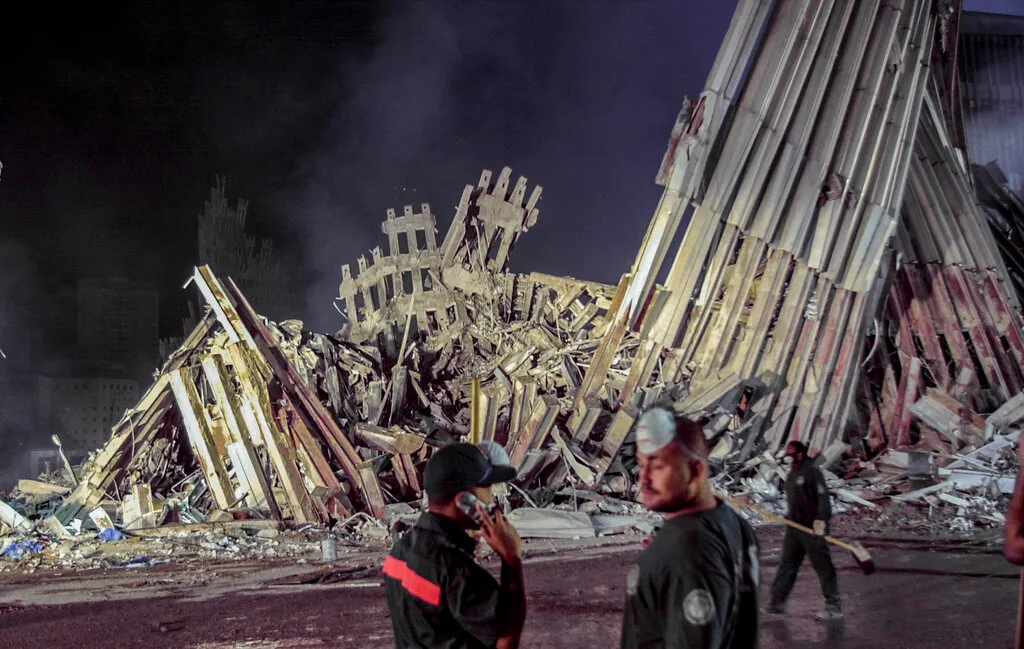
Two days after 9/11 my buddy and I took a bus from our hometown in Clifton, N.J., and went into Manhattan. We wandered around the city and made our way south to what would later be called Ground Zero.
There were three things from that day that are seared into my memory. The first was the families of victims at the Manhattan Armory, carrying pictures of loved ones begging people to help them find their missing family and friends. The second was the smell. It was a combination of smoke, concrete, chemicals and batteries. The third was how bad it felt to breathe. I was a smoker at the time and told my buddy when we were making our way home that I felt like I just smoked a carton of cigarettes.
Years later, in Iraq, I had the ignominious duty of burning everything that was trash every single night. We burned everything to the point that it made zero sense. I was told that we didn’t want our trash to be sifted through by the enemy, so we had to burn everything. Plastic bottles, computers, batteries, paper, and all trash. When you dared ask if it was necessary or safe, you got chewed out.
In 2011, I was at the VA in San Diego to ask about a bump in my throat. The doctors found a lump on my thyroid. I asked if it had anything to do with my exposure to burn pits. They laughed at me and said no.
A couple of years later, the lump had doubled in size and had to be removed, along with half my thyroid. They had to conduct a sleep test before I could do surgery and found I had sleep apnea. I asked again if this and the growth had anything to do with exposure and was told no.
Around the same time, the brave men and women who worked around the clock at Ground Zero started coming down with similar yet more severe symptoms. They developed respiratory issues such as coughs, wheezing, shortness of breath and asthma. They would have sinus issues and reflux from their airways into the lungs. And some got cancer. Respiratory, blood, and lymph node cancers became prevalent.
Twenty-five years since the terror attacks on the U.S., and 25 years into what we labeled a “war on terror,” we have to come to terms with the fact that long term care for both 9/11 responders and Global War on Terrorism veterans is way more complex that what we thought it would be. We also knew but chose to ignore the fact that exposure would lead to long term effects.
New York City Mayor Zohran Mamdani made news when he said that city officials at the time knew the air quality was bad but misled people by claiming it was safe. Of course, in the world we live in people couldn’t understand why he decided to come out and talk about this, calling it some type of conspiracy theory .
There is no conspiracy. The federal, state and local authorities knew there was asbestos, chemicals and toxins in the air. They said it was safe, based on regulations at the time. But they didn’t or wouldn’t factor in long term effects. It might be safe to be at Ground Zero for a day, like I was. But repeated days that went on for months? Surely, they had to know that wasn’t safe.
It was not a fair position to be in. Then-Mayor Rudy Guiliani had to get the city back to a sense of normalcy. New York isn’t just a normal run-of-the-mill city. It was and is the financial capital of the world. The clean up efforts had to happen as fast as possible.
That means there were hard decisions to be made. Yes, you had to look at the short-term needs which were very urgent. But leadership also means balancing the short-term needs with the long-term effects. And that is where the government failed us. Millions of dollars have been paid out to 9/11 responders, even though it has taken herculean efforts from advocates like Jon Stewart . And veterans are now getting help for their own exposure to burn pits, thanks to the PACT Act .
Despite this, there is still work to be done. Long term exposure is complex and we still don’t know how bad things will get. Countless more are starting to get symptoms as they get older. We know this because the same thing happened to Vietnam veterans when they were exposed to Agent Orange or Gulf War veterans when they had to breathe in smoke from oil well fires set by Saddam Hussein. The facts show this will be an ongoing issue. Last year, over 10,000 people were diagnosed with 9/11-related cancers .
Mamdani’s release of documents about air quality was needed. We must always look out for the long-term effects even when confronted with an urgent situation. And prepare for the long-term effects, including the financial needs of those who need help. We owe it to them to seek out the truth and advocate for their continued care, no matter the cost.
Joslin Joseph is a recipient of the Military Reporters and Editors award for Best Commentary-Opinion. A graduate of Harvard and Ohio State, he is a Marine veteran who served in Iraq. He currently lives in Anaheim, Calif.
Topics in this story
Gathered from external sources. Rights to this text belong to whoever originally published it.