Gen Z believes in the billionaire tax
More than two-thirds of Generation Z thinks wealthy Americans should pay up. A new CBS/YouGov poll released Sunday found that 69 percent of respondents under 30 favor candidates who support raising taxes on wealthy Americans. That’s a higher rate than among millennials, Gen Xers and baby boomers, though majorities in older age categories also back…
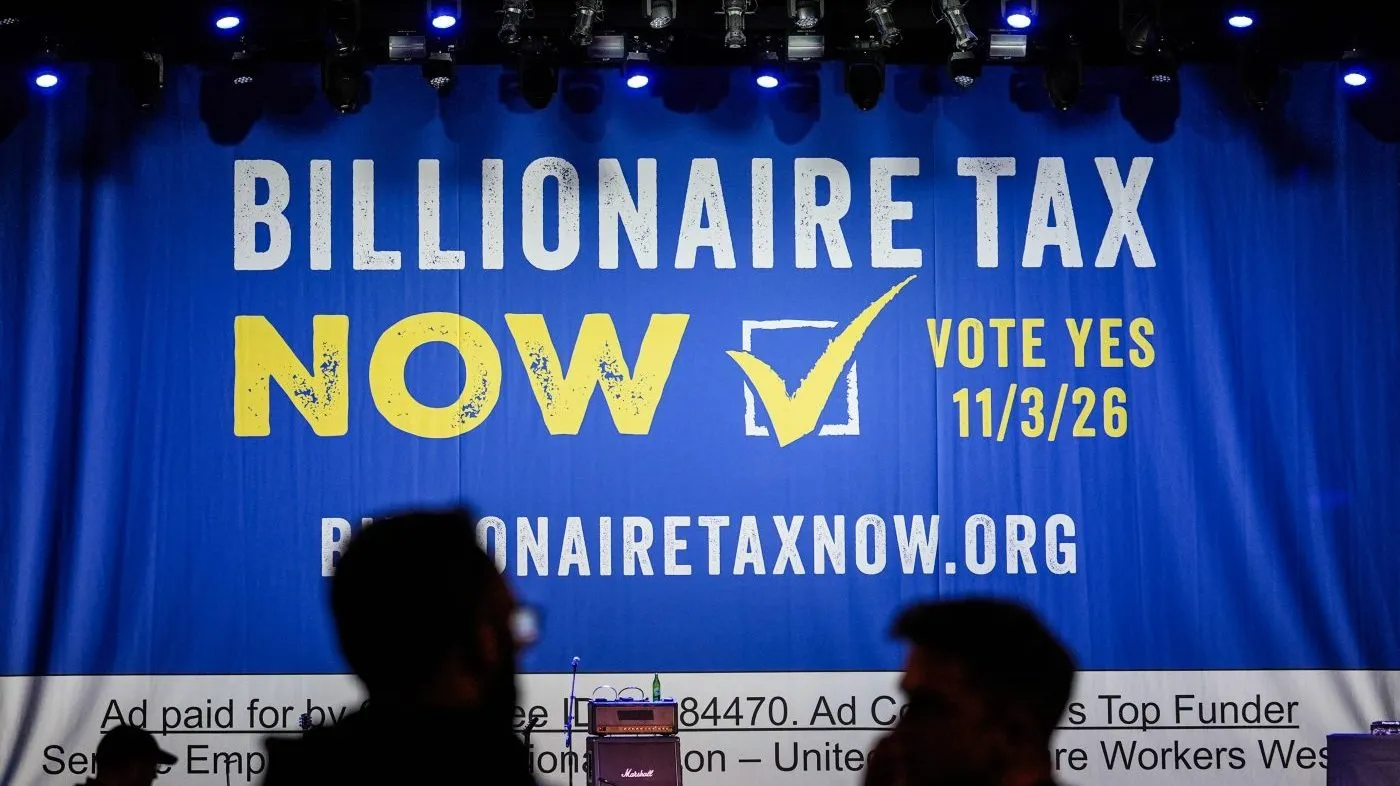
More than two-thirds of Generation Z thinks wealthy Americans should pay up.
A new CBS/YouGov poll released Sunday found that 69 percent of respondents under 30 favor candidates who support raising taxes on wealthy Americans.
That’s a higher rate than among millennials, Gen Xers and baby boomers, though majorities in older age categories also back higher taxes on the wealthy.
In comparison, 59 percent of respondents aged 30 to 44 and 55 percent of Americans aged 45 and older said the same.
The new polling also found that Gen Z participants were least likely to say a candidate’s stance on taxing the wealthy was irrelevant. Only 12 percent of respondents under 30 said it “would not matter either way,” lower than Americans aged 30 to 44 (19 percent), 45 to 64 (21 percent) and 65 plus (22 percent).
That suggests a number of Gen Z voters want candidates to back taxing the wealthy.
William Gale, the Arjay and Frances Fearing Miller chair in federal economic policy at the Brookings Institution, told The Hill there are some obvious reasons why such taxes might appeal to Gen Z.
He noted that Gen Z was “hit by COVID and the global financial crisis and the student loans and housing shortages,” challenges he sees as fueling a wish for a tax system that hits the wealthy harder.
The results arrive ahead of midterm elections in November when the House and Senate majorities are in play and tax issues are at the center of the discussion.
Polling on California’s Proposition 40, which would levy a one-time 5 percent tax on the net worth of the state’s 200 billionaires , shows voters split nearly down the middle.
But Gen Z is not so divided. One survey found that 75 percent of Americans aged 18 to 29 plan to vote in favor of the initiative.
“I think the idea of taxing the rich has a lot of support in the abstract, as you’re seeing in these surveys. It’s a different thing, though, to get a legislature to pass a specific tax increase on the wealthy,” Gale later added.
California will make its decision in November.
The CBS/YouGov poll ran Sept. 8-11, surveyed 2,460 American adults and had a 2.3 margin of sampling error.
Prove it: Gen Z wants politicians to meet them where they are
Each election young adults have voted in has been labeled as the most important of their lives, yet polls show they feel nothing is changing between each election cylcle.
Only 21 percent of young people think the American Dream is achievable, compared with 50 percent a decade ago, Fortune reports .
“The big political causes our politicians told us, Democrats and Republicans, to see did not come into fruition in ways that have tangibly changed young people’s lives,” Alex Edgar, founder of AWE Strategies, a consulting firm focused on engaging young people, told The Hill.
Cost of living and inflation are ranked as the top issue among Gen Zers, and their lack of faith in the American Dream means young adults feel frustrated with how politicians have handled affordability.
“There is a pace of change in the economy that is not reflected in political leadership,” Edgar said. This is what makes Gen Zers feel different than their older counterparts.
Jaylin Drewry, the national lead of historically Black colleges and universities at the Fair Elections Campus Vote Project, told The Hill that Gen Z feels “skeptical” about the political process.
“Gen Z has been told it’s important to participate in the voting process, and each year, they see that access to voting is being rolled back in different ways,” he added, pointing to restrictions in mail-in voting and redistricting as pain points.
There is a noticeable shift in the politics young adults grew up around to the political system they’re beginning to inherit.
Kala Washington of the Fair Elections Center told The Hill that she felt there was a “different political energy” when former President Obama was in office and that things today seem more “life or death.”
Gen Z feels optimism toward politicians who meet constituents where they are, practice what they preach, make themselves known outside of election cycles and keep their promises, Edgar, Drewry and Washington concurred.
For Edgar and Washington, New York City Mayor Zohran Mamdani (D) embodies these qualities. For Drewry, Sen. Raphael Warnock (D-Ga.) does. But the figures aren’t just on the left.
“The conservative movement invests a fair amount into young leaders,” Edgar said, citing the late conservative activist Charlie Kirk. “We see the impact in the number of young people with official positions in the administration.”
As the country approaches 2028, politicians have a lot of work to prove to Gen Z that they care.
“There is an opening for candidates on both sides of the aisle to come out with not just a hopeful vision for what a good life looks like for young Americans, but also policy proposals that are reflective of the unique crises young Americans are experiencing with plans on how they’re going to follow through with that,” Edgar said.
Sandwich chain Jersey Mike’s, a company valued at roughly $7.5 billion with more than 3,300 store locations, is having trouble winning over Generation Z, according to a recent Wall Street Journal article .
The Journal says the sub shop is lacking in the viral food and wellness trend departments. In other words, the fast casual chain is not fast enough, and it’s way too casual.
Seventy percent of Jersey Mike’s customers are from Generation X, while Gen Zers only make up 2 percent of the chain’s consumers (me included).
The sandwich franchise falls behind in marketing and only puts 1 percent of its spending on social media advertising. Other sub shop chains including Jimmy John’s, Firehouse Subs and Subway all spend 10 percent to 18 percent on social media campaigns.
Jersey Mike’s has tapped into former New York Giants quarterback Eli Manning and actor/comedian Danny DeVito for ads, but it sounds like they need a little more pizzazz to win over Gen Z.
The Feed is a weekly scoop on Generation Z put together by three Generation Z editors at The Hill. We’re working to understand the ins and outs of our generation’s politics. Send tips or comments to awalker@thehill.com, jfeldstein@thehill.com or cleibowitz@thehill.com.
Topics in this story
Gathered from external sources. Rights to this text belong to whoever originally published it.