The new Democratic powerbrokers 2028 hopefuls need to know
A slate of newly elected Democrats in states such as New Hampshire, South Carolina and New Mexico are set to serve as major power brokers in the 2028 presidential primary as potential hopefuls ramp up their early state travels. Soon-to-be senators, House members and statewide elected officials will hold sway over candidates’ reception in the…
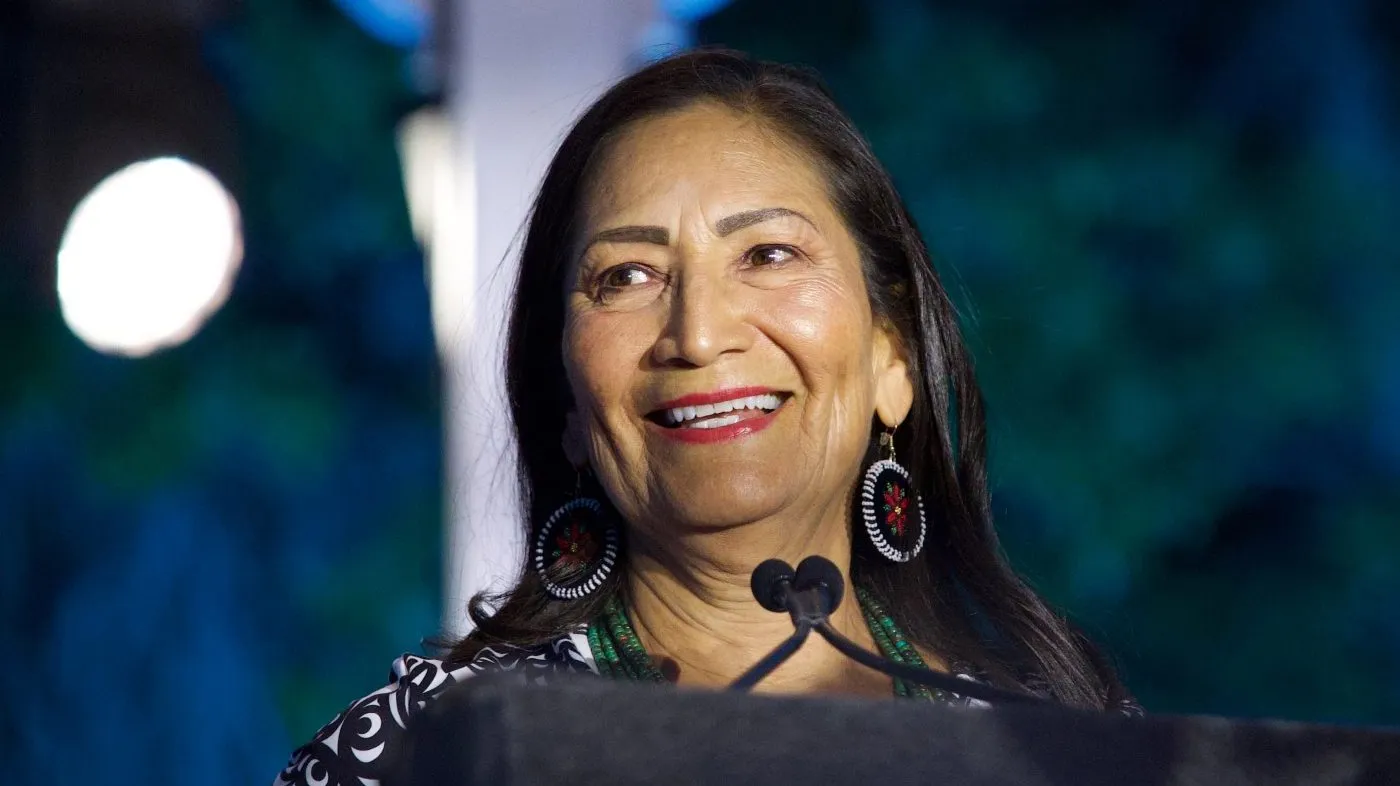
A slate of newly elected Democrats in states such as New Hampshire, South Carolina and New Mexico are set to serve as major power brokers in the 2028 presidential primary as potential hopefuls ramp up their early state travels.
Soon-to-be senators, House members and statewide elected officials will hold sway over candidates’ reception in the first primary states, where a lackluster performance or shocking upset can make or break a campaign. And they are already eyeing how they might wield that power in the coming months.
“I hope that I can have some influence over how their agendas are getting set, how their policy platforms are coming out,” New Mexico Gov.-elect Deb Haaland (D) told The Hill, underscoring her focus on tribal communities.
Democrats’ historic midterm wins across the country ushered in a new class of kingmakers in South Carolina, Nevada, New Hampshire, New Mexico, Michigan and Virginia — the party’s first five states in the 2028 primary calendar.
Democratic strategist Antjuan Seawright, who served as a senior adviser for Sen.-elect Annie Andrews’s (S.C.) campaign and also advises Rep. James Clyburn (D-S.C.), suggested Andrews and Clyburn, alongside Rep.-elect Nancy Lacore (D-S.C.), may exert influence by “providing listening opportunities for their constituents to hear from like-minded candidates who specialize or who would prioritize like-minded values.”
The Palmetto State, where the first Democratic primary will be held on Jan. 22, 2028, is no stranger to upending the presidential process.
Many Democrats credit Clyburn’s endorsement of former President Biden with helping him clinch the 2020 primary contest in South Carolina and, ultimately, the party’s nomination.
Seawright pointed to the coalition of voters who coalesced around Lacore, Andrews and Clyburn in 2026 as key for any White House hopeful’s chances of winning South Carolina in 2028 — a coalition of Black voters, rural voters, young voters and “non-traditional Democratic-performing counties.”
“Relationships are going to be important in the South, in a place like South Carolina,” Seawright said, acknowledging that Biden’s primary victory in 2020 was in part due to his “deep, strong relationships,” particularly with Black voters in the state.
Meanwhile, like Haaland, Govs.-elect Jocelyn Benson of Michigan and Aaron Ford of Nevada are set to play outsized roles in 2028. Nevada will hold its primary Feb. 1, followed by New Hampshire on Feb. 8, New Mexico on Feb. 15, Michigan on Feb. 22 and Virginia on Feb. 29.
In an interview with the NewDEAL in July, Ford offered early advice to potential presidential candidates, urging contenders to travel to the Silver State frequently and to offer specific prescriptions for voters’ issues.
“We expect you to do more than just come and placate,” Ford said in the interview. “We need to hear actual solutions to the problems that people are telling you that they are encountering.”
Haaland, meanwhile, reiterated her interest in having presidential contenders consult with tribes, offering to facilitate meetings within her state. This is the first presidential cycle New Mexico has been included in the early primary calendar.
“Any future president of our country will need to ensure that tribal communities are important, that their platform reflects what tribes deserve and what they’re capable of in terms of contributing … to our country, to our economy, to our healthcare, to all the things that we have,” Haaland told The Hill.
“Are you meeting with tribes yearly? Are you including them in your administration? Are you going to appoint Indigenous folks to some high-level … positions?” she added.
In the Midwest, new Democratic leaders — including Sen.-elect Abdul El-Sayed (Mich.) and Rep.-elect William Lawrence (Mich.) — are poised to play a key role as the party navigates divisions between its left and center flanks. Lawrence, who ousted Rep. Tom Barrett (R), underscored the populist roots of his campaign, urging potential presidential candidates to follow suit.
“I didn’t take any corporate PAC money in my race, including from Big Tech,” Lawrence said, adding that he hopes “every candidate for office around the country does the same because we’ve got to get money out of politics.”
And in New Hampshire — where Democrats will vote third in the primary lineup — there are two new faces shaping the Democratic primary landscape: Rep.-elect Stefany Shaheen (D) and Sen.-elect Chris Pappas (D), who are no strangers to the Granite State’s presidential contests.
Shaheen, whose mother is retiring Sen. Jeanne Shaheen (D-N.H.), told The Hill she sees her role in the process as twofold: to encourage candidates to visit her state and “to pressure test the ideas we hear from presidential candidates.”
“What we saw from voters on Election Day was a mandate for change,” Shaheen said. “We’re going to fight starting on Jan. 3 to bring an end to this war, to stop the tariffs and to fix healthcare. But we also have got to get on with building and rebuilding.”
“And I think whoever we choose in 2028 is going to be at the helm of how that rebuilding takes shape, and those ideas are ideas that we need to pressure test as voters,” she continued.
Pappas, whose family’s restaurant the Puritan Backroom is a regular stop on the campaign trail in the state, told WMUR-TV in an interview last week he’s looking forward to serving as an “ambassador” for the 2028 presidential contest.
Pappas added that he wants candidates to “understand that they need to show up here, have real conversations with voters, and that we intend to vote and vote in big numbers in January of 2028 to select the next president.”
Possible Democratic White House hopefuls have flocked to many of these key primary states in the last year.
Former Vice President Kamala Harris, California Gov. Gavin Newsom, former Transportation Secretary Pete Buttigieg, Kentucky Gov. Andy Beshear, Sen. Cory Booker (D-N.J.) and Illinois Gov. JB Pritzker, for example, all campaigned in South Carolina ahead of November’s elections. Many of these same Democrats have traveled to New Mexico.
Haaland suggested 2028 hopefuls have traveled to her state to “formulate a plan” for a potential bid. She said these trips are the “smart thing to do,” though she intends to weigh in as the nominating process kicks off in the Land of Enchantment.
“I’m absolutely going to make sure that my perspective figures on any candidate who comes here,” she added.
Topics in this story
Gathered from external sources. Rights to this text belong to whoever originally published it.