Punishing Israel-boycotters is even worse than boycotting Israel
As bad as the BDS movement against Israel is, what happened on Sept. 3 in the House of Representatives is no better.
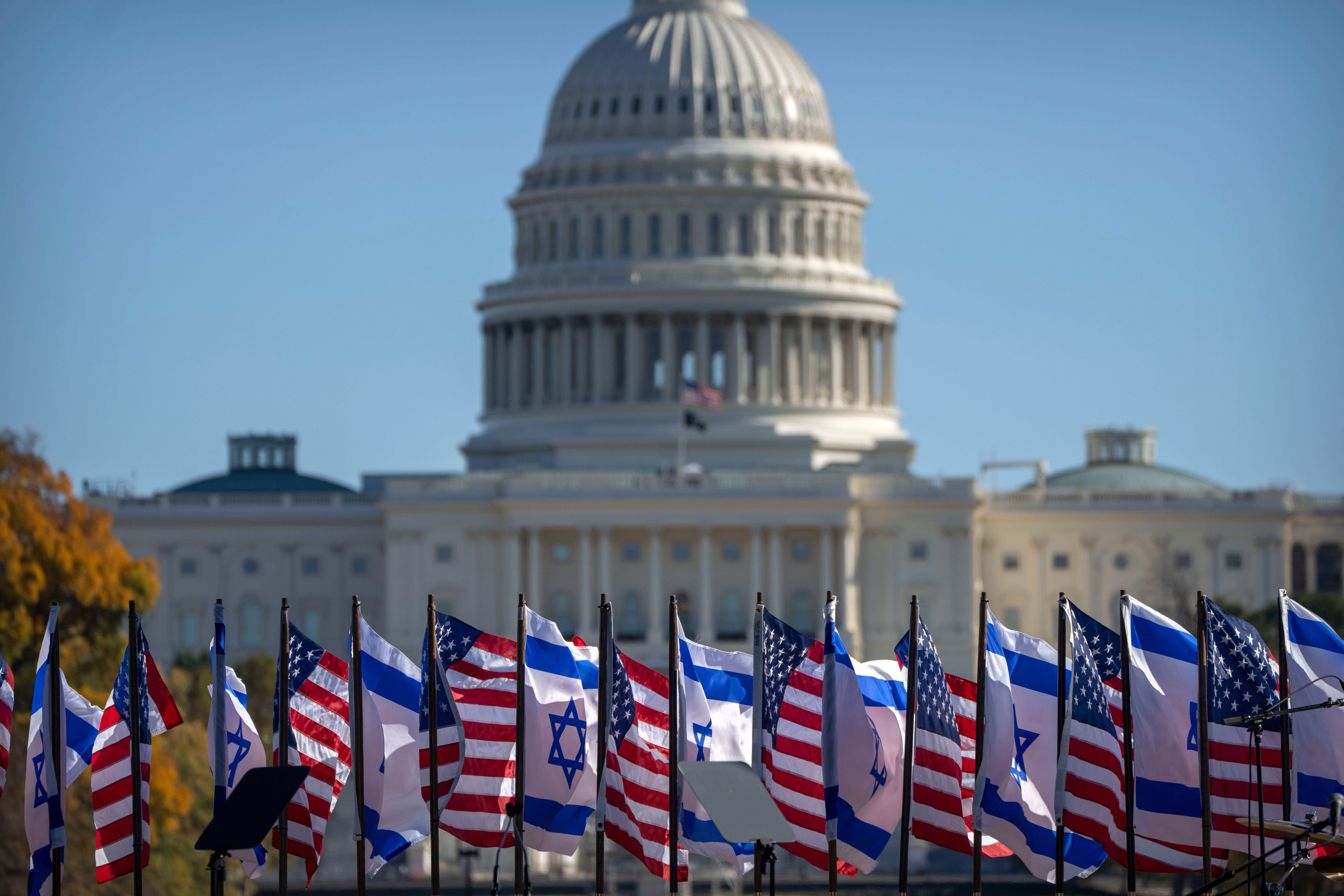
Israel’s response to Hamas’s horrific attack on Oct. 7, 2023 has done much to undermine its standing both in the U.S. and abroad. Now, its role in pushing for war against Iran has made a bad problem worse .
Today, polls show that Americans are more sympathetic to the Palestinian cause than to Israel, a dramatic reversal in a short period of time. Demonstrating hostility to the Jewish state has also become a badge of honor among political progressives.
And, as the Guardian noted last year, “There are growing calls to shun Israeli and Israeli-adjacent businesses, ban the country from sporting and cultural events, and cut ties with its academic institutions. From stadiums to the high street, from concert halls to the political stage, the boycott movement is moving from the fringe to the mainstream.”
That movement has made significant inroads on college campuses across the country, promoted by several organized groups, including the U.S. Campaign for the Academic and Cultural Boycott of Israel.
Boycotting Israel, whether on college campuses or elsewhere, is a bad idea in my view. It is not the way to change Israeli policy .
Israel is an outpost of democracy in the Middle East. It has been, and remains, a staunch ally of the United States. As the Jewish Community Relations Council of San Francisco observes , “The Boycott, Divestment and Sanctions Movement promotes a distorted, one-sided narrative about the Israeli-Palestinian conflict.” Instead of focusing on objectionable policies pursued by a particular government, it “attempts to isolate Jews who believe in Israel’s right to exist and is an impediment to the peace process by promoting an all or nothing approach to ending the conflict.”
But as bad as the boycott movement is, U.S. House passage of the The Protect Economic and Academic Freedom Act , by a 237-169 vote, was worse.
The bill would “prohibit an institution that participates in a nonexpressive commercial boycott of Israel” from being eligible for federal student aid funds. It would also require institutions receiving such funds “to certify that students are not unreasonably obstructed from participating in academic programs in Israel, and for other purposes.”
The Guardian notes that its proponents claim that “This legislation is about a simple principle: our colleges and universities should not discriminate against Israel, Israeli institutions or Israeli students, and federal taxpayer dollars should never support institutions that engage in such discrimination.”
But, for Republicans, the legislation served a political purpose, forcing Democrats to go on the record either in support of Israel or not. Thirty-three Democrats took the bait and joined all but two Republicans in voting for the bill.
The Anti-Defamation League was pleased with the result . But this legislation is a step in the wrong direction. It is coercive, impinges on free expression and, if passed into law, would likely exacerbate antisemitism on college campuses.
And the government should not be in the business of imposing unrelated political conditions on recipients of federal aid. The Supreme Court made that clear almost 40 years ago when it decided South Dakota v. Dole . In that case, it laid out standards and guidelines for the kinds of conditions that can be attached to federal aid.
The conditions must be germane — that is, they have to be related to the federal interest in the particular program for which aid is granted, and the financial inducement “cannot be so coercive as to pass the point of pressure and turn into outright coercion.” In addition, as the court noted, threats to withhold aid cannot violate constitutional provisions such as the First Amendment.
In the case of the House bill, the issue of whether a college or university boycotts Israel has little to do with the federal government’s interest in helping students attend college. And that focus is not viewpoint neutral. As such, it seems a clear violation of the First Amendment, which prohibits restricting expressive activities because of their content.
New York Congressman Jerry Nadler got it right when he said , “Supporting this bill does nothing to support students on campus, prevent hate, or improve the reality in the Middle East. Instead, it feeds the political arson being committed by the Trump administration against institutions of higher education and endeavors to limit Americans’ First Amendment freedoms in service of Republicans’ partisan political agenda.”
Whatever their views of Israel, other Democrats, especially those in the Senate, should heed Nadler’s counsel. They should work to kill the Protect Economic and Academic Freedom Act . Then they should get back to the more urgent business of persuading people on college campuses and elsewhere that boycotting Israel is wrong and convincing the Israeli government and people to change the policies and actions that lead people to support anti-Israel boycotts.
Austin Sarat is the William Nelson Cromwell Professor of Jurisprudence and Political Science at Amherst College.
Topics in this story
Gathered from external sources. Rights to this text belong to whoever originally published it.