73 senators moved permitting reform forward. Now finish it.
The Senate cleared a major procedural hurdle for the Bipartisan American Affordability and Jobs Act, moving the long-negotiated permitting reform bill closer to passage before the end of the current Congress.
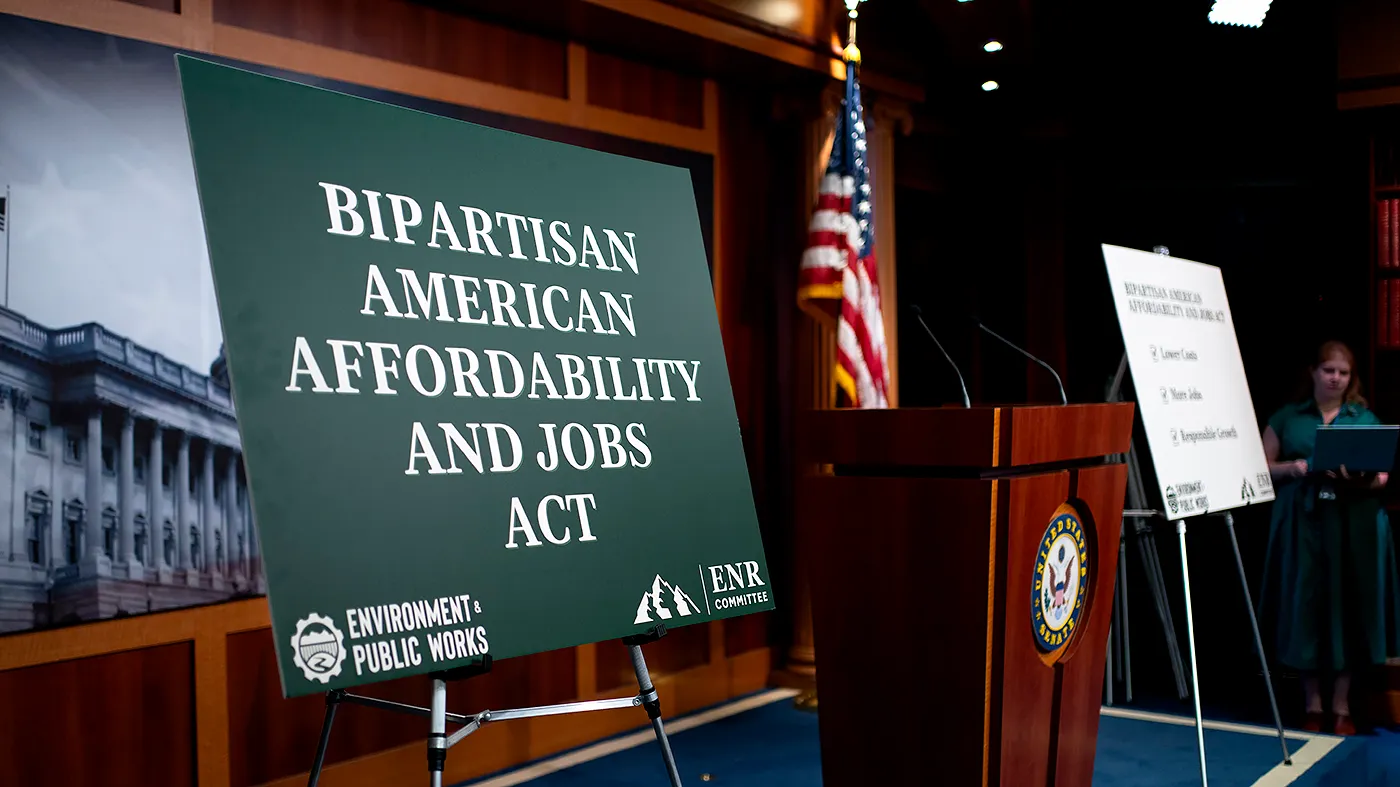
Last Monday, dozens of Citizens’ Climate Lobby volunteers spread across the U.S. Capitol complex in the hours before the Senate’s first vote on the Bipartisan American Affordability and Jobs Act. That evening, 73 senators voted to clear a key procedural hurdle that allows the bill to move forward for consideration.
We were glad to see it. The procedural motion, known as cloture, sets up the bill for consideration, and some senators voted yes expecting additional adjustments will be made before the final vote. There’s work to do, but the momentum is real, with the Senate expected to stay in session to keep working on the Bipartisan American Affordability and Jobs Act. Senators should use that time to finalize and pass it, and the House should follow suit before the 119th Congress ends on Jan. 3.
Our current permitting system is holding back clean energy and driving costs up. The Bipartisan American Affordability and Jobs Act fixes that. It’s a real bipartisan compromise and a deal like this is unlikely to come together in the next Congress.
Waiting has a cost too. The permitting system we have now helped bring us climate change and puts wind, solar, and transmission projects in purgatory.
Look at what that has meant in practice. SunZia, a wind and transmission line project large enough to power about 1 million homes in New Mexico, began permitting in 2008 and just finished this year.
Cape Wind in Massachusetts, which would have been the country’s very first offshore wind farm, went through 17 different agencies and 30 separate lawsuits over the course of 15 years before it was canceled.
Then there’s Esmeralda 7 in Nevada, a solar and storage project designed to power approximately 2 million homes. Its environmental review was canceled while the project was being evaluated. Developers were told to start over and segment pieces of the project out for individual permits. None of them have moved forward.
Every clean energy project that gets put on hold means worsening climate impacts, dirtier air, fossil fuel plants that keep running in frontline communities, more threats to biodiversity, higher energy bills, and more blackouts and brownouts.
The Bipartisan American Affordability and Jobs Act changes all of that.
Permitting agencies get firm deadlines for reviews and permitting decisions. No longer will they be able to sit on a permit or yank permits from projects they simply don’t favor. It also makes data centers pay their fair share of grid costs and lets states set data center rates that protect households. Finally, the bill gives federal authority to approve the big interstate power lines that carry clean electricity to where people use it.
The payoff will show up in reduced emissions and lower energy costs for households across the country. Resources for the Future estimates the bill cuts power-sector emissions by about 2 billion tons through 2041 and grows total American transmission capacity by 30 percent. The Center for Climate and Energy Solutions also found that pushing these reforms back to 2030 would forfeit roughly $55 billion in electricity system savings and 800 million metric tons of emission cuts through 2040.
None of these provisions made it into the bill without thoughtful consideration, negotiation, and input from a broad array of stakeholders. The Bipartisan American Affordability and Jobs Act is the product of nearly two years of work and its sponsors Sens. Shelley Moore Capito (R-W.Va.), Mike Lee (R-Utah), Sheldon Whitehouse (D-R.I.), and Martin Heinrich (D-N.M.) deserve an awful lot of credit for building a consensus.
Nobody got everything they wanted in the bill and that’s the point. When concerns came up, the sponsors listened and made changes before Monday’s vote. That’s how a comprehensive permitting reform bill earns 73 bipartisan votes and why the bill has support from organizations across climate advocacy, organized labor and the clean energy industry.
This kind of agreement is rare and it likely won’t keep if we squander this moment. In January, a new Congress arrives with a new majority, new committee leaders, and new members of Congress. Permitting policy can’t pass on a party-line reconciliation bill, so even in the next Congress, any permitting reform will need support from both parties. Holding out for a different deal in 2027 requires us to bet on a bill that probably won’t come, while clean energy projects keep waiting in line and energy costs keep rising.
Citizens’ Climate Lobby volunteers know what’s at stake. Since 2023, we have held over 2,000 meetings with congressional offices on permitting reform. We did not do all that just for a procedural vote.
The Senate has done much of the heavy lifting already — finding a bipartisan deal and showing it can earn support across the aisle. Now, Congress needs to finish the job. Pass the Bipartisan American Affordability and Jobs Act, send it to the president’s desk before the end of the year, and get clean energy built.
Ricky Bradley is executive director of Citizens’ Climate Lobby, a nonpartisan grassroots climate advocacy organization.
Topics in this story
Gathered from external sources. Rights to this text belong to whoever originally published it.