Angie Nixon’s ignorance on Cuba shows she isn’t ready for the Senate
Mike Waltz needs to school Angie Nixon about Cuba. Nixon, a Democrat aligned with the Democratic Socialists of America who is running to become a U.S. senator from Florida, recently showed extreme and perhaps willful ignorance about the communist country perched just 90 miles off her state’s coast. When CBS News reporter Cristian Benavides asked…
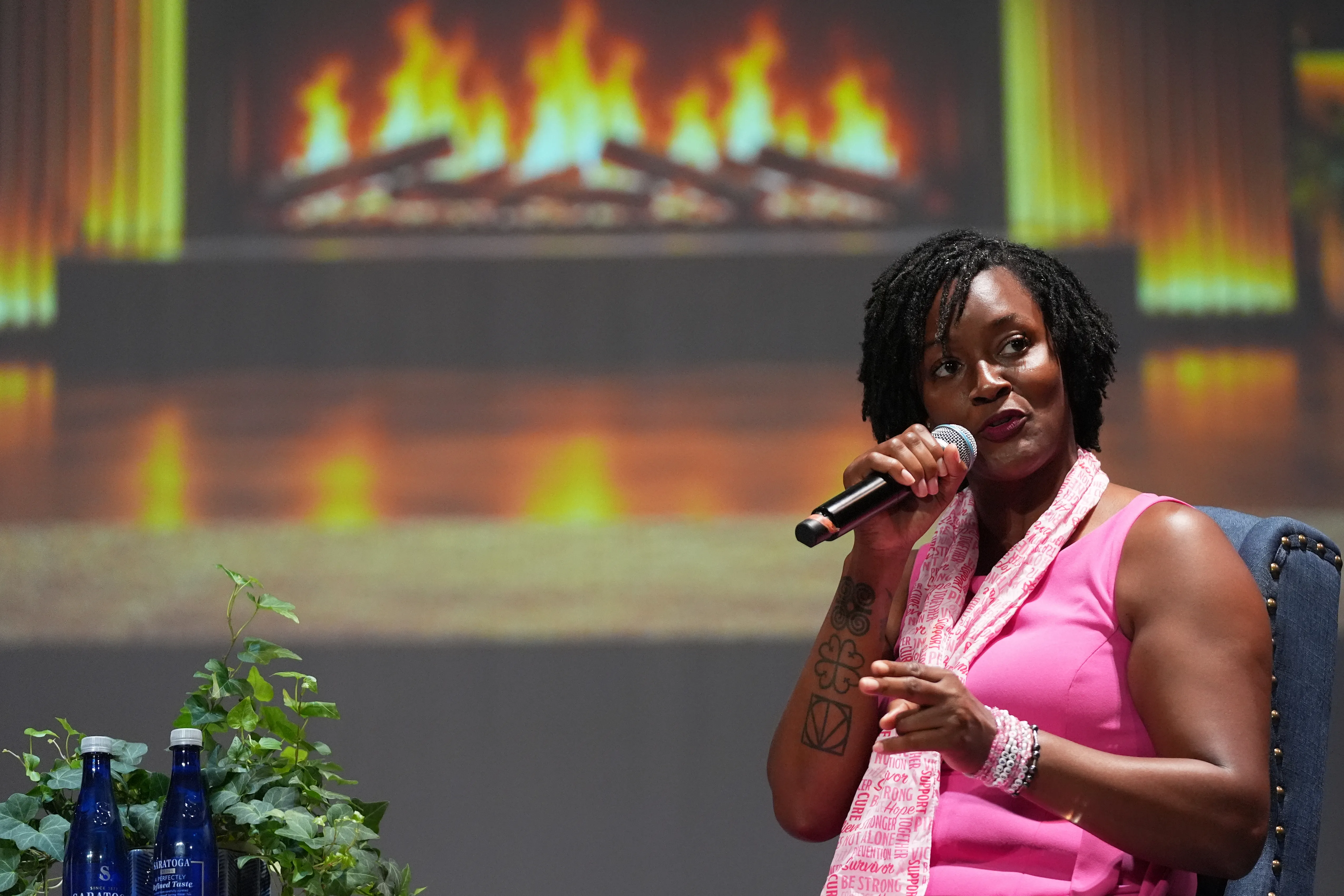
Mike Waltz needs to school Angie Nixon about Cuba.
Nixon, a Democrat aligned with the Democratic Socialists of America who is running to become a U.S. senator from Florida, recently showed extreme and perhaps willful ignorance about the communist country perched just 90 miles off her state’s coast.
When CBS News reporter Cristian Benavides asked Nixon if she considers Cuba a dictatorship, she responded, “That is what people have told me. I have never been to Cuba, and so I will have to take their word for it.”
Coming from someone running for statewide office in Florida, home to more than a million Cuban exiles and their families, Nixon’s tone-deaf response was rebuked not only by Republicans but also by other Democratic candidates in the Sunshine State.
Does she not actually know the miserable history of Cuba’s repressive and brutal communist regime? Nixon certainly could have benefitted from being in the room recently when Mike Waltz, the U.S. ambassador to the United Nations, stunned the General Assembly by documenting the corruption and hardship delivered to the people of Cuba over the last 67 years.
Waltz addressed the Turtle Bay diplomats on the eve of their annual vote condemning the U.S. sanctions imposed on our southern neighbor, trying to interrupt a 34-year run of anti-American posturing. As he showed photos of Fidel Castro wearing not one but two Rolex watches at a time when Cubans could not afford basic necessities, Waltz declared, “According to the regime’s own statistics, that would pay for 55 years of an average Cuban wage.” Waltz also shared a photo of Cuba’s current ruler, Miguel Díaz-Canel. “It didn’t just start with Castro,” he said. “This is the current Cuban president, also with a Rolex on.”
Waltz also displayed pictures of the Castro family’s 14,000-square-foot seaside retreat and revealed that Cuba’s military-run conglomerate GAESA has stockpiled some $18 billion in looted funds. As reported by the New York Post, “Waltz called out the Havana government for profiting off of the forced labor of its own citizens sent to concentration camps while using confiscated ‘businesses, farms, factories, homes and the savings of generations of hardworking Cubans’ to line the pockets of its leaders.”
In response, Cuba’s delegates rushed the stage, attempting, as Waltz noted, to intimidate him. “I know that you don’t like to hear these hard truths, but I am speaking for the Cuban people,” Waltz said. “And ever since 1959, this government in Havana would have you believe that everything in Cuba has just disappeared; that they are the victim; that it’s someone else’s fault.”
Waltz is correct. Cuba and its few friends around the globe lay the country’s poverty and dysfunction at the feet of U.S. sanctions, first imposed by President Dwight Eisenhower in 1960 and now escalated under President Trump .
Most economists say it is the socialist policies embraced by the rulers of Cuba, not sanctions or John F. Kennedy’s 1962 embargo, that have caused its problems.
Why should we care? Because young people in our country appear enamored of socialism. It is important for them to know just what sort of misery has been delivered to humanity by what New York City Mayor Zohran Mamdani calls the “warmth of collectivism” — in Cuba and elsewhere. Our schools have not educated our youth about the undeniable failures of communist and socialist nations, or about the successes of capitalism.
It is impossible to find a socialist country that has succeeded in improving the lives of its people. In 1970, Venezuela was the richest country in Latin America; today, after more than two decades of socialist rule, it is the poster child for socialism run amok. An economy in free fall, a bureaucracy riddled with rampant corruption and more than 70 percent of the people living in poverty — that is the sorry heritage of Hugo Chávez, who became president in 1998 . Chavez nationalized the oil industry and adopted leftist policies such as price controls and property expropriations. Venezuela descended into poverty. His successor, Nicolas Maduro, presided over a more than 75 percent shrinkage in his nation’s economy between 2014 and 2021.
Meanwhile, Venezuela became one of the most corrupt countries on earth , ranking ahead of only Sudan and Somalia on Transparency International’s 2025 Corruption Perceptions Index.
Cuba has followed the communist playbook since Fidel Castro took over in 1959. Before the revolution, Cuba’s GDP per capita ranked seventh among 47 Latin American economies. Soon after Castro took control, he nationalized key industries. By the late 1960s, Cuba was a ward of the Soviet Union, dependent on its communist overlords for economic, political and military aid.
The collapse of the Soviet Union caused a further decline in Cuba’s fortunes. GDP fell by 33 percent between 1990 and 1993 . The country was plagued by severe shortages of food, fuel and medicine.
After 50 years of communism, in 2001, Cuba was the third poorest country in Latin America as measured by per capita GDP. Only Nicaragua and desperately poor Haiti ranked lower.
The upshot has been a severe drop in population . According to the Council on Foreign Relations, “up to a quarter of the population has left since 2020.” Cuba’s repressive government, bent on locking up protesters, and the lack of opportunity in the communist country are together driving young people especially to escape. The council reports that more than 700 were arrested in the summer demonstrations against the regime’s repression.
Human Rights Watch reports that Cuba’s government “continues to repress and punish virtually all forms of dissent and public criticism”; they control all media and stage sham elections in which candidates are nominated by the government. Citizens can vote, but have no choice.
This is the country that Nixon could not bring herself to describe as a dictatorship. She is not ready to be a senator.
L iz Peek is a former partner of major bracket Wall Street firm Wertheim and Company.
Topics in this story
Gathered from external sources. Rights to this text belong to whoever originally published it.