Republicans have sacrificed Milton Friedman’s free market on the altar of Trump
Today’s Republicans seem to have forgotten Friedman’s lesson in the market-distorting and economy-threatening effects of business-government collusion.
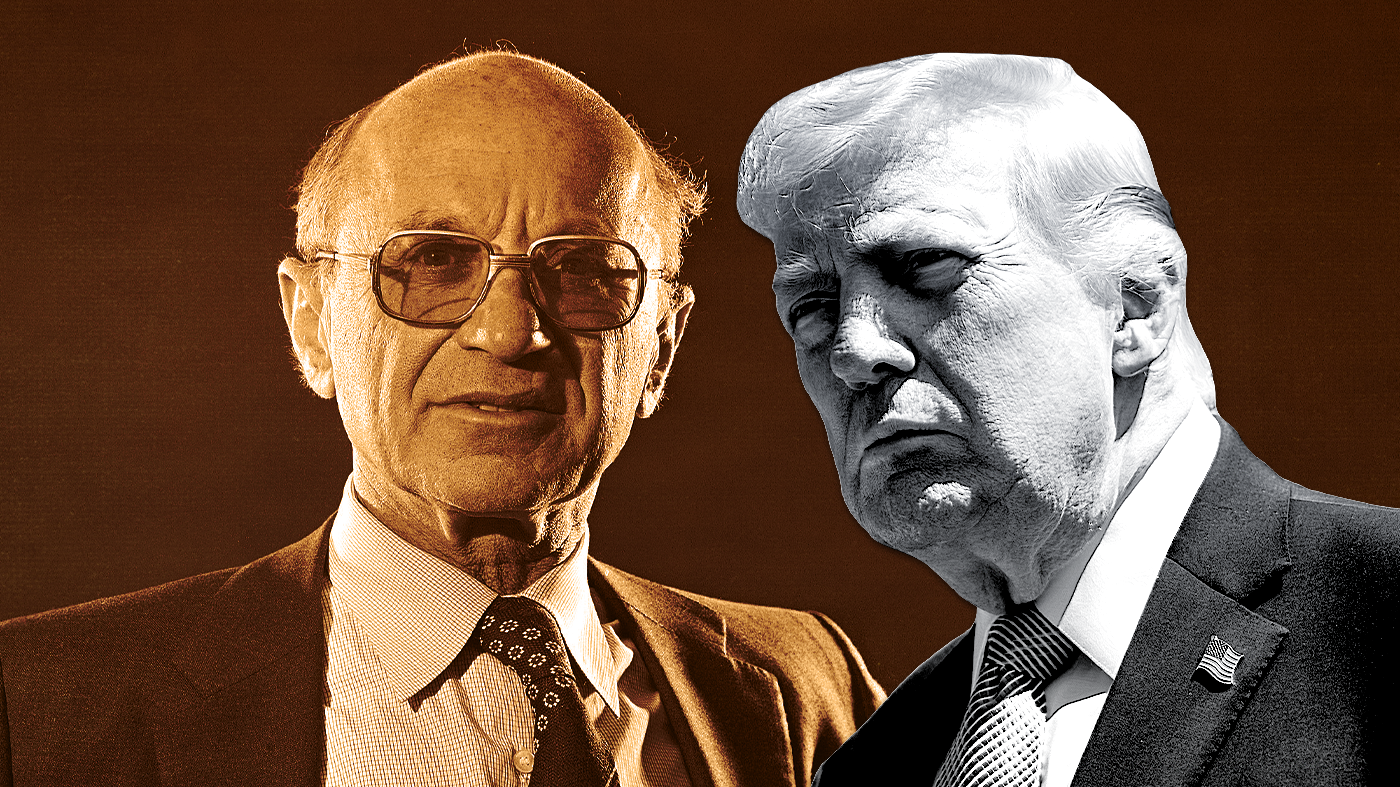
In late July, the Trump administration announced it would take equity stakes worth nearly $1 billion in seven more private semiconductor companies as part of its investment in domestic chipmaking capacity. For those keeping track, President Trump’s government has now taken ownership stakes in 30 companies since first demanding a 10 percent share of Intel last year.
For a guy who loves to attack Democrats as communists, Trump’s spree of government ownership in private industry has little parallel in modern American history. As the line separating the free market from government blurs, a growing number of executives — most of them in the increasingly overlapping Big Tech and surveillance sectors — are happily surrendering their inch-deep belief in the free market for a double scoop of political influence.
Trump’s interest in taking ownership stakes in AI companies is well-known, and it speaks volumes about how quickly the Republican Party has abandoned the free market principles of its one-time prophet, economist Milton Friedman . If Democrats want to craft a sound and effective criticism of Trump’s China-style government buying spree, they should look to Friedman’s many warnings about what happens when Big Business and Big Government find themselves with the same owners.
Speaking to business students in South Africa in 1976, Friedman made clear the distinction between being “pro-free enterprise and pro-business. ” It was a point he would sharpen in interviews over the following years, before remarking in 1980 that “I’m opposed to big business and I’m opposed to big government and I do believe they are in bed with one another.” Today’s Republicans seem to have forgotten Friedman’s lesson in the market-distorting and economy-threatening effects of business-government collusion.
But Trump’s ownership stakes in private companies pose a deeper harm than the government picking winners and losers (though there’s no doubt that competitors to Trump’s favored AI players will find it awfully hard to compete). Those in doubt need look no further than Trunp’s recent glowing promotion of Scotts Miracle-Gro — a major Trump donor — which led to a 6 percent jump in the company’s share price.
But America’s pitchman-in-chief doesn’t need to take official ownership stakes in companies in order to tilt the scales in their favor. Investing in them as a private citizen is often enough. As CNN reports, Trump has a strong tendency to publicly praise and promote companies in which he recently purchased stock, including 20 companies the president talked up on his Truth Social platform just days after investing in them. Trump’s stock trading is so frequent, in fact, that it amounted to more than 800 pages of his most recent 927-page financial disclosure.
Offering free White House advertising for his personal stock portfolio is bad enough; using taxpayer money to take ownership stakes in critical American industries creates opportunities for corruption on an entirely different — and more dangerous — level. Trump claims his ownership stakes are designed to ensure semiconductor companies and tech firms are serving America’s strategic interests, but he also has the bad habit of equating America’s interests with his own desire to be seen as a Xi Jinping-style strongman exerting his personal influence on powerful businessmen.
“When you combine capitalists and ownership of property with political power you have too much power concentrated,” Friedman said. “If you have free enterprise, if you have competition, then one power is offset against the other power.”
Friedman’s warning is made flesh in tech titans like Palantir’s Alex Karp and Nvidia’s Jensen Huang, who are eager to sacrifice competition for access to lucrative government deals and Trump’s personal favor. As Trump’s view of the public interest increasingly aligns with Silicon Valley’s view of its own interests, it’s worth asking if the government is even capable of serving as a watchdog for the industries it now considers friends and strategic partners.
There’s no denying Silicon Valley’s willingness to bend the knee to Trump’s demands has generated a lucrative return on executives’ personal investments. Administration officials and C-suite leaders alike have profited to the tune of billions of dollars over the past year, with Trump alone raking in more than $7 billion in cryptocurrency gains . It’s no coincidence that many of Trump’s favored tech leaders also hold significant amounts of his cryptocurrencies.
Trump’s use of state capitalism has forced a serious discussion about what kind of economy the U.S. has become, and whether the government should be in the business of favoring our corporate tech giants. Friedman would abhor Trump’s actions. Democrats must harness their new and unlikely ally to help remind Americans that free and fair competition enriches all of us, while government collusion only profits the favored few.
Max Burns is a veteran Democratic strategist and founder of Third Degree Strategies.
Topics in this story
Gathered from external sources. Rights to this text belong to whoever originally published it.