Trump fails to change economic headwinds facing GOP candidates
Gas, diesel and food prices are high and expected to remain elevated through Election Day, creating a strong political headwind for Republicans who are at serious risk of losing control of the House and possibly the Senate, as well. President Trump’s diesel deal with Russia has had little lasting impact on fuel prices, according to…
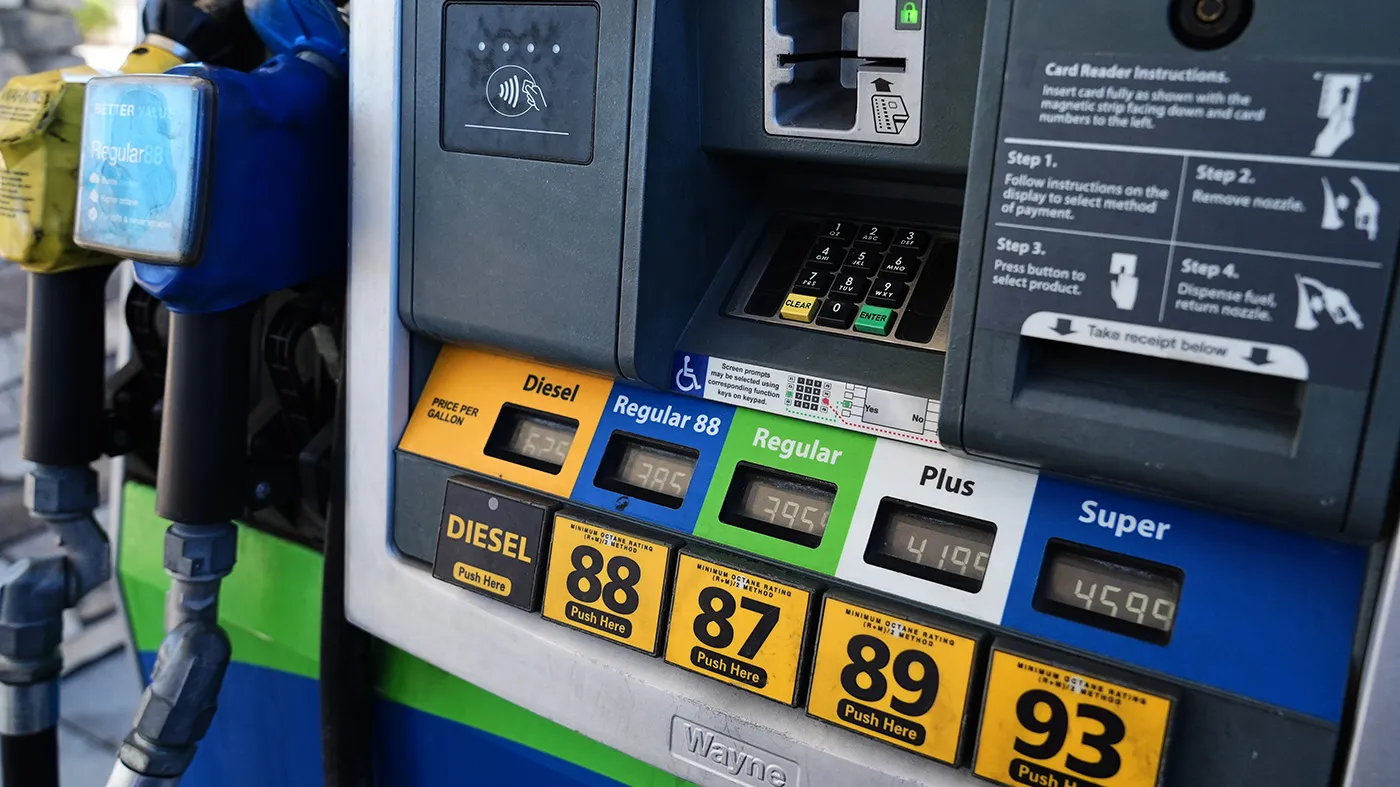
Gas, diesel and food prices are high and expected to remain elevated through Election Day, creating a strong political headwind for Republicans who are at serious risk of losing control of the House and possibly the Senate , as well.
President Trump’s diesel deal with Russia has had little lasting impact on fuel prices , according to economic experts. The national average price of diesel stood at $6.28 a gallon on Friday, significantly higher than where it was before Trump launched strikes against Iran, which was $3.72 per gallon in February.
High fuel prices have pushed up food prices, despite Trump’s interventions to control costs across the U.S. economy.
The price of ground beef is now hovering around $6.80 a pound despite Trump’s order in August to import 300,000 metric tons of foreign beef.
Consumer borrowing rates are high, including the rate for a 30-year fixed mortgage, which stands at 7.32 percent.
Congress passed the 21st Century Road to Housing Act in July but it has had little impact on the worst housing market in years.
Pending home sales dropped 7.3 percent from August to September, representing an 11.3 percent year-over-year decline, according to the National Association of Realtors.
Recognizing the gravity of the housing affordability crisis, Trump on Thursday signed an executive order to lower insurance premiums, refinancing costs and interest rates on some government-backed home loans, but it’s unlikely to have much impact before Nov. 3.
It adds up to an economic environment that has put voters in a sour mood and gives Democrats a chance to capture Senate seats even in Republican-leaning states such as Alaska, Iowa, Kansas and Texas.
“The economists tell us the economy is doing well, there are a lot of great numbers for the Trump administration but the bottom line is Americans aren’t feeling it. Many Americans feel like their dollars aren’t going as far. They’re paying higher prices for gas, higher prices for groceries,” said Brian Darling, a Republican strategist.
Darling said Trump’s diesel deal with Russian hasn’t had much of an impact on fuel prices.
“Diesel prices are really high and that is the most extreme energy inflation that we’re seeing in the economy right now,” he said.
He warned that if “gas prices creep up right up to Election Day, that’s bad news for Republicans.”
“That is something that’s been a real problem for Republicans,” he said. “If they go up between now and Election Day, that may be a tiebreaker in many of these close races.”
Trump on Thursday announced that he would invoke the Defense Production Act to boost domestic oil production and refining capacity.
The announcement came a few weeks after Trump shocked Republican senators by announcing a deal with Russian President Vladimir Putin to import hundreds of thousands of tons of Russian diesel into the United States.
But economic experts say Trump’s deal with Russia and his recent invocation of the Defense Production Act will hardly impact prices before Election Day.
“Gas prices are not going to come down until we have an end to the war” with Iran and there’s a “ramp-up of production and shipping through the Strait of Hormuz,” said Neale Mahoney, a professor of economics at Stanford University.
He noted that Trump’s negotiations with Iran to reopen the Strait of Hormuz have “been largely going sideways over the last few weeks” and predicted, “I don’t expect any sharp deviations from that trend.”
The price of brent crude oil rose to a six-month high on Friday, gaining more than 3 percent to close at $116 a barrel.
West Texas Intermediate, the other oil benchmark, rose nearly 4 percent to close at $103 a barrel Friday.
That in turn is putting upward pressure on food prices, say experts.
“Diesel prices and also the reduced exports of fertilizer out of the Strait of Hormuz impact the economy over time,” Mahoney said. “Over time, the increase of the price of fertilizer works its way through into agricultural prices.
“We expect to see higher agricultural prices heading into the rest of the fall and the winter, combined with El Niño, which is going to strain global food supply,” he warned, referring to the increase in ocean temperatures in the Pacific that are expected to impact weather patterns over the next several months.
“Those two shocks together are going to put increased strain on food prices. Gas and food are the prices that consumers see most often,” he added. “They’re the ones in polling and in focus groups that [people] say they are the most frustrated about.”
Political and policy experts say the relentless rise in prices have fueled growing public pessimism over the U.S. economy and voter anger over Trump’s management of the economy.
The University of Michigan’s Surveys of Consumers reported on Friday that U.S. consumer sentiment dropped to near a record low in October, the second-lowest reading on record after the one set in May. Consumers are 15 percent less optimistic about the economy than they were in February, before the war in Iran sent oil prices soaring.
The latest CNBC All-America Economic Survey of 1,000 registered voters published on Thursday found that 8 out of 10 Americans rate the economy as fair or poor and that 35 percent of Republicans say they are pessimistic about the economy.
The poll found that only 33 percent of voters approve of Trump’s handling of the economy while 63 percent disapprove.
Trump has stepped up his efforts in recent weeks to change voters’ views by taking decisive action to address costs, such as announcing an $8 billion relief program to help farmers afford diesel costs during harvest season.
The president is also taking credit for new investments coming to battlegrounds states, such as the $15 billion Mesabi Metallics steel plant that he announced would be build in Iowa, creating 1,750 new jobs.
But political and policy experts say that voters’ negative views of the economy are mostly baked in and that Trump’s actions to address the affordability crisis, something he dismissed as a “hoax” in December, aren’t likely to change many people’s minds.
“They are too little, too late. It’s not clear that any of these initiatives are going to bring prices down,” said Darrell West, a senior fellow in the governance studies program at the Brookings Institution.
“People are worried housing, healthcare, child care and other issues and his moves don’t meaningfully reduce the cost of living for people,” he said.
“He hasn’t manage to bring down beef costs even though he has made some deals. The problem is that many things he’s done hasn’t addressed the fundamental problem,” he added, referring to Trump. “The Iran war has raised fuel prices and the cost of manufactured goods.
“There are many sectors where there are only two, three or four companies so we don’t really have meaningful price competition. There are just big structural issues he hasn’t addressed,” West said.
Darling, the GOP strategist, said Trump is working hard to show voters that he’s laser-focused on the economy but acknowledged the president’s failure to end the conflict with Iran continues to be a big political problem for Republicans because voters blame rising costs on the war.
“President Trump is working hard to make the rounds, do rallies, trying to cut deals to make the economy a little bit better. But the bottom line is that for the economy to change, that takes a long period of time,” he said.
He called the military conflict with Iran “the most important issue.”
“The Iran war is impacting gas prices, grocery prices. And a lot of Republicans supported the president because he wasn’t going to start any new wars. They’re disillusioned,” he said.
Topics in this story
Gathered from external sources. Rights to this text belong to whoever originally published it.