Plan B for Trump’s election intimidation: An iron fist in a velvet glove
While Gen. Dan Caine testified that the U.S. military has no plans to be at polling places, experts warn that military leaders will need to utilize specific rules for the use of force to mitigate potential voter intimidation if the Insurrection Act is invoked.
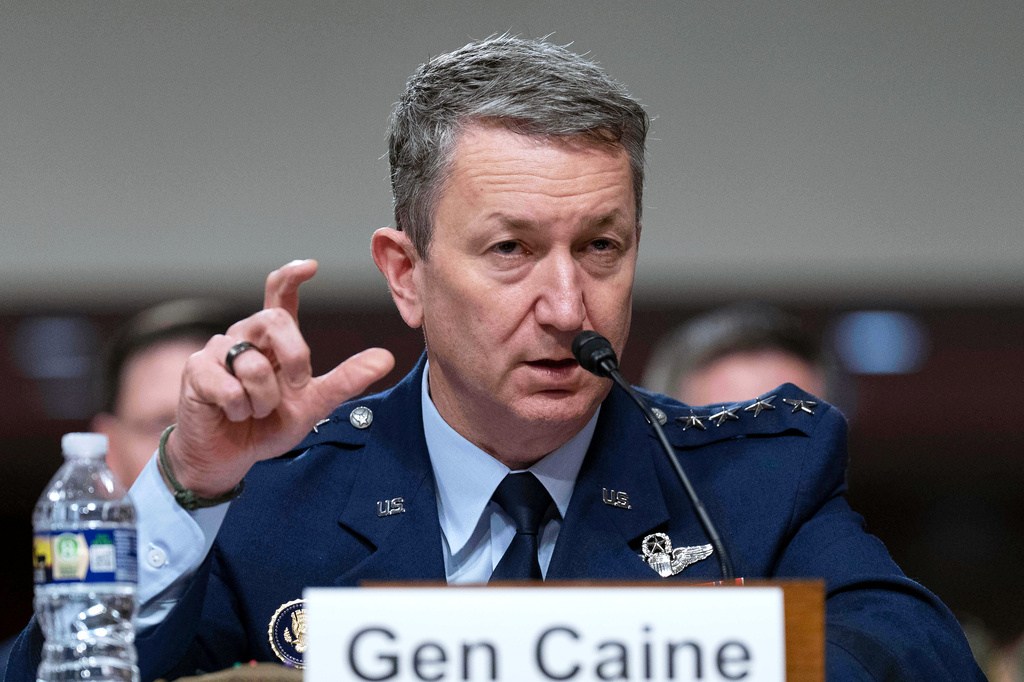
Gen. Dan Caine, the nation’s senior-most military leader, recently told Sen Elissa Slotkin (D-Mich.) that the U.S. military has “no plans” to be at polling places in November. But President Trump has made it impossible to dismiss fears of military interference.
To the contrary, his persistent assault on the integrity of the voting process, his suggestion that Republicans “should take over the voting in at least 15 places,” and his refusal to rule out invoking the Insurrection Act have led many to begin bracing for an imminent collision.
Americans across the country are worrying that their constitutionally-assured right to vote will be curtailed by Trump’s increasingly frantic search for anything that will preserve his party’s congressional majorities.
The bar for legally deploying troops to polling places is high. Under the Posse Comitatus Act, the president cannot use federal military troops for law enforcement purposes. Meanwhile, federal law makes it a crime to post “troops or armed men” at polling site, but exceptions exist. The Insurrection Act permits the president to deploy troops in response to “unlawful obstructions, combinations, or assemblages” or “domestic violence, unlawful combination, or conspiracy.” Troops or armed men can be legally deployed at polling sites to “repel enemies of the United States.”
If the president wants to deploy troops to election sites, he can easily come up with a set of fake facts that satisfies both legal loopholes.
Most senior commanders understand the damage that can be done if troops are deployed to polling places; not only would it present real threats to democracy but it could subject them — not the president — to criminal prosecution.
In his testimony before Congress, the commander responsible for the domestic use of military forces acknowledged that laws prohibit deploying troops to polling sites and asserted that he would refuse orders that violate them.
However, if resistance fails and the president and his Office of Legal Counsel concoct legal and factual justifications for deploying troops to polling sites, military commanders and their judge advocates can mitigate the impacts of these actions by exercising good judgment.
First, state and local officials and commanders must be transparent with each other and with the media about what is happening at every polling site. Commanders will need to display moral courage if the facts they perceive on the ground are different from those Trump and his minions are peddling. If ordered to polling places, they must first and foremost focus on de-escalation.
They must also resist the inevitable pressure of mission creep. Exceptions to federal law allowing deployment of troops to polling places are very narrow. Commanders cannot let their responses exceed those narrow limits. For example, federal troops deployed to quell discontent cannot seize voting equipment, ballots, or otherwise interfere in election processes.
If the secretary of Defense orders commanders to wield an iron fist, they can and must refuse to intimidate anyone or to interfere in the voting process, donning velvet gloves instead. “ Rules for use of force ” — which are rules that are established by commanders that troops must follow when deployed domestically — must stipulate that servicemembers must be neither seen nor heard by voters unless there is an actual civil disturbance that exceeds law enforcement agencies’ ability to respond. These rules must also acknowledge the limits of the legal authorities upon which the deployment is based.
For example, they must stipulate that troops may only be used to address physical disturbances at the polls. They must agree that troops may not do anything that might intimidate voters, including detaining them for any reason other than to quell disturbances. (For example, they may not look for or detain suspected non-citizens, enforce voting procedures or observe voting processes.)
The public should be concerned that Trump may deploy the military as part of his effort to “take over” voting in many locations. But that concern need not translate to fear that troops will adversely impact the election. If existing legal guardrails fail, there is still a Plan B. The military officers ordered to command those troops and the judge advocates advising them can mitigate whatever intimidation Trump seeks to achieve.
Steven Lepper is a retired U.S. Air Force major general, Dan Maurer is a retired U.S. Army lieutenant colonel and Eugene R. Fidell is a military law expert.
Topics in this story
Gathered from external sources. Rights to this text belong to whoever originally published it.