Iran live updates: IRGC will target US ships if fighting resumes, official says
The Indian Ocean sits beyond the southern entrance to the Strait of Hormuz.
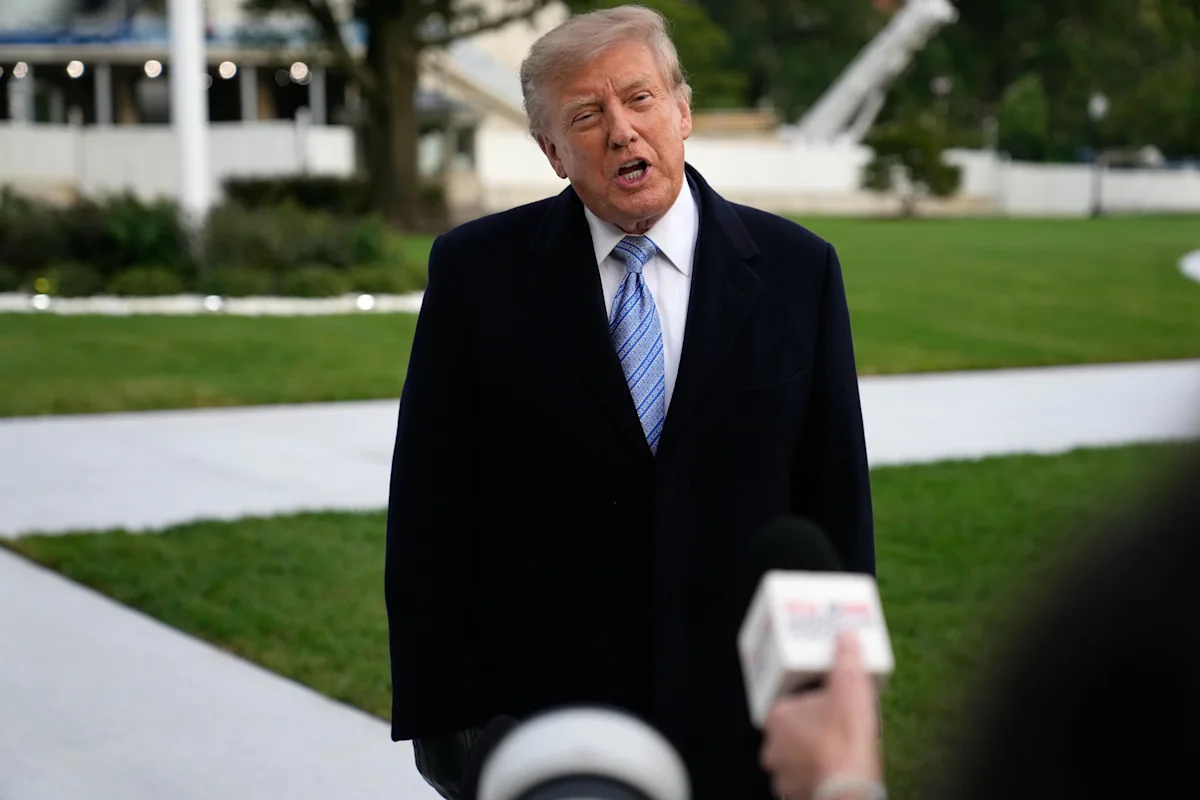
President Donald Trump announced "major combat operations" against Iran on Feb. 28, with massive joint U.S.-Israeli strikes targeting military, government and infrastructure sites.
Delegations from the U.S. and Iran entered negotiations in June aimed at a war-ending deal based on a memorandum of understanding signed by both countries.
Those talks broke down as the U.S. and Iran continued to exchange strikes, with the strategic Strait of Hormuz as the primary flashpoint. Trump then said in August that the U.S. would launch a "crushing economic operation" to force Tehran into submission.
Iran's Islamic Revolutionary Guard Corps Navy on Sunday claimed to have seized a U.S. Remus 600 unmanned underwater vehicle operating in the Strait of Hormuz, according to a statement published by state media. The Pentagon did not immediately comment on the IRGC's claim. -ABC News' Guy Davies
Ali Mohammadi, the deputy political commander of the Islamic Revolutionary Guard Corps Navy, said on Saturday that Iranian forces would target American vessels in the Indian Ocean if heavy fighting with the U.S. resumes. "If another war breaks out, we will undoubtedly attack and hit their vessels and destroyers even in the Indian Ocean," Mohammadi said, in comments published by the semi-official Fars News Agency. The Indian Ocean sits beyond the southern entrance to the Strait of Hormuz and the Gulf of Oman, which have been the focus of Iranian and U.S. maritime actions during the ongoing conflict. U.S. vessels have been operating in the Indian Ocean to enforce their blockade of Iranian ports and shipping. -ABC News' Somayeh Malekian
President Donald Trump said Saturday morning that he rejected Iran's seven-day plan to reopen the Strait of Hormuz, though he did not go into specifics as to why he found the proposal unsatisfactory. "Well, I'm rejecting their deal. They want to make a deal where we open the Strait immediately because they're losing so badly," Trump said. "We're winning tremendously. We have total control of the Hormuz Strait."
"They want to make a deal. I think that's fine, I like making a deal too. But I'm not. That deal would not be acceptable," he added. "And what they want to do is immediately open the Hormuz Strait. You know why? Because they're dying. You know why they're dying? Because they have no money coming in. Because they get their money from the Hormuz Strait," the president said. -ABC News' Emily Chang
Iranian President Masoud Pezeshkian told journalists Thursday there is a "major atmosphere of mistrust" between the U.S. and Iran, but that "we are ready for a trust-building relationship." After Iran's president addressed the U.N. General Assembly in New York, he provided remarks to a small group of journalists, including ABC News' Martha Raddatz.
"We struggle to understand why America attacked Iran," he said. "We don't want a nuclear weapon," adding, "President Trump says the U.S. obliterated the program, so why do they need to inspect?" But he said, "We are willing to have inspectors." Separately, Iran's foreign minister told journalists that Iran has presented a plan through mediators that would reopen the Strait of Hormuz in seven days if the U.S. agrees to certain conditions. The minister did not spell out the steps the U.S. would have to take but said they were similar to a memorandum of understanding the U.S. signed in Islamabad but has since backed away from. With gas prices in the U.S. soaring to nearly $4.50 per gallon and diesel prices at an all-time high tonight, the Iranian president told journalists, "It is impossible for the U.S. to make Iran surrender." He acknowledged the U.S. "has the power to destroy anything and everything," but insisted, "We will never surrender." The Iranian president also claimed most of the U.S. bases in the region are no longer usable. Regarding Iran's supreme leader Mojtaba Khamenei, who was severely wounded and reportedly disfigured during the first day of the war, the Iranian president said he met with the supreme leader twice and "saw no major challenges with this health." The supreme leader has not been seen in public since that initial strike.
After a week in which more Republicans have emerged to call for an end to the war in Iran, the Senate failed to adopt a House-passed war powers resolution on Thursday by a vote of 49-50. Republican Sens. Lisa Murkowski, Susan Collins, Rand Paul and Thom Tillis joined all but one Democrat, Sen. John Fetterman, in voting in favor of the resolution. Democratic Sen. Angela Alsobrooks did not vote. Democrats would've needed full attendance and five Republicans to vote with them in order for the resolution to pass. Read more here . -ABC News' Lalee Ibssa and Allison Pecorin
Israeli Prime Minister Benjamin Netanyahu's speech at the United Nations Thursday got off to a raucous start, as scores of diplomats walked out of the hall in protest as soon as he approached the podium. Netanyahu wasted no time delving into the conflict with Iran.
"Devastating Iran's nuclear facilities was hard. It was very hard to do. But for me, it was one of the easiest decisions I've ever had to make as prime minister," he said. Netanyahu praised President Donald Trump claiming Israel had "no greater partner." "Israel has never been stronger. We are not afraid. But I'll tell you who is afraid: the tyrants of Tehran. That's who. And you know what they're most afraid of? They're own people," he said. -ABC News' Shannon Kingston
Thee United Arab Emirates on Thursday suspended flights by Iranian air carriers to and from the country until further notice, according to the state-run WAM news agency. In a statement carried by WAM, the General Civil Aviation Authority said that "the decision was made in light of the US ban imposed on Iranian airlines from using airports in various countries around the world." The authority said it will continue to update relevant authorities and the public on any developments until air traffic between the UAE and Iran returns to normal. -ABC News' Desiree Adib
Saudi forces intercepted six Houthi ballistic missiles on Thursday, a military spokesperson said, following safety alerts issued for five regions of the country. Col. Turki Al-Malki, the spokesperson for Saudi-led coalition forces operating in support of the internationally-backed Yemeni government, said in posts to X that air defenses "thwarted an attempt to target Taif and Yanbu," two of the five regions put under safety alert. "Escalations and violations by the terrorist Houthi militia will be dealt with firmly," he added.
The Saudi General Directorate of Civil Defence on Thursday issued safety alerts for five regions amid continued cross-border hostilities with the Iran-backed Houthi rebels in Yemen. The directorate posted safety alerts to X for the regions of Yanbu, Tabuk, Taif, Mecca and Jeddah.
All warnings were lifted soon after they were announced, with the directorate saying that the "danger has passed."
Senior Iranian figures praised Iranian President Masoud Pezeshkian's Wednesday address to the United Nations General Assembly, in which he said Tehran "will never bow" to U.S. threats. Maj. Gen. Ali Abdollahi, the chief of staff of the Iranian armed forces, wrote in a post on X that Pezeshkian's speech constituted "a slap in the face" to the U.S., after President Donald Trump said he was mulling a "big decision" at to whether to make a deal with Tehran or "quickly annihilate" the country. "As long as Iran's waters, land and skies remain under threat, no aggressor nation -- nor any supporter of such aggressors -- shall enjoy security," Abdollahi said. The speaker of the Iranian parliament and Tehran's chief negotiator, Mohammed Bagher Ghalibaf, said in a post to X that Pezeshkian "spoke not just for a government, but for a 3,000-year-old civilization. He was the powerful voice of courage, resilience and strength for the Islamic Republic of Iran."
Topics in this story
Gathered from external sources. Rights to this text belong to whoever originally published it.