Who will have the best view of this week’s blood moon lunar eclipse?
Just about everyone in the U.S. will have an opportunity to see the blood moon lunar eclipse this week, but some people will end up having a much better view than others.
(NEXSTAR) – Just about everyone in the U.S. will have an opportunity to see the blood moon lunar eclipse this week, but some people will end up having a much better view than others.
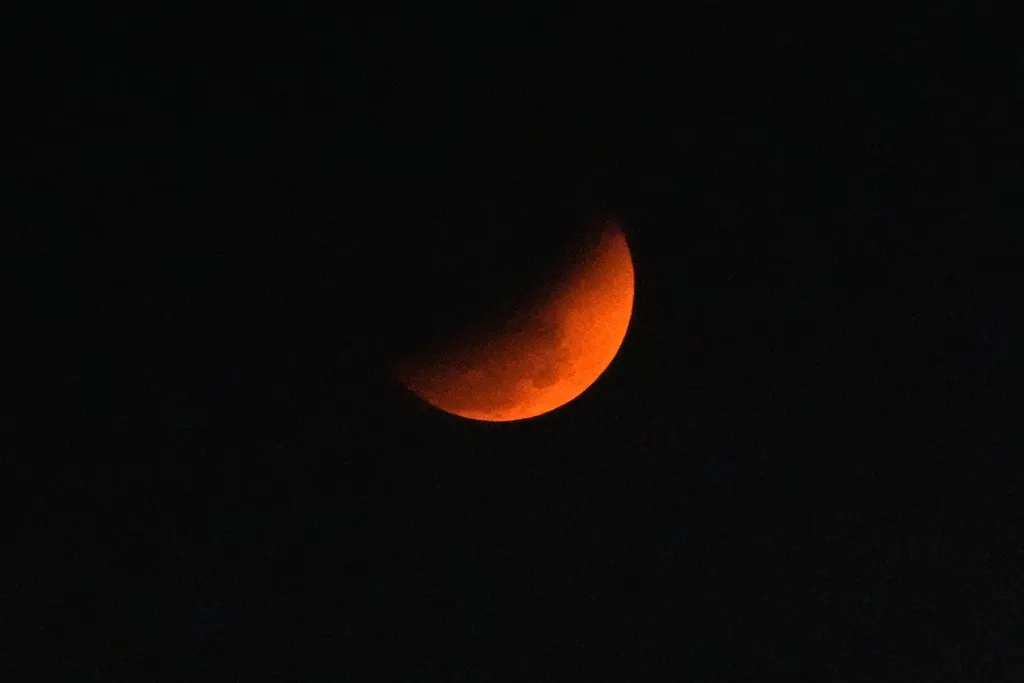
The eclipse starts Thursday night and lasts early into Friday morning, as the moon moves through Earth’s shadow, taking on a red color as it goes. That reddish, coppery tint is what gives this week’s lunar eclipse its “blood moon” nickname.
While the eclipse viewing zone covers all of North America, some people will get a better view thanks to their time zone.
“Most of the U.S. is going to see the eclipse, but once you get west of the continental divide, that’s where you’re starting to see the eclipse take place at moonrise,” said Nexstar chief meteorologist Brian James.
For example, for those who live on the West Coast in Pacific Time, eclipse maximum is scheduled for 9:12 p.m. on Thursday. That’s not long after sunset, and the moon isn’t that high in the sky.
“So it’s going to be occurring right as the moon is coming up over the horizon,” said James. “That’s going to make it a little bit more difficult to see, but there will still be at least a little chance to see as it’s getting toward the tail end of the eclipse.”
Here are the times the lunar eclipse reaches maximum in every continental time zone:
Eastern Daylight Time: 12:12 a.m. on Friday, Aug. 28
Central Daylight Time: 11:12 p.m. on Thursday, Aug. 27
Mountain Daylight Time: 10:12 p.m. on Thursday, Aug. 27
Pacific Daylight Time: 9:12 p.m. on Thursday, Aug. 27
The moon will be easier to see the higher it is in the sky, but everyone in the continental U.S. still has a chance of a good view if they look to the horizon.
People who live in Alaska and Hawaii may have a harder time. The eclipse will reach its maximum in those time zones before the sun has fully set, but they can still catch the tail end of the eclipse.
Another possible issue is cloud cover or smoke from wildfires, which can obscure the view of the moon.
If you’re looking to eclipse watch this week, there’s no need for special glasses. Those are only necessary during a solar eclipse, not a lunar eclipse.
Topics in this story
Gathered from external sources. Rights to this text belong to whoever originally published it.