Tariffs, the price of ground beef, and Donald Trump
Former President Trump’s proposal to temporarily pause tariffs on imported ground beef aims to lower prices before the midterm elections, despite economic analysis suggesting the 25 percent price reduction claim is unrealistic and potentially harmful to domestic producers.
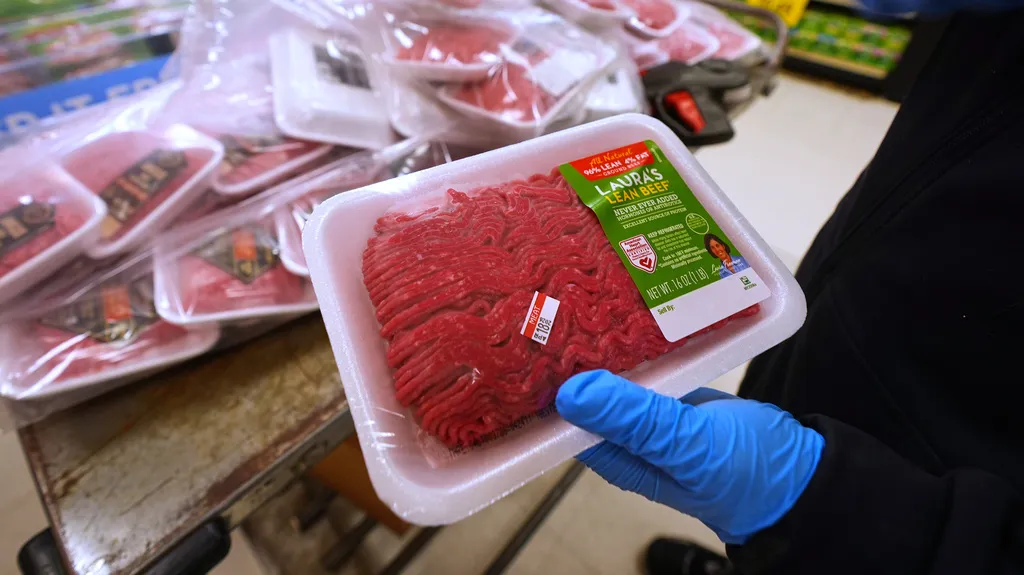
President Trump is no economic Reaganite , the latest manifestation of which is his gambit to reduce the price of ground beef by pausing higher tariffs on 300,000 tons of imported ground beef for 90 days. As Trump put it, “This beef will be sold at 25 percent below current market prices.”
Americans consume roughly 7 million tons of ground beef in a year, or about 1.8 million tons over a given 90-day period. If we assume that none of the 300,000 tons would have been imported without the tariff relief, those additional supplies would add about 16.7 percent.
If we apply the demand elasticity estimates of consumer responses to changes in the price of ground beef as reported in the economic literature , the rough price reduction that we would expect from this temporary easing of tariffs would be no more than about 8 percent. Because some substantial portion of the 300,000 tons would have been imported in the absence of this Trump tariff reduction, the price effect will be smaller still.
So whence the Trump claim of a 25 percent price reduction? Surely he cannot believe that ground beef produced domestically will sell for so large a premium over the imported competitors. Or, as is so often the case, did Trump simply pull that number out of thin air?
Whatever the case, the temporary nature of the tariff reduction — it is no accident that the 90-day period ends not long after the midterm election — means that domestic producers will have incentives to put some of their ground beef in freezers in anticipation of increased prices after the 90-day period is over. Has Trump thought any of this through?
Remember when Trump claimed , repeatedly, that foreign producers would bear the costs of U.S. tariffs imposed upon imported goods? Because of the economic fundamentals shaping the international supplies of goods to the U.S., that claim was never realistic even remotely, and the economic literature is unambiguous that it is U.S. purchasers of imported goods who bear virtually the entire burden of tariffs.
Looming elections focus the minds of politicians, and Trump is no exception. His net approval poll numbers are underwater by roughly 30 points, and by about the same among all adults with respect to his tariff policies.
He cannot do much about gasoline prices — tariffs are not the source of recent increases — but he can deceive himself, and perhaps others, into believing that this tariff maneuver on ground beef will make an appreciable difference. When it fails to do so, it is a safe bet that he will again blame the private sector.
The cost of producing beef cattle has increased by 4.8 percent over the last year. The price of ground beef increased by 23 percent during former President Joe Biden’s first 18 months in office (39 percent during his four-year term), whereas the increase during Trump’s first 18 months is 24 percent.
Accordingly, Trump’s claim that “under Biden, beef prices soared at their fastest rate” is false, and whatever Trump may tell himself. Are his advisers simply incapable of telling him hard truths? And his own policies bear a substantial share of the blame.
Moreover, with respect to his complaint that “the American beef herd fell to its smallest size in modern history,” are the producers responsible for dry conditions and other problems? What does he think his effort to reduce prices will do to ameliorate that trend? And it is obvious that this tariff gambit might be repeated in the future; what effect will that have on the size of the herds?
Tariffs drive up production costs, as Trump now is conceding almost explicitly. The cost of cattle feed has increased 7.3 percent since Trump took office, in substantial part because fertilizer prices have increased, by around 50 percent globally since the beginning of the year. That this is the direct result of the Iran conflict and the partial closure of the Strait of Hormuz is obvious and acknowledged by the U.S. Farm Bureau, a prominent organization representing the agricultural sector and thus no fan of high input prices. Perhaps that is part of a price worth paying to confront the Iranian regime and its nuclear weapons program. But it is a price nonetheless.
Trump blames the previous administration for high beef prices. Trump blames the fossil energy producers for high gasoline prices because they are “ making too much money .” Trump blames vandalism for the problems with the Lincoln Memorial Reflecting Pool even as it is clear that poor workmanship was a major cause. That Trump refuses to take responsibility for adverse outcomes is obvious. That he is incapable of doing so is obvious as well.
Benajmin Zycher is a senior fellow at the American Enterprise Institute.
Topics in this story
Gathered from external sources. Rights to this text belong to whoever originally published it.