Why the Air Force needs a new fleet metric
Air Force Deputy Chief of Staff Lt. Gen. David H. Tabor argues for replacing the outdated Primary Mission Aircraft Inventory metric with a Combat Coded Total Aircraft Inventory to ensure realistic funding and combat readiness.
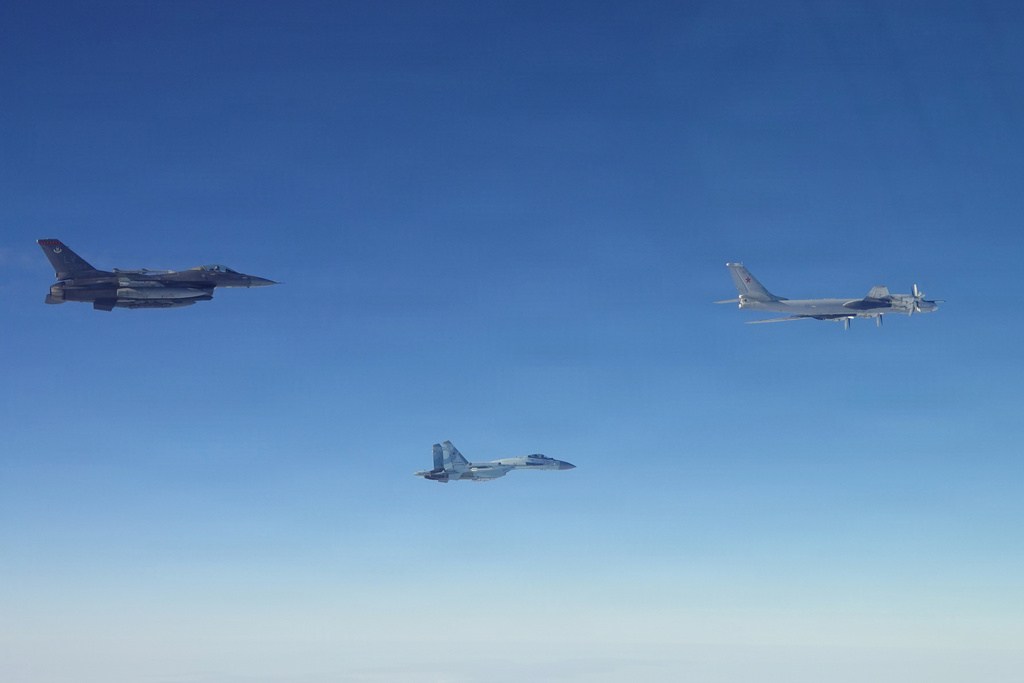
Though the Air Force is actively advancing toward a more autonomous future, crewed fighters like the vaunted F-15, the advanced F-35, and the next-generation F-47 are — and will remain —the indispensable cornerstone of airpower.
That truth is beyond dispute, confirmed by an enduring history woven between flesh-and-blood aviators and their high-performance aircraft, underwritten by the global deterrence that only dominant airpower can provide.
The question now is not whether our airpower dominance will be sustained, but how it will be preserved. This could benefit from a new approach to configuring and funding our force.
Candidly, there is a stark divide between legislated direction on how the fleet should be counted and funded, and the actual combat capacity of the Air Force. This disconnect is rooted in a formula that creates a disparity between peacetime budgeting and the need for actual combat readiness.
For decades, the metric used to measure fighter capacity has been an accounting standard known as Primary Mission Aircraft Inventory. It dictates funding, flying hours and manning, but crucially excludes backup and attrition reserve aircraft. It measures only what we can afford to operate during routine training outside conflict. To adequately capture our warfighting capability, we must look at the entire combat-coded inventory.
It is a technical debate, to be sure, but it is a critical one. Legislation that modernizes this metric is essential to match the real-world requirements that guarantee global deterrence today.
The Primary Mission Aircraft Inventory counting method has shaped the size of the Air Force’s fighter fleet since 2017, when Congress mandated a legal floor set at 1,145 fighters. That 2017 Primary Mission Aircraft Inventory baseline was built on modeling originating from the 1999 and 2001 Quadrennial Defense Reviews, a different era of global security challenges and math that predates 9/11.
One step toward better defining airpower requirements would be using the National Defense Strategy to guide the required size, shape and reach of the fighter inventory, not a 25-year-old profile of global threats and security assumptions.
Today’s fleet includes cutting-edge F-35s and F-15EXs alongside older F-15s and F-16s. Operating this diverse fleet comes with complex sustainment and modernization requirements, requiring an even greater number of reserve aircraft among the older fleets.
A new approach based on Combat Coded Total Aircraft Inventory will more accurately gauge our capacity for global power projection. This standard is more meaningful, looking beyond frontline fighters to account for critical backup and attrition reserve aircraft that exist to replace aircraft that are damaged, destroyed, or in need of maintenance.
Also necessary is raising the minimum fleet requirements to match this more accurate reality, ensuring the U.S. is fielding a force capable of absorbing the shocks of warfare.
Organized sports can offer a useful metaphor. Primary Mission Aircraft Inventory is the starting lineup — the exact number of players needed on the field at one time. But to measure true readiness, we must look at the entire roster. Combat Coded Total Aircraft Inventory does exactly that, counting the starters alongside the bench and injured reserve needed to make a team work.
When critics look at a fighter squadron with 21 actual aircraft (Combat Coded Total Aircraft Inventory) but only manned and funded for 18 primary aircraft (Primary Mission Aircraft Inventory), we are asked why the other three jets are allowed to gather dust on the ramp. The reason is that aircraft constantly rotate through maintenance cycles — these are not the same jets day to day, and they do not sit idle; they are essential shock absorbers for aberrations that impact the ability to predictably provide combat power. Combat is unforgiving, as we saw with the sobering loss of four F-15s during Operation Epic Fury. Fleets can shrink rapidly when the shooting starts.
Consider a practical combat scenario: If a squadron is tasked to deploy 12 aircraft with the option for six more, and we only count their Primary Mission Aircraft Inventory baseline of 18, we leave zero margin for real-world contingencies. Without built-in depth, a single aircraft requiring depot-level maintenance or lost to combat instantly degrades a squadron’s frontline strength and means it can no longer meet its operational requirements. Combat-capable backup jets exist to guarantee that pilots and maintainers can consistently put the required 18 fully capable fighters into the sky.
Critics assert that by adopting Combat Coded Total Aircraft Inventory, the Air Force is attempting a bureaucratic bait-and-switch to meet the 1,145 aircraft mandate without buying physical aircraft. This is not accurate. The goal is to present an honest accounting of the nation’s required combat capability.
The Air Force needs support to codify the Combat Coded Total Aircraft Inventory mandate now. While we are hopeful for increased defense budgets, the combination of significant financial constraints, colliding with an aging fleet, and a restrictive Primary Mission Aircraft Inventory floor will lead to false funding choices that could, and have in the past, resulted in cutting those essential combat-capable reserve aircraft.
Arguing for an accurate accounting of crewed aircraft is not a dismissal of uncrewed platforms like the Collaborative Combat Aircraft; national security demands both. The Air Force is procuring the aircraft we need to meet national security demands, including 62 additional fighters (38 F-35As and 24 F-15EXs) alongside 30 Collaborative Combat Aircrafts in the 2027 budget.
The development of Collaborative Combat Aircrafts is rapidly moving forward — they will be a force multiplier and as they develop further, are envisioned to execute missions historically limited to fighters. But, large-scale UAV warfare against a peer adversary remains untested; Ukraine’s grinding drone war is a poor proxy for the level of coordinated, fast-paced air operations required to dominate contested airspace. Autonomous systems will contribute to that future environment, but we do not yet know with precision how. That said, rest assured we are planning and building to that future.
We must equip our units for the brutal realities of defending this nation. We cannot measure tomorrow’s combat capacity with yesterday’s peacetime accounting. By adopting Combat Coded Total Aircraft Inventory and raising our fighter requirements and resources to match, we provide the American public an honest, unvarnished look at our strength — and a guarantee that we have the depth to win when called upon.
Lt. Gen. David H. Tabor serves as Air Force Deputy Chief of Staff for Plans and Programs. In that role he directs activities ensuring the Air Force builds and employs effective air and cyber forces to achieve national defense objectives.
Topics in this story
Gathered from external sources. Rights to this text belong to whoever originally published it.