Supreme Court’s mail ballot ruling brings giant sigh of relief to Trump critics
Nevada’s top election official was at dinner with a friend on Monday night when his phone started blowing up. The Supreme Court’s mail ballot decision had landed. His stomach sank. “Then, as I started to read, just pure emotion of joy,” Nevada Secretary of State Cisco Aguilar (D) told The Gavel. While Trump expressed dismay, the…
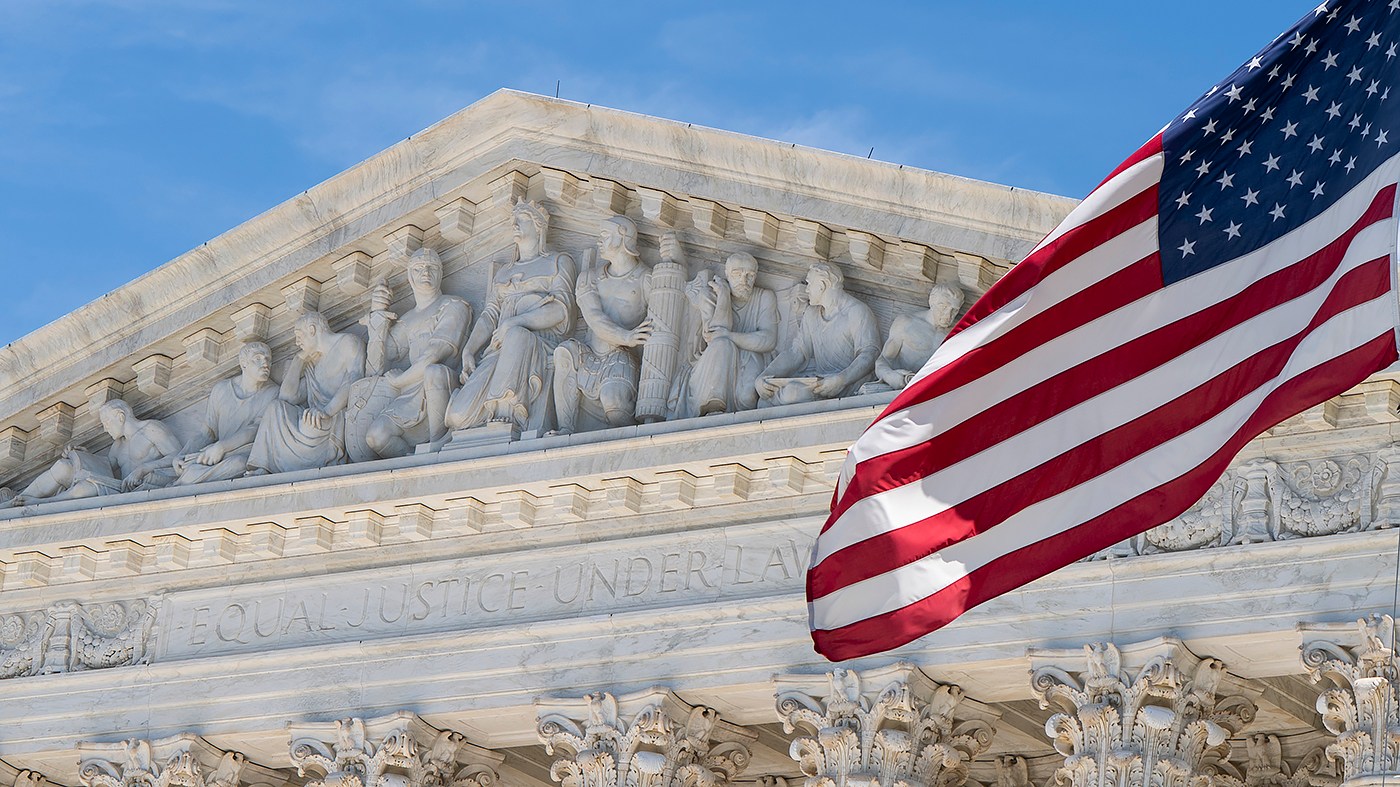
Nevada’s top election official was at dinner with a friend on Monday night when his phone started blowing up. The Supreme Court’s mail ballot decision had landed. His stomach sank.
“Then, as I started to read, just pure emotion of joy,” Nevada Secretary of State Cisco Aguilar (D) told The Gavel.
While Trump expressed dismay, the Supreme Court’s decision to keep a block on his mail-in voting plan is being met with relief from the president’s critics, who had warned that chaos would ensue if the plan were allowed.
It would’ve required states to meet new ballot design requirements and upload lists of voters for them to receive a mail ballot.
But some states had already begun sending ballots.
Aguilar, who also serves as chair of the Democratic Association of Secretaries of State, worked through the weekend to develop a Plan B as the justices’ decision loomed. He was even considering launching a new lawsuit against the U.S. Postal Service under state law.
“What are some of the crazy ideas? Let’s throw ideas on the board. Let’s figure it out so that we can then be ready to go,” Aguilar recounted.
That is no longer needed. With Trump’s plan on hold, Nevada and other states are proceeding with mail-in voting as they have previously.
It was a rare loss for Trump on the Supreme Court’s emergency docket. But Aguilar said he was optimistic after listening earlier this year to questioning from Justice Amy Coney Barrett and Chief Justice John Roberts during oral arguments in another case, Watson v. Republican National Committee . The two conservatives later joined the liberal justices to side against the GOP in that case and rule that officials can accept mail ballots that arrive after Election Day.
Both Barrett and Roberts appeared to rule against the president again in the latest dispute, though the justices don’t have to disclose their votes in emergency rulings.
“I would assume that they understood the situation pretty well, especially being so close to the election and what disruption and chaos that would cause,” Aguilar said.
NAACP General Counsel Kristen Clarke told The Gavel that Trump’s plan would have been “simply catastrophic.”
“There is no way that the midterm election cycle would have been a normal one had the Supreme Court given the administration the green light to turn our mail voting system on its head,” said Clarke.
Monday’s ruling saw him heap some of his most searing condemnation to date on Barrett and his two other Supreme Court nominees, Justice Neil Gorsuch and Justice Brett Kavanaugh.
“These are not the people I interviewed to serve on the United States Supreme Court, they are merely a shell of their original selves,” Trump wrote on Truth Social.
The post showed how Trump’s limited series of Supreme Court losses still looms large in the president’s social media feed. He went on to condemn the justices’ recent decisions striking down his tariffs and birthright citizenship restrictions.
“It is not easy for me to write this criticism of the United States Supreme Court,” Trump concluded.
Like Barrett, Gorsuch didn’t explain himself. Kavanaugh did. He penned a solo opinion suggesting that Trump’s efforts may be legal, but it’s simply too close to the midterms to implement them.
So, what does the Supreme Court’s ruling mean? Trump’s plan is effectively dead for 2026 but remains an open question for the 2028 cycle.
It all depends how you interpret the ruling’s key sentence:
“The Government is unlikely to succeed on the merits of its challenge to the District Court’s preliminary injunction.”
That may not seem like much at a glance, but there’s a lot to unpack. Irv Gornstein , executive director of Georgetown Law’s Supreme Court Institute, during a discussion with reporters on Tuesday, called the language “cryptic.”
The justices could’ve written something like: The U.S. Postal Service’s plan is likely unlawful.
Instead, they zeroed in on the judge’s preliminary ruling. That ruling concerns only the midterms and leaves future election cycles unaddressed.
So, were the justices trying to leave the door open, or were they suggesting that Trump’s policy actually exceeds his power, no matter the timing?
Gornstein suggested it may be the latter. After all, Kavanaugh felt a need to speak out separately from the majority to indicate Trump may be acting legally once the calendar isn’t a problem. No other justice was willing to join him, at least publicly.
It “suggests to me that one or two justices were fine with sending a subtle signal that they would rather not see this again but were not fine with sending a definitive signal that they did not want to see this again,” Gornstein said.
“We will see whether the Trump administration takes the subtle hint.”
Welcome to The Gavel, The Hill’s weekly newsletter unpacking the intersection of courts & politics from Zach Schonfeld and Sophie Brams. Email us tips at zschonfeld@thehill.com and sbrams@thehill.com . You can also reach out to us on X (@ZachASchonfeld and @sophiebrams) or Signal (zachschonfeld.48 and sbrams.32).
NY, others sue over public charge rule: New York is leading a coalition of 22 states and Washington, D.C., in challenging a Trump administration rule that makes it harder for immigrants to obtain green cards if they rely on public benefits such as food stamps. Blue cities filed a separate suit .
FEMA cuts ruled unlawful : A federal judge in California says the Department of Homeland Security “ unlawfully usurped the authority ” of the Federal Emergency Management Agency when it tried to cut the workforce in half, ruling the proposal unlawful .
ICE at polling sites?: The city of Denver is suing the Trump administration to block the presence of Immigration and Customs Enforcement (ICE) officers at polling locations for the midterms. Border czar Tom Homan says there is “no plan” to put them there.
Trump-era visa policy halted: A judge blocked a Trump administration policy that would’ve restricted how long foreign students and journalists on visas can remain in the country.
Trump’s name on Kennedy Center, blocked: A judge ruled the latest attempt to add Trump’s name to the Kennedy Center’s exterior is unlawful. The ruling also blocks plans to name the performing arts institution’s outdoor plaza after the president.
Kavanaugh recounts being at White House on 9/11: Supreme Court Justice Brett Kavanaugh, who was at the White House working for then-President George W. Bush during the Sept. 11 attacks, recounted his experiences at a Notre Dame panel on Friday’s anniversary. “Seared into my memory is the Secret Service agent saying, ‘Run! Sprint! Ladies take off your heels, and sprint!’ And we were all kind of sprinting out the gate,” Kavanaugh told the crowd.
It’s been a busy summer for courts in the nation’s capital.
That was evident Tuesday morning, when a steady stream of lawyers, defendants and onlookers flowed into the D.C. Superior Court courtroom where Associate Judge Deborah Israel was presiding over more than a dozen criminal case hearings.
The local trial court calendar was so full that the judge informed everyone the proceedings were delayed because she was waiting for attorneys to check in.
One attorney even told a client that he was needed in three different courtrooms that morning but promised to be back in time for the appearance.
We were there for a status conference involving Zion Mitchell , a 21-year-old National Guard member accused of pointing a gun at a fellow guardsman during an argument late last month.
Here’s what happened, according to prosecutors:
Mitchell and a group of National Guard members were on break from patrol duty on Aug. 25, sitting in a black van in front of a Popeyes fast food restaurant on H Street NE. He was roughly two months into his deployment.
He and the alleged victim, identified in court only as N.J. , got into a heated exchange over whether their hairstyles complied with Army regulations. Mitchell threatened to “slap the Jackson 5” out of her and a back-and-forth ensued, with the victim ultimately saying: “Shut the f— up. Try me.”
The alleged victim then heard a “holster click,” later finding out Mitchell had drawn his weapon. One witness allegedly told him to “Put that up.” Another described the gun as being loaded — as National Guard firearms typically are — with one round in the chamber.
Mitchell initially told authorities that he was in a “playful argument” with the victim, suggesting that his pulling out a magazine and pistol was part of “playful banter.” But he later admitted that he pointed the gun in her direction, at a roughly 45-degree angle and not toward her head.
The National Guardsman was arrested in early September and charged with assault with a dangerous weapon and possession of a firearm while committing a crime of violence or dangerous crime. Assistant U.S. Attorney for D.C. Jasmine Dohemann told the judge a potential plea offer was on the table.
Mitchell, who lives in Georgia, was brought into the courtroom wearing an orange jumpsuit and in shackles. He had been in jail since his arrest, with a magistrate judge initially denying bond due to the “nature of the crimes.”
Israel released Mitchell on bond, noting that hadn’t engaged in “smart behavior” but also had no prior interaction with the judicial system. His record was “as clean as it gets,” she said.
But she added a few conditions. He was to be fitted with a GPS tracker and ordered to live with his mother in Stone Mountain, Ga. He cannot leave the greater Atlanta area, is under a 6 p.m.-to-6 a.m. curfew, cannot possess any firearms and is barred from contacting the victim.
If the National Guard tried to deploy him elsewhere, the judge told Mitchell’s attorney that she needed to be notified.
Just down the road in the E. Barrett Prettyman U.S. Courthouse, where federal cases are heard, another set of high-profile proceedings was unfolding.
U.S. District Judge Christopher Cooper had called a scheduling conference in an ongoing legal challenge to the Kennedy Center’s plan to add Trump’s name to the building. He had already blocked the move once, finding that it was unlikely unlawful because Congress hadn’t approved.
A couple of hours later, the Obama appointee would issue another injunction that temporarily stops the board from adding the lettering back to the facade — this time in the form of two inscriptions that seek to recognize the president’s fundraising efforts.
The Justice Department, which is representing the Kennedy Center, is expected to appeal.
In another part of the courthouse, a jury was beginning to hear evidence in the federal trial of a D.C. councilmember charged with bribery.
Trayon White Sr. , the councilmember for Ward 8, stands accused of accepting more than $150,000 in exchange for using his position on the council to “pressure government employees” into extending contracts for two companies that provide violence intervention services. He has pleaded not guilty.
White was captured on video collecting $35,000 in cash on four separate occasions in the summer of 2024. That fact, the jury heard, was undisputed.
The councilman, who won a special election in July 2025 to retake his vacant seat, appeared in the courtroom in a beige jacket and waistcoat. He seemed relaxed but engaged, occasionally chatting with his counsel as the first witness was on the stand.
During a 10-minutes recess following opening arguments, White moved freely about the room, hugging some who had come to watch. Several people lined the hall outside, waiting patiently for a seat in the packed gallery to open.
White faces up to 15 years in prison and the loss of his seat, if convicted.
Petitions for the Supreme Court to take up cases that we are keeping an eye on…
The Supreme Court’s new term is nearly here. The justices kick things off with their first closed-door conference on Sept. 28, when they will vote on new cases to take up.
That initial meeting is a big one. The justices will confront nearly 900 petitions to accept cases that have piled up over the summer. Court watchers nickname it the “long conference.”
We’ve gone through the petition list. Over the next three editions of The Gavel, we’ll preview cases that could pique the justices’ interest along with other interesting ones.
This week, we’ll focus on the requests from state attorneys general and challenges to state laws:
Maryland gun law: Gun owners and Second Amendment groups are challenging Maryland gun regulations that prohibit possessing a firearm in various public areas. It’s the latest case to test the bounds of “sensitive places” where the government can ban firearms. The challengers say the restrictions don’t survive the Supreme Court’s recent Second Amendment cases. The case is Novotny v. Moore .
Iowa immigration law: Iowa Attorney General Brenna Bird (R) wants to enforce the state’s law that makes it a crime to illegally re-enter without proper legal status. Lower courts ruled it was preempted by federal law and blocked the statute before it went into effect. The state argues the challengers had no standing to do so and that decision was wrong on the merits. The case is Bird v. Iowa Migrants Movement for Justice .
Juvenile murder conviction in Utah: Utah Attorney General Derek Brown’s (R) office is appealing a decision from its state supreme court wiping the sentence of Morris Mullins, then 17, who was convicted of aggravated murder for killing a 78-year-old woman. Utah wants the justices to decide if it’s constitutional to sentence a juvenile murderer to life without parole when a court finds they are capable of change. The case is Utah v. Mullins .
Post-conviction relief in Arkansas: Under a 1996 law that is aimed at stopping prisoners from endless legal maneuvers to fight their convictions, state inmates have a one-year statute of limitation to file a habeas petition. That clock pauses when the person has a “properly filed” pending application for post-conviction relief. In this case, the defendant was asking the Arkansas courts for permission to file a belated appeal. The lower court ruled that it counted, and Arkansas Attorney General Tim Griffin (R) wants the high court to take a look. The case is Payne v. Garrett .
Other miscellaneous, notable petitions in the pipeline:
Municipal liability: Both sides in this dispute want the Supreme Court to take up their case, but for different reasons. Richard Hershey filed the lawsuit after Bossier City, La., police threatened him with arrest for handing out pamphlets promoting the Christian Vegetarian Association on a sidewalk. Hershey wants the Supreme Court to review whether the lower court properly granted the officers qualified immunity. The city wants the justices to consider whether their precedents allow the city to be held liable for constitutional violations for a single incident. Each side is represented by well-known conservative Supreme Court advocates. The cases are Bossier City, La. v. Hershey and Hershey v. Bossier City, La.
Military divorce: Roxane and Richard Marschner’s divorce settlement said Richard would make it up to his ex-wife if her share of his military retirement pay was reduced because he later waived it to receive disability benefits. However, North Dakota’s top court held that agreement is preempted by the federal Uniformed Services Former Spouses’ Protection Act under the logic of a 2017 Supreme Court decision. Roxane appealed. The case is Marschner v. Marschner .
‘Let’s Go Brandon’ shirt: Two brothers who were punished by a Michigan school district for wearing sweatshirts to class that read “Let’s Go Brandon,” a phrase used to mock former President Biden, are appealing after a lower court sided with the district. Their petition invokes the Supreme Court’s 1969 landmark decision protecting students who wore black armbands to school to protest the Vietnam War. The new case is D.A. v. Tri County Area Schools .
The 1 st U.S. Circuit Court of Appeals will hear arguments in the Trump administration’s bid to dismantle the Minority Business Development Agency, the Federal Mediation and Conciliation Service and other agencies. A judge declared it unlawful.
The 8 th U.S. Circuit Court of Appeals will hear arguments in Missouri’s bid to use a GOP-friendly congressional map for the midterms. The Supreme Court has blocked the map as the case proceeds.
The Judicial Conference — the federal judiciary’s policymaking arm — will hold its biannual meeting.
Barrett is slated to give a book talk at the UVA Karsh Institute of Democracy in Charlottesville, Va.
Justice Ketanji Brown Jackson is set to receive the Justice Brennan Distinguished Jurist Award at the Philadelphia Bar Association’s annual conference.
Anthony Kazmierczak will be sentenced after pleading guilty to an assault charge for spraying Rep. Ilhan Omar (D-Minn.) with apple cider vinegar during a January town hall.
Melissa Farris , accused of defacing the World War II Memorial on the National Mall, will be arraigned in D.C. Superior Court on felony vandalism charges
The University of Chicago will host its annual Supreme Court preview event.
A federal judge in Boston will hold a hearing on the legality of the Trump-era reversal of a longstanding policy to not conduct immigration enforcement at “sensitive locations,” like houses of worship. The policy is currently blocked under an existing order.
The Wall Street Journal’s Erin Mulvaney and Cara Lombardo : Why Weil Gotshal’s Highest-Paid Partner Jumped to Cravath, Shocking Big Law
Topics in this story
Gathered from external sources. Rights to this text belong to whoever originally published it.