Supreme Court takes up new case over race and school admissions
The Supreme Court will hear a challenge to admissions policies at a suburban Maryland county’s competitive middle school, the justices announced Monday. It’s a key test of the court’s 2023 decision invalidating affirmative action in higher education admissions. That decision left open questions over what lengths school districts may still take to promote diversity. An association of Asian…
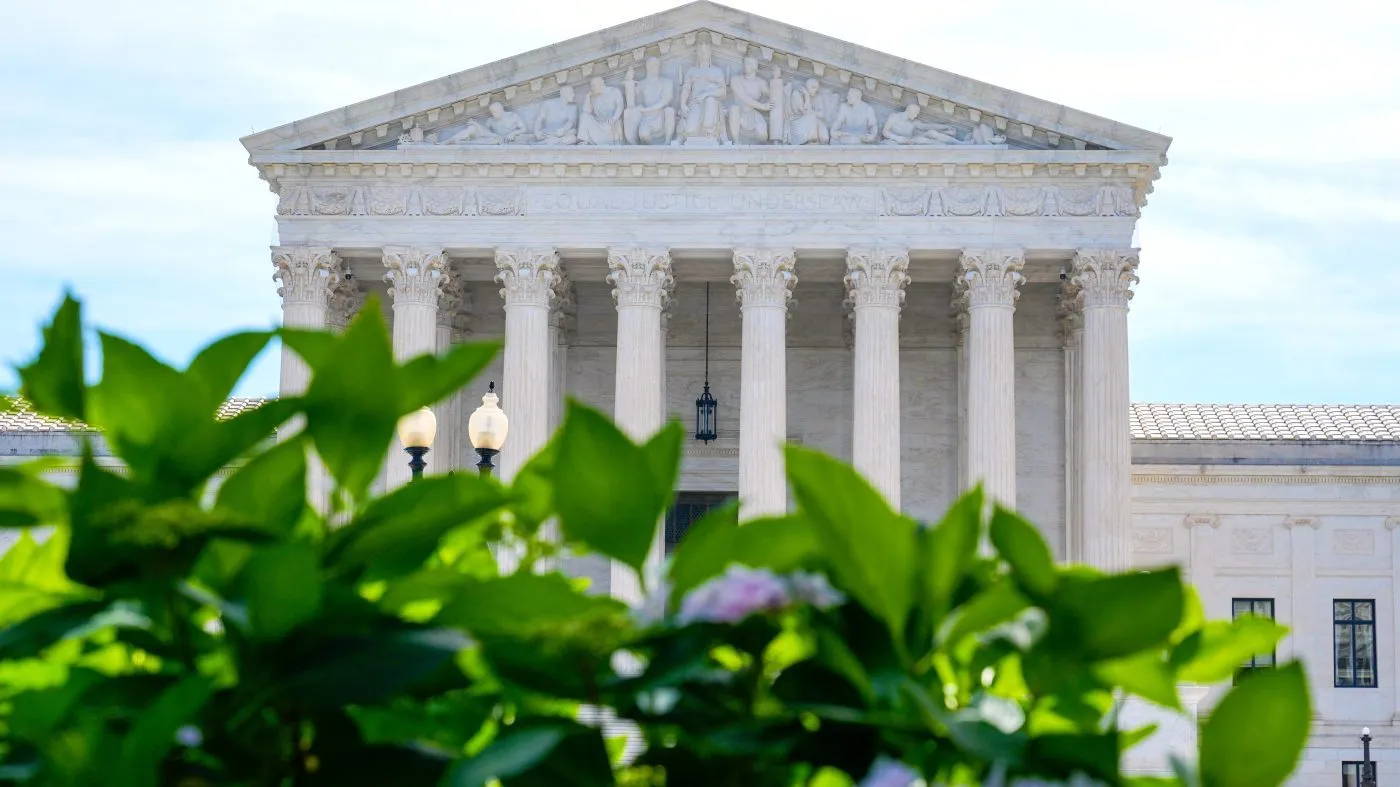
The Supreme Court will hear a challenge to admissions policies at a suburban Maryland county’s competitive middle school, the justices announced Monday.
It’s a key test of the court’s 2023 decision invalidating affirmative action in higher education admissions .
That decision left open questions over what lengths school districts may still take to promote diversity.
An association of Asian American parents wants to revive a challenge to Montgomery County’s new admissions policy, launched in response to the COVID-19 pandemic, to select students for the district’s magnet middle school programs that focus on STEM — science, technology, engineering and math — and the humanities.
The county still screens students based on their grades and test scores. But at a second stage of the process, the county conducts a lottery to determine which students get a seat at the magnet school.
The group, called the Association for Education Fairness, says the policy violates the Constitution’s Equal Protection guarantee. Lower courts dismissed the claims.
The association says courts used the wrong legal standard and wants the justices to provide a nationwide resolution for what evidence a plaintiff must show to invalidate a racially neutral policy as discriminatory.
“Yet the governing constitutional standard now depends on geography,” the group’s lawyers wrote. “Evidence sufficient to establish an Equal Protection claim in some circuits is legally irrelevant in others.”
The case is set to be heard this term. Oral arguments are likely to be held next year, with a decision expected by summer.
“The Constitution protects students as individuals, not as members of a racial group,” said Chris Kieser, a senior attorney at Pacific Legal Foundation, a libertarian group that represents the parents. “A school district should not be able to defeat a discrimination claim by showing that its policy did not harm enough Asian American children. Every family deserves admissions rules that judge their child on their own merit.”
Montgomery County’s school board told the Supreme Court the case is “unremarkable and of little significance” and is not the best way to sort out the proper evidentiary standards.
“This case involves a race-neutral lottery adopted in response to a global pandemic. It is not the right fact pattern for this Court to take up the question presented,” the board’s lawyers wrote.
The high court agreed to get involved after receiving multiple similar appeals from other areas in the wake of the affirmative action decision.
In 2024, the court turned away a challenge to a revamped admissions policy at Thomas Jefferson High School for Science and Technology, one of the nation’s top-ranked high schools, located in the Virginia suburbs of the nation’s capital.
Justices Samuel Alito and Clarence Thomas, both members of the court’s conservative wing, had publicly indicated they wanted to take up the case.
“The Court’s willingness to swallow the aberrant decision below is hard to understand,” Alito wrote at the time.
Months later, the duo similarly dissented as the court declined to get involved in the battle over admissions practices at Boston’s prestigious “exam schools.”
Topics in this story
Gathered from external sources. Rights to this text belong to whoever originally published it.