The Memo: Bond market turmoil heightens midterm risks for Trump and GOP
Turbulence in the bond markets, fueled primarily by rising anxiety about government debt, is creating one more headwind for President Trump and the GOP as they move toward challenging midterm elections. Bond yields ticked up again on Tuesday, with the yield on the U.S. Treasury 10-year note hitting its highest point since January 2025. The…
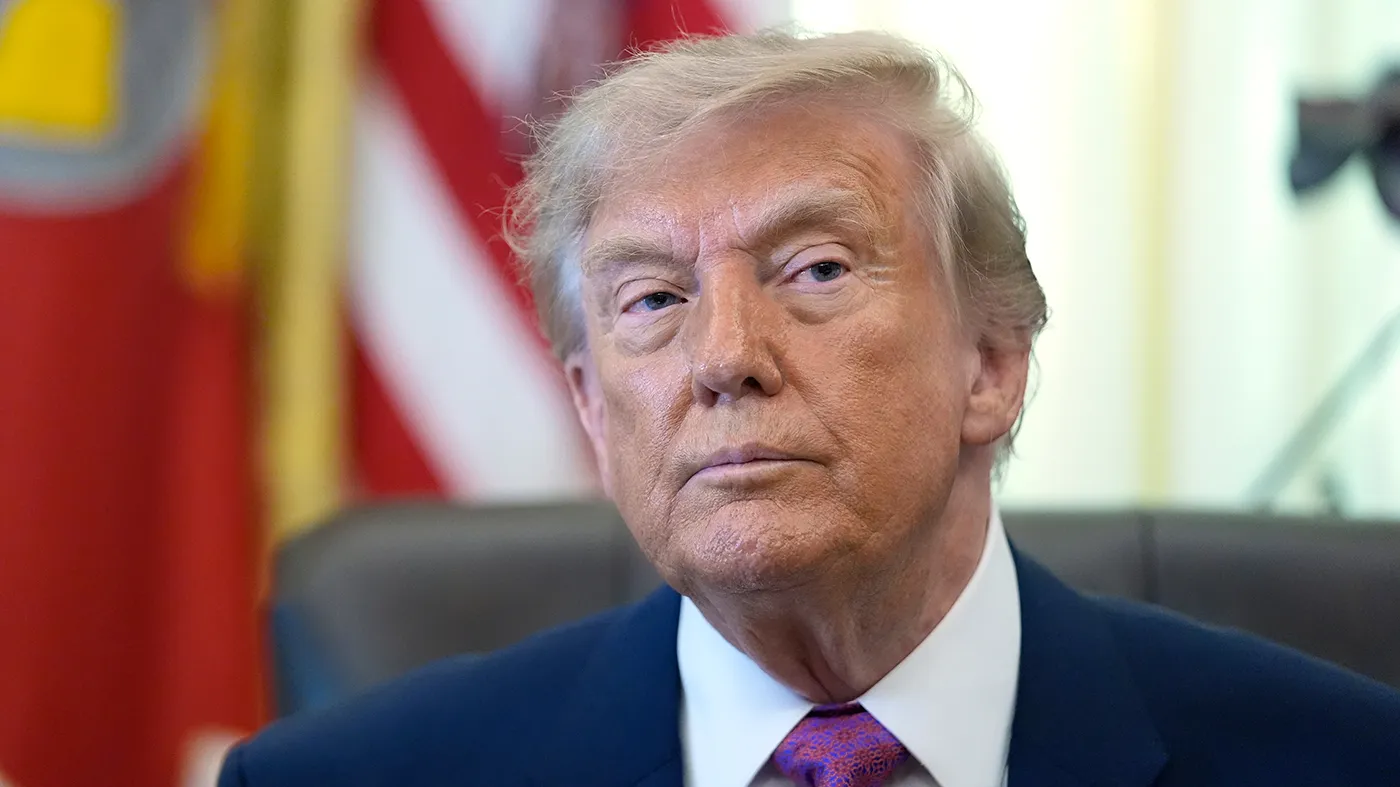
Turbulence in the bond markets, fueled primarily by rising anxiety about government debt, is creating one more headwind for President Trump and the GOP as they move toward challenging midterm elections.
Bond yields ticked up again on Tuesday, with the yield on the U.S. Treasury 10-year note hitting its highest point since January 2025.
The yield on the 10-year as recently as late February, just before the start of the war with Iran, was around 4 percent. Now, it sits at about 4.8 percent.
An increase on this scale, which sounds modest, can have major repercussions on the government’s expenses to manage its massive debt load, which recently hit $40 trillion.
Rising bond yields also swiftly seep into consumer lending, nudging up interest rates on mortgages, auto loans and credit card debt.
That’s bad news for Trump and his party, given that numerous polls show the cost of living to be at the top of voters’ lists of concerns. Trump repeatedly gets lower poll ratings on that issue than on any other.
The complex moves of the bond markets rarely make headlines. When they do, it’s often bad news.
On Tuesday, the Drudge Report blared “Bond Yields Soar, Global Panic, Stock Crash Imminent?” across the top of its home page.
Even if that seems a tad overexcitable to most experts, there’s no denying the growing nervousness gnawing at the markets.
In basic terms, the bond markets are getting edgy about several factors, which are combining into a powerful storm.
Prime among those is the U.S.’s rising debt load and the lack of evidence that there is political will in either party to do much about it.
There’s also sticky inflation, and the possibility that the Federal Reserve will have to raise interest rates. There’s the related issue of the war, which increases volatility especially with respect to energy prices, sustaining inflationary pressure.
Internationally, other nations are also grappling with rising debt and deficits. Finally, the AI boom is being fueled in significant measure by companies issuing their own bonds, thus competing with the U.S. federal government for creditors’ business.
Trump has, characteristically, insisted that all will be well. Speaking with reporters Monday, he returned to a familiar refrain — that interest rates should be lower.
“When we do well, they shouldn’t have to raise interest rates. They should, in many cases, lower [rates],” he said . “When we’re doing well, we become a better credit. When you become a better credit, you’re supposed to cut rates.”
It’s far from clear that even Kevin Warsh, Trump’s recently confirmed chair of the Federal Reserve, agrees.
Last week, Warsh said the Fed could have “work to do” to bring inflation down to its target of 2 percent from its current rate of 3.4 percent. The comment was widely seen as an acknowledgment that rates might have to rise.
Treasury Secretary Scott Bessent has tried to shore up confidence — with mixed success.
In media interviews on Monday and Tuesday, Bessent has talked up the robustness of the market for U.S. bonds.
“If there were a problem in the bond market … then people would be selling U.S. bonds and buying other countries’ bonds. But we are the best-performing market,” he told CNBC’s Sara Eisen on Monday.
Still, Bessent’s move last week to double federal buybacks of long-term debt offered only a very brief balm to the bond markets. Yields briefly fell before resuming their climb.
Jessica Riedl, a budget and tax fellow at the Brookings Institution, told this column that such a move can actually backfire because “it tells financial markets that Treasury is concerned about long-term interest rates but too feckless to do anything about it.”
Riedl also argued that the larger issue of rising yields could hurt Republicans come November’s elections.
“The polls have not looked good for Republicans because voters are clearly worried about the economy — in particular when President Trump had promised such dramatic economic gains. He said prices would begin falling on Day 1.”
Conservatives see the electoral implications differently, even as they acknowledge that U.S. government debt is a long-term problem.
“I don’t think folks follow the bond market. What they follow are their home economics — what things cost them,” Mick Mulvaney, who served as the director of the Office of Management and Budget during Trump’s first term, told this column.
Still, in terms of the rising concerns evident in the bond market, Mulvaney said: “Fiscal conservatives like me have been wondering for two decades when this was going to happen.”
He stressed that he did not see the situation right now as a crisis but “it’s a small trend-line.”
Some economic experts sound a broadly similar tone.
Allison Schrager, a senior fellow at the Manhattan Institute, said that on one hand, “debt crises tend to happen very slowly and very quickly — and it’s a reason why I’ve been very concerned about debt for a long time.”
But Schrager also suggested that, by historic standards, the current mix of inflation and bond yields was not that remarkable.
“Really, yields are not that high relative to what they normally are,” she said. “Inflation is about 3 percent. Yield on the 20-year is around 5 percent. That’s not crazy. Historically, that’s pretty consistent.”
Still, Democrats are betting voters are more likely to be casting ballots in November with a general sense of economic malaise rather than with an in-depth knowledge of historic bond yields.
“They are already taking it on the chin because of Iran, the cost of living, the cost of healthcare and all that,” Democratic strategist Mark Longabaugh said.
“You add on higher interest rates, and it’s all going to be laid at the feet of Republicans,” he added, “And I think it’s going to get worse over the next nine weeks.”
The Memo is a reported column by Niall Stanage.
Topics in this story
Gathered from external sources. Rights to this text belong to whoever originally published it.