Home heating costs threaten to chill GOP vote in key Senate races
Democrats running for Senate in Maine, Alaska and New Hampshire are zeroing in on the rising cost of home heating as winter — and Election Day — quickly approach. Republican candidates have been on defense in key Senate battlegrounds, arguing against the claim that the GOP has enabled President Trump’s war in Iran, which has…
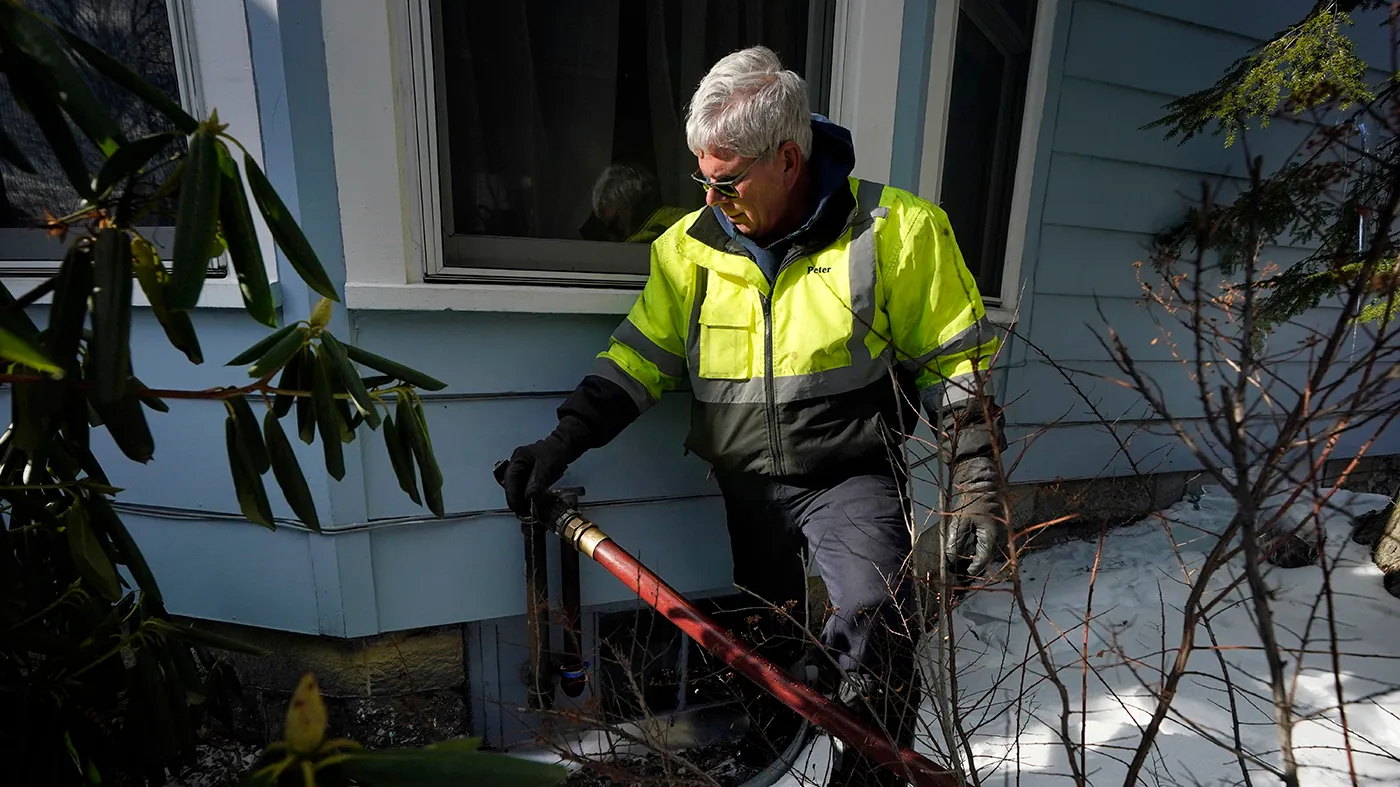
Democrats running for Senate in Maine, Alaska and New Hampshire are zeroing in on the rising cost of home heating as winter — and Election Day — quickly approach.
Republican candidates have been on defense in key Senate battlegrounds, arguing against the claim that the GOP has enabled President Trump’s war in Iran, which has inflated oil costs. The cost of residential heating oil went from an average of less than $4 per gallon before the war to more than $6 today.
“There are a lot of people here who are stretched pretty thin, and home heating costs are an issue even during the best of times,” said Mark Brewer, the chair of the political science department at the University of Maine.
“So when we’re talking about a spike like this, it’s a huge issue,” he continued.
Democrats are narrowly favored to flip the Senate, according to Decision Desk HQ, as Republicans confront voter anger over high costs due to the Iran war. The Republicans running for Senate in Maine, New Hampshire and Alaska either declined to comment for this story or did not respond to The Hill’s request for comment.
Democrats’ path to a Senate majority may run through Maine, a state where about half of homes use heating oil to stay warm. Democrat Troy Jackson has sought to assign blame to his opponent, Republican Sen. Susan Collins (Maine).
“Unlike Susan Collins, Troy understands what it’s like to worry about the furnace shutting off in the middle of the night and in the U.S. Senate, he’ll fight to lower costs and end the war in Iran that’s only making it harder for Mainers to make ends meet,” campaign spokesperson Ella McFarlane told The Hill in a statement.
The Collins campaign referred The Hill to a campaign webpage highlighting the senator’s opposition to the conflict and vote to halt military actions despite initially opposing efforts to halt the war. The website does not reference heating oil.
Energy costs are just one example of the larger trend of rising costs nationwide. Seventy-five percent of U.S. adults report seeing higher energy costs in recent years, and 84 percent of registered voters surveyed by Pew Research Center said the economy is important to their vote.
Collins pushed the Trump administration in September to address the cost of heating oil this fall.
“It now costs about $675 more to fill a standard tank than it did last year — a significant hardship for the half of Maine households that heat their homes with fuel oil,” Collins wrote in a letter to President Trump, urging him to release oil from the Northeast Home Heating Oil Reserve.
The administration then released 315,000 barrels of heating oil, though it’s unclear how much relief that will provide to consumers. It’s among a blitz of announcements from Collins in recent months either criticizing Trump or flexing her ability to influence decisions in Washington.
James Melcher, political science professor at the University of Maine at Farmington, said the home heating issue will reinforce how voters already feel about the candidates.
Jackson voters blame Trump and Collins for high costs while Collins voters — and Collins herself — blame Democrats and the Maine Legislature, Melcher said.
New Hampshire’s Chris Pappas, a House Democrat running for Senate, has called on fellow legislators to authorize additional funding and for full distribution of the Low-Income Home Energy Assistance Program (LIHEAP). LIHEAP aids nearly 6 million homes nationwide in affording energy costs.
“Granite Staters deserve a fighter who is focused on lowering costs, delivering relief, and putting New Hampshire first — not rubber-stamping an agenda that leaves working families footing the bill,” Pappas said in a statement to The Hill.
Republican John Sununu, a former senator from the Granite State, has said he would support increased LIHEAP funding, a cause also championed by Collins. He has also called for infrastructure development to further improve energy costs, while criticizing Trump for entering the Iran war without a plan to keep the Strait of Hormuz, a key shipping route for oil, open for passage.
Melcher said New Hampshire’s GOP governor likely prevents Sununu from blaming the state government for high costs like Collins can.
In Alaska, Sen. Dan Sullivan (R) is running a tight race for reelection in a state where gas and oil costs have reached double digits in some communities. Sullivan has called for a diesel export moratorium to help ease costs and said at an October rally that high costs are a “small price to pay” to prevent a nuclear Iran.
“The conflict in the Middle East is temporary,” Sullivan said. “The true forever war is the national Democrats’ war against Alaska oil and gas and our jobs. That’s the forever war.”
Former Rep. Mary Peltola (D-Alaska), the Democratic candidate running against Sullivan, has pinned the blame squarely on his support of Trump’s agenda, warning Alaskans are worried people will freeze to death because they will have to chose between paying for food or warmth this winter.
“Mary will stand up to anyone to take on DC corruption, lower costs, and put Alaska first – and Dan Sullivan will be forced to answer for raising costs on Alaskans this November,” a spokesperson for the Peltola campaign told The Hill.
Alexander Hirsch, chair of the political science department at the University of Alaska Fairbanks, said Alaskan voters have often swung with the economy. He said energy costs are a perennial issue, and while Alaskans may point the finger at different people for the rising cost of oil, voters seem to want change.
“Some Alaskan voters are blaming tariffs, others have a different scapegoat, but I think the bottom line is that Alaskans want to see a change in a political representation in order to bring about an impactful change in terms of their everyday lives,” Hirsch said.
Topics in this story
Gathered from external sources. Rights to this text belong to whoever originally published it.